[email protected]

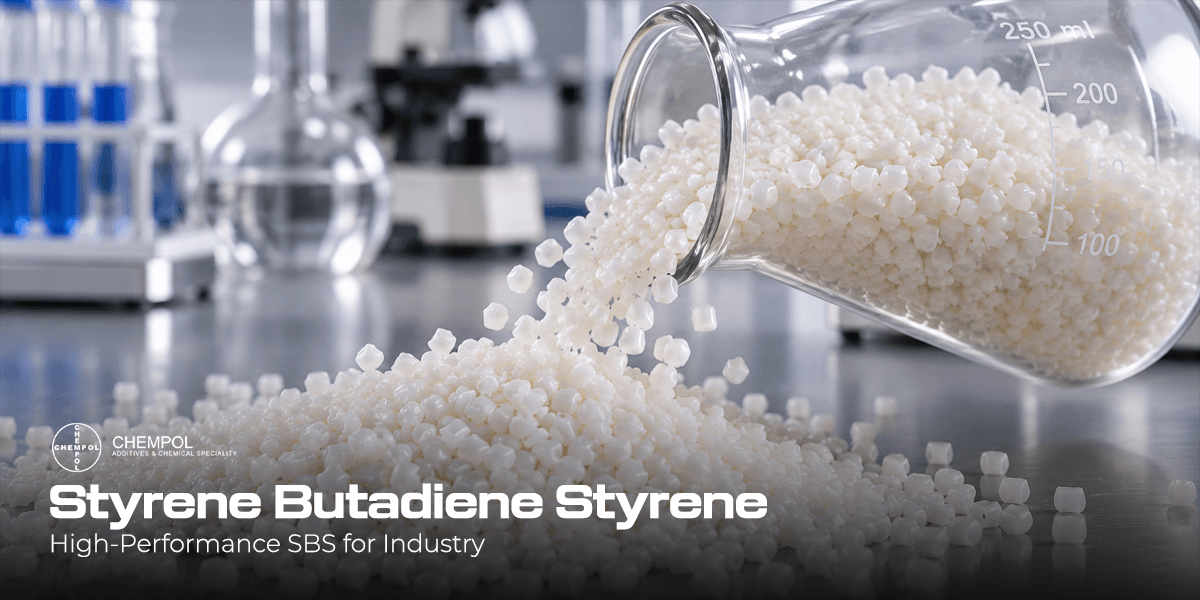
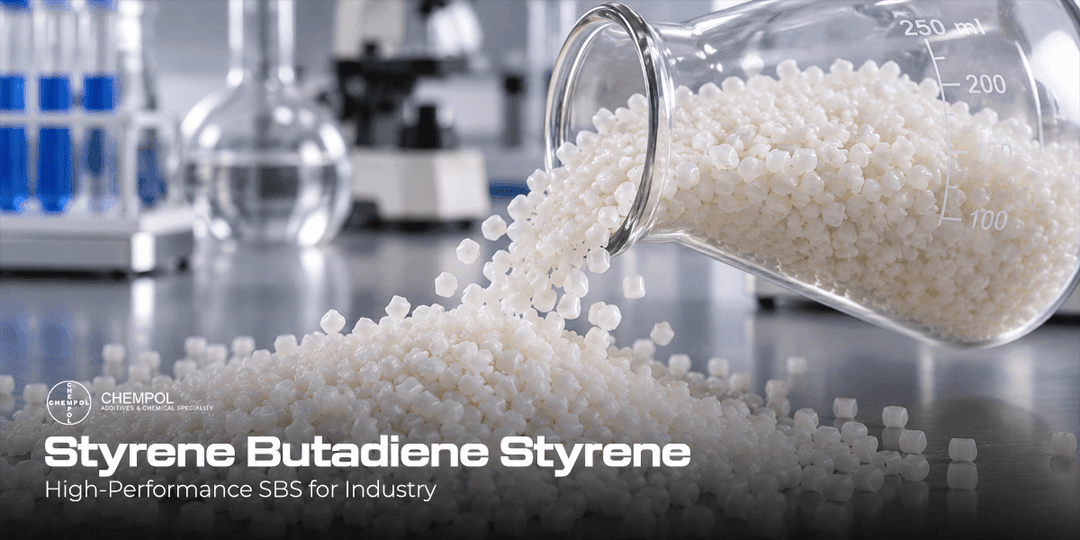
Styrene Butadiene Styrene: High-Performance SBS for Industry
Manufacturers across industries require polymers that deliver consistent performance without complicating processing or increasing costs. Adhesive manufacturers require stability and plasticity. Elasticity and temperature resistance should be improved in bitumen and asphalt companies. Plastic compounders desire high impact strength, and the shoe and rubber industries need materials with high durability and flexibility that can withstand repeated stresses.
Styrene-Butadiene-Styrene can address most of these issues.
Chempol Styrene-Butadiene-Styrene (SBS) is a high-performance, thermoplastic elastomer (TPE) used in the manufacture of products that demand elasticity, flexibility, impact resistance, abrasion resistance, and high-performance processing. SBS is one of the most versatile polymers in industry-wide manufacturing, and its adhesive properties, including compatibility with bitumen, plastics, rubber compounds, coatings, and other materials, enable its use in a wide range of applications.
For procurement teams, formulators, R&D professionals, and production managers, selecting the appropriate SBS grade may enhance product performance or manufacturing economics. Chempol assists industrial consumers with various SBS grades, application-oriented customer support, and a reliable supply to meet production needs.
What is Styrene-Butadiene-Styrene (SBS)?
SBS is a thermoplastic elastomer produced from blocks of styrene and butadiene. Its molecular structure is a combination of both rubber and thermoplastics.
The styrene portions offer strength and structural stability, whereas the butadiene portions offer elasticity and flexibility. Due to this blend, an SBS Block Copolymer can act like rubber in its applications yet can be processed using most traditional thermoplastic manufacturing techniques.
This makes Thermoplastic Elastomer SBS an appealing product in manufacturing, where the manufacturer desires rubber-like performance while avoiding reliance on conventional vulcanized rubber processing.
The material is widely used as:
- A modifier in bitumen and asphalt
- A polymer base for pressure-sensitive and hot melt adhesives
- An impact modifier in plastics
- A flexible component in footwear materials
- A performance-enhancing ingredient in rubber products
- A polymer for sealants, coatings, membranes, and molded articles
Chempol offers SBS for industrial applications where formulation consistency, processing behavior, and final-product durability are crucial purchase criteria.
How Does SBS Work?
A Styrene-Butadiene-Styrene Polymer combines hard styrene domains with soft, elastic polybutadiene segments. The styrene domains form reversible physical crosslinks at normal operating temperatures. They help the material retain its strength and shape. The butadiene stage enables the polymer to stretch, bend, absorb shock, and recover.
The styrene domains soften with heat during processing. This enables SBS to flow and mix with compatible materials. The material’s structural properties return as it cools down. This reversible behavior endows SBS with a valuable manufacturing property: it exhibits a useful elastomeric behavior and is amenable to fairly efficient thermoplastic processing. Depending on the formulation, manufacturers can use SBS to adjust:
- Elastic recovery
- Tack and adhesive strength
- Flexibility
- Toughness
- Impact resistance
- Low-temperature performance
- Surface feel
- Viscosity
- Compatibility with oils, resins, polymers, or bitumen
These properties make SBS a valuable formulation tool, not just another raw material for R&D teams.
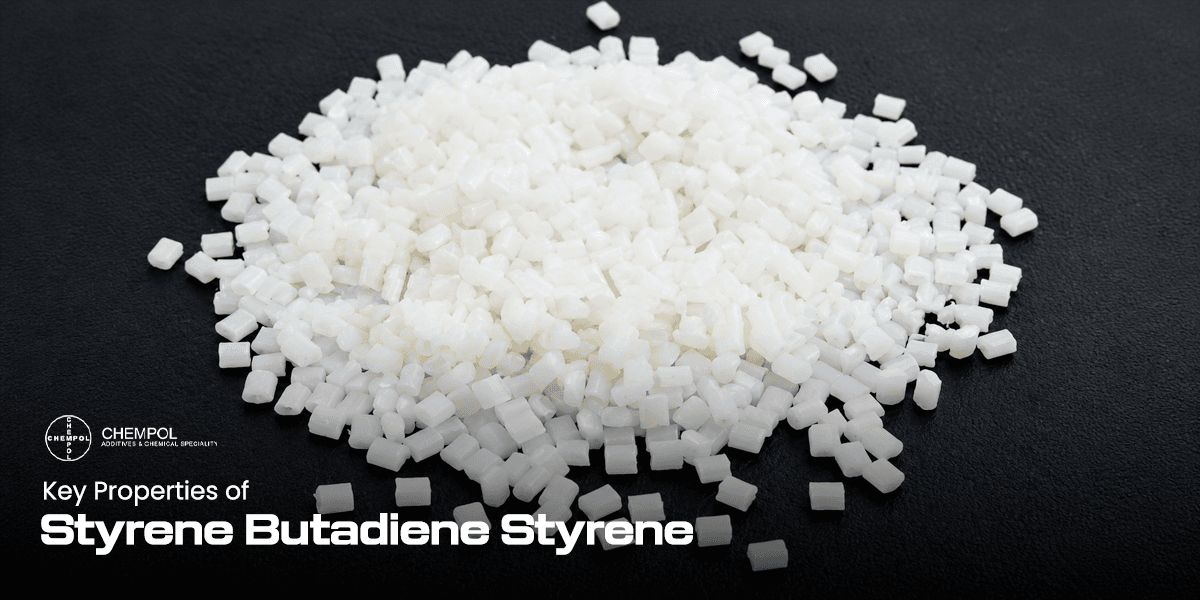
Key Properties of Styrene Butadiene Styrene
Chempol SBS is designed for industrial applications, where processability and performance must coexist.
Excellent Elasticity and Flexibility
SBS is quite elastic, which enables the finished products to deform under stress and recover easily. For manufacturers, it can translate into fewer cracks, enhanced ability to bend repeatedly, and increased longevity of flexible parts. Flexibility in adhesives helps maintain bonding when substrates undergo expansion, contraction, bending, or vibration.
High Impact Resistance
Being a high-impact thermoplastic elastomer, SBS can enhance energy absorption and toughness when used in compatible plastic formulations. It is useful for products subject to handling damage, impact loads, repetitive motion, or mechanical stress. The improved impact performance will help to minimize premature failures and enhance end-user satisfaction.
Abrasion Resistance and Long Service Life
Friction is commonly encountered in footwear products, flexible molded components, rubber articles, and industrial surfaces. A properly formulated SBS Rubber Material can provide abrasion resistance while remaining flexible. The increased wear life can allow manufacturers to add value to their products without making production a lot more complicated.
Easy Processing and Manufacturing Efficiency
SBS is a rubber material that can be processed by thermoplastic processing in appropriate applications, unlike most traditional rubber systems. For manufacturers, effective processing can facilitate a quicker production cycle, easier formulation development, and simpler processing.
Improved Surface Finish
Depending on the formulation and processing method, SBS can help manufacturers create products with smooth, flexible surfaces and uniform appearance. It is especially useful in footwear, molded products, plastic compounds, and other products presented to consumers, where appearance can affect perceived quality.
Broad Formulation Compatibility
SBS is especially useful as it can be used with a variety of material systems.
SBS is particularly valuable because it can work across several material systems. It can be used with:
- Tackifier resins in adhesives
- Bitumen in road and waterproofing products
- Compatible plastic compounds
- Oils and fillers
- Rubber formulations
- Sealant and coating systems
This flexibility makes SBS useful for companies managing multiple product categories.
Cost and Production Efficiency
The choice of material must enhance both the technical performance and business performance. When used together, the elasticity, strength, processability, and compatibility of a single flexible polymer material, such as SBS, can assist formulators in meeting their desired performance without artificially complicated polymer systems.
Request SBS Support from Chempol
When considering whether to formulate something new with SBS, improve an existing product, or use other raw materials, contact Chempol to discuss your technical needs. Request any SBS grades, technical specifications, application guidance, pricing, or recommendations according to your manufacturing process.
Benefits of Using SBS in Industrial Applications
A single physical property does not determine the value of SBS. Its key strength is that it can enhance multiple performance characteristics simultaneously.
SBS enables manufacturers to enhance flexibility without compromising on useful strength. Adhesive formulators can balance tack, peel strength, and elasticity. Bitumen processors can improve the flexibility and deformation resistance of pavements. Plastic compounders can enhance impact resistance without entirely altering their production systems.
This flexibility can also streamline sourcing for procurement managers. One Industrial SBS Polymer category may serve multiple business units or formulations, depending on the grade selected.
For technical managers, the ability to refine formulations using a variety of SBS grades supports product development and performance optimization.
Applications of SBS Across Industries
Below are the applications of SBS across various industries:
SBS for Adhesives
SBS for adhesives is widely used for its elasticity, resin compatibility, and ability to provide strong tack and flexible bonding.
In a pressure-sensitive adhesive SBS system, the balance between tack, holding power, and flexibility needed in tapes, labels, films, laminates, and specialty adhesive products can be achieved with the help of the polymer.
SBS, being a Hot Melt Adhesive Polymer, can also be utilized in formulations where rapid setting, thermoplastic processing, and flexible bonding are needed.
Examples of typical industries are packaging, construction materials, hygiene items, auto parts, footwear, labels, and general industrial assembly.
SBS for Bitumen Modification
SBS for Bitumen Modification is one of the most important industrial uses of SBS.
When SBS is appropriately mixed with bitumen, it can enhance elasticity, temperature sensitivity, and resistance to deformation and cracking.
As a Bitumen Modification Polymer, SBS is typically used in applications where standard bitumen may not provide the required performance under heavy loads or variable temperatures.
Applications include modified bitumen, road construction, roofing products, bridge use, and specialty infrastructure systems.
SBS for Asphalt Modification
SBS for Asphalt Modification may be used to enhance the performance of asphalt binders by resisting rutting at high temperatures and remaining flexible at low temperatures.
This makes SBS-modified asphalt applicable in challenging road conditions, such as highways with heavy traffic, intersections, industrial zones, airports, and places with extreme seasonal temperature changes.
For asphalt producers, proper selection and dosage of the polymer are key to achieving the required viscosity, storage capacity, and performance.
SBS for Waterproofing Membranes
SBS for Waterproofing Membranes offers elasticity and crack-bridging characteristics that could be useful in roofing and construction systems.
The bituminous membranes modified with SBS are used in situations where waterproofing materials are required to resist movement or temperature variations and environmental exposure.
Common uses include roofing, foundations, underground structures, and tunnels, among other locations where water protection is needed for durability.
SBS for Plastic Modification
SBS for Plastic Modification is used to enhance the flexibility, toughness, and impact performance of compatible thermoplastic systems.
As an SBS Plastic Compounding Material, it can help compounders develop materials for applications that cannot be achieved with rigid polymers alone and require higher levels of resilience.
Potential applications are consumer products, industrial molded components, modified compounds, packaging components, and specialty plastic products.
SBS for Footwear
SBS for Footwear Soles is popular because the material offers flexibility, resilience, abrasion resistance, and efficient molding properties.
The footwear manufacturers can apply SBS-based compounds to soles, mid-soles, sandal components, and other components of flexible footwear.
Comfort, processability, surface finish, and durability: SBS can be applied in high-volume footwear production while remaining cost-sensitive.
SBS for Rubber Products
SBS for Rubber Products can be applied in situations where the manufacturer requires the elastic behavior of rubber in combination with thermoplastics.
Uses might involve flexible industrial components, grips, pads, seals, protective components, household items, and all types of molded products.
The appropriate SBS grade is determined by hardness, elasticity, compatibility, processing temperature, and final-use conditions.
SBS for Sealants and Coatings
SBS for Sealants and Coatings may help increase flexibility, adhesion, crack resistance, and durability.
These products are used in the construction industry, waterproofing, protective finishes, repairs, and specialty industrial preparations.
Flexible Molded Products
SBS finds application in flexible molded products that need to be soft, absorb impact, be hard, and have a good surface feel.
Applications can range from industrial grips and protective parts to flexible consumer components and specialty molded articles.
Need Help Selecting SBS for Your Application?
Different formulations require different polymer characteristics.
Contact Chempol’s team to discuss your application, processing conditions, target performance, and purchasing requirements. Chempol can help you evaluate suitable SBS options for adhesives, bitumen, plastics, footwear, rubber compounds, membranes, sealants, coatings, and related industrial uses.
Chempol Styrene-Butadiene-Styrene Grades
Not one SBS grade fits all manufacturing processes.
These grades may differ in molecular structure, styrene content, viscosity, hardness, processing behaviour, and compatibility with other raw materials.
Chempol offers various SBS grades, allowing buyers to choose the material based on application requirements rather than a one-size-fits-all approach.
Industrial customers must check the corresponding technical data sheet and consider the material in their own formulation before full-scale production.
How to Choose the Right SBS Grade
The right grade to use starts with the final application. Consider the following factors:
- Required elasticity: Establish the degree of stretch, elastic recovery, or repetitive flexing the product can withstand.
- Processing method: Consider extrusion, compounding, mixing into blends, coating, mixing adhesives or modifying bitumen.
- Viscosity requirements: The chosen SBS must be compatible with the mixing and application processes.
- Compatibility: Evaluate interaction with oils, resins, bitumen, plastics, fillers and other formulation ingredients.
- Temperature conditions: Consider the processing temperature and end-use temperature.
- Mechanical performance: Specify targets for toughness, abrasion resistance, impact strength, hardness, and durability.
- Commercial requirements: Compare performance, processing efficiency, availability, and overall formulation cost.
Technical testing is necessary before commercial-scale adoption.
Why Choose Chempol as Your SBS Supplier
There is more to an SBS Supplier than price per kilogram. Industrial purchasers also require uniformity, technical communication, reliable supply, and products suited to real manufacturing conditions. Chempol focuses on supporting B2B customers through:
- Consistent product quality
- Multiple SBS grades for different applications
- Reliable performance across industrial uses
- Application-focused technical support
- Industrial market knowledge
- Reliable supply planning
- Global export capability
- Competitive commercial options
- Responsive, customer-focused service
Chempol, as an industrial SBS Manufacturer and Supplier partner, cooperates with its customers to determine application requirements and then suggests material options. This method can be especially useful for procurement teams collaborating with the R&D, production, and quality-control departments.
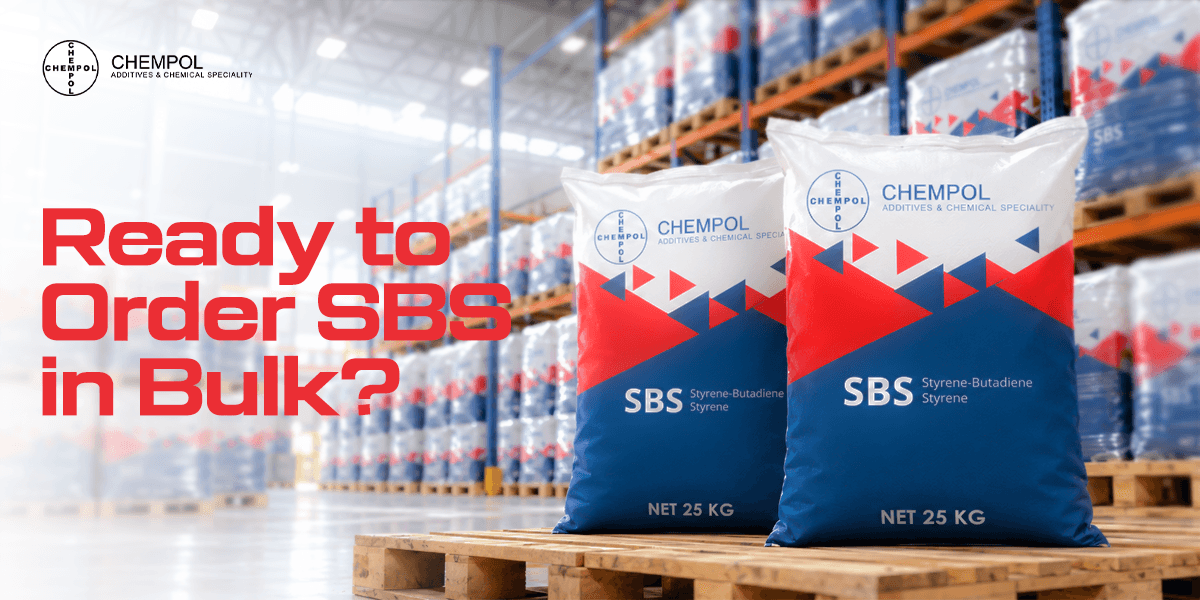
Ready to Order SBS in Bulk?
Styrene Butadiene Styrene remains a significant industrial polymer due to its ability to be elastic, flexible, impact- and abrasion-resistant, and thermoplastic.
SBS for Adhesives and modified bitumen, waterproofing membrane, footwear, sealant, coating, rubber products, and flexible molded components offers flexibility that enables manufacturers to address a broad array of formulation and performance issues.
However, effective application of SBS is contingent on selecting the appropriate grade, ensuring formulation compatibility, and collaborating with a supplier to meet both technical and commercial demands.
Chempol offers SBS to industrial customers who are interested in reliable quality, ease of use, customer service, and affordable supply options.
Planning a new formulation or reviewing your current SBS supplier? Contact Chempol today to request a quote, technical specifications, product recommendations, or assistance selecting the right Styrene Butadiene Styrene grade for your application.