[email protected]
API SN vs API SN-DEXOS: Choosing the Right PCMO Additive Package
For lubricant manufacturers, oil blenders, and formulators, selecting an appropriate passenger car motor oil (PCMO) additive package is essential to achieve adequate engine protection, oil stability, and finished-product performance. When comparing API SN vs API SN-DEXOS, one has to make a decision based on differences in API performance categories and General Motors’ Dexos engine oil specifications.
An API SN additive package is an additive package used in gasoline engine oil formulations that targets API SN performance. Comparatively, a Dexos-based additive package is created to meet additional OEM performance specifications, in addition to the applicable API and ILSAC specifications. These variations affect additive chemistry, formulation purpose, testing needs, and overall production economics.
Chempol also provides PCMO additives to meet various formulation requirements, such as CHEMPOL 63011 for API SN/SM/SL applications and CHEMPOL 65920D for API SN, ILSAC GF-6, and GM dexos1 Gen 2.
Looking for the right PCMO additive package for your formulation? Contact Chempol to discuss your target specifications, technical requirements, and additive sourcing needs.
What Is an API SN Additive Package for Gasoline Engine Oil?
An API SN additive package is a formulated blend of chemical compounds that helps manufacturers produce gasoline engine oils for the API SN service category. It offers a balanced additive system that meets the necessary engine oil performance requirements without compelling blenders to purchase and optimize each additive ingredient separately.
For lubricant manufacturers, an API SN engine oil additive package is significant for developing additive formulations that provide wear protection, oxidation resistance, engine cleanliness, and sludge control. Such performance attributes are critical to the stability of lubricants and also to protecting engine parts in various operating conditions.
A typical API SN PCMO formulation needs several complementary additive functions. Detergents are used to control high-temperature deposits, and dispersants are used to keep contaminants in suspension in the oil. Antioxidants also enhance resistance to oil degradation, and anti-wear additives protect key engine surfaces.
The balance between these elements is especially significant, since enhancing one aspect of the performance without taking into account the others may affect the formulation overall. Thus, one of the key considerations in the development of the product is the compatibility of a passenger car motor oil additive package.
How Does an API SN Engine Oil Additive Package Support Formulation?
The API SN motor oil additives also help achieve several significant formulation goals. The oxidation protection helps preserve oil quality during operation, and the detergency and dispersancy help keep the engine clean. Anti-wear chemistry is used to minimize component wear, and appropriate additive blends are used to control sludge and deposit formation.
Formulation economics is also essential for manufacturers that focus on conventional gasoline engine oil applications. An appropriately chosen API SN additive package can make sourcing raw materials easier and serve as a viable starting point for developing commercially competitive PCMO products.
CHEMPOL 63011 API SN Additive Package is a product from Chempol offered to manufacturers focused on API SN, API SM, and API SL applications. The package targets stable engine protection, oxidation resistance, engine cleanliness, and sludge control, which helps formulate gasoline engine oils cost-effectively.
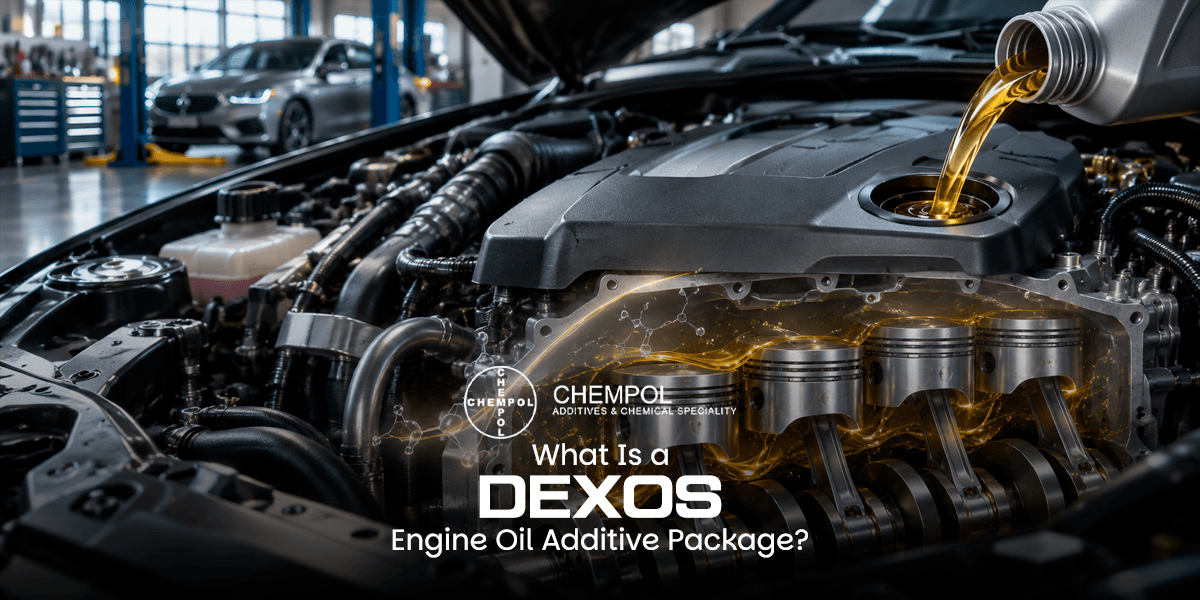
What Is a DEXOS Engine Oil Additive Package?
A Dexos engine oil additive package is designed to support lubricant formulations that meet the specific engine oil performance needs of General Motors. In contrast to API service categories, Dexos specifications are developed by General Motors and impose additional requirements on the oils to be used in suitable GM engine applications.
For lubricant formulators, this means that compliance with an API category does not necessarily mean compliance with a specific Dexos specification. The entire formulation should meet the OEM’s applicable requirements, such as engine performance, durability, and fuel economy.
Detergents, dispersants, antioxidants and anti-wear additives may be needed in careful balance in a GM Dexos engine oil formulation. Low-speed pre-ignition (LSPI), timing chain wear, turbocharger deposits, and oxidation stability may also be factors in the formulation, depending on the specification being generated.
All these demands make additive selection a substantial component of high-quality PCMO creation. Manufacturers should consider the entire additive system, base oil choice, viscosity grade, and other formulation components.
Understanding API SN-DEXOS Additive Package Requirements
Product descriptions and searches often use the term API SN-DEXOS to refer to additive packages used in the gasoline engine oil formulations to meet the API and GM performance requirements. API SN-DEXOS is not an officially recognized API service category. API SN is an industry-defined gasoline engine oil service category, whereas GM Dexos is a separate engine oil specification established by General Motors.
The CHEMPOL 65920D API SN-DEXOS Additive Package by Chempol is designed for higher-performance gasoline engine oils. Its published performance scope is API SN, ILSAC GF-6, and GM Dexos1 Gen 2.
The package will help achieve formulation goals such as LSPI mitigation, timing-chain wear control, piston and turbocharger deposit control, oxidation resistance, and fuel-economy support. Such properties make it of interest to manufacturers formulating advanced PCMOs.
Importantly, CHEMPOL 65920D should not be considered an API SN-only product. It has recorded performance coverage for API SN, ILSAC GF-6, and GM Dexos1 Gen 2. To ensure the exact application and qualification requirements, manufacturers ought to refer to the existing technical data sheet.
API SN vs API SN-DEXOS: Key Formulation Differences
The main distinction of these additive-package methods is the targeted finished-oil performance goal. Both are supportive of gasoline engine oil formulation; however, there can be differences in their application requirement and formulation priorities.
Engine Wear Protection and Durability Requirements
Both API SN and Dexos-oriented formulations require wear protection. Anti-wear additives protect engine parts by limiting friction-induced damage during operation.
However, OEM-oriented formulations can entail other considerations regarding durability. For example, timing chain wear and elongation control are critical performance considerations in some modern gasoline engine oil applications. Timing chain wear control is specifically listed among the performance features for CHEMPOL 65920D.
Oxidation Resistance and Engine Oil Thermal Stability
Another factor to note when comparing an API SN additive package with a Dexos-oriented one is oxidation resistance. The engine oil is exposed to heat, oxygen, and operating stresses, which may contribute to oxidation, viscosity changes, and deposit formation.
Both formulation methods need appropriate oxidation protection. Nevertheless, manufacturers are advised to consider specific performance requirements of their target specification and choose an additive system accordingly.
Engine Sludge and Deposit Control
Detergency and dispersancy also help keep engines clean by controlling deposition and the accumulation of contaminants. Proper management of sludge plays a crucial role in ensuring that lubricants meet the required service life.
An SN formulation of API must have appropriate cleanliness and deposit-control properties. OEM-oriented formulations can also be more demanding and require attention to specific performance areas related to deposits, such as piston and turbocharger cleanliness.
CHEMPOL 63011 is dedicated to engine cleanliness and sludge control, and CHEMPOL 65920D features additional stated deposit-control targets for advanced gasoline engine oil applications.
Fuel Economy and Passenger Car Motor Oil Performance
Modern passenger car motor oils are designed with fuel economy in mind. Fuel economy may be affected by finished-oil viscosity, friction properties, base-oil choice, and additive chemistry.
Formulations that target a subset of the ILSAC category can achieve a certain fuel economy. CHEMPOL 65920D supports an ILSAC GF-6 formulation objective and is therefore applicable to manufacturers assessing fuel-conscious PCMO products.
OEM Requirements and Formulation Economics
Customers who need the API SN service type might require an API SN-based formulation. A Dexos-oriented formulation, however, should also consider the relevant GM specification and its associated qualification requirements.
On the procurement front, manufacturers are advised to consider additive package pricing, recommended treat rates, compatibility with base oils, test results, and the total cost of production. The choice of an additive package based solely on purchase cost may lead to additional costs when the final formulation needs to be altered or when it does not perform as expected.
How to Choose the Right API SN or DEXOS Additive Package for PCMO?
The initial step in selecting the appropriate additive package is to establish the intended specifications for the finished lubricant. Manufacturers ought to determine whether the target product will serve API SN applications or require a higher level of performance, meeting a combination of API, ILSAC, and GM Dexos requirements.
Another important consideration is the selection of the base oils. Various base oil systems may affect oxidation stability, viscosity performance, volatility and additive compatibility. Formulators therefore need to ensure that the chosen package is appropriate for their intended base oil composition and SAE viscosity grade.
The market targeted also determines the choice of packages. A local gasoline engine oil product designed to appeal to customers with price sensitivity can be offered to meet different commercial needs than a high-end passenger car motor oil designed to satisfy specific OEM performance goals.
Technical documentation should be reviewed before production. Manufacturers are to demand the existing technical data sheet, recommended treat rate, compatibility data, and associated performance data. Further testing and qualification should be scheduled, where necessary, to determine whether the entire formulation meets its specifications.
For manufacturers who are interested in testing API SN/SM/SL applications, CHEMPOL 63011 is an alternative to consider. CHEMPOL 65920D provides an alternative performance package for formulators developing products designed to address API SN, ILSAC GF-6, and GM dexos1 Gen 2.
The ultimate choice must always be made based on the documented product scope and the criteria for the finished lubricant, rather than on product names.
Chempol PCMO Additive Package Solutions for Lubricant Manufacturers
Chempol offers additive packaging solutions for lubricant manufacturers, blending firms, and PCMO formulators to develop gasoline engine oils that meet various market needs.
CHEMPOL 63011 API SN Additive Package
CHEMPOL 63011 has been developed for use in API SN, API SM, and API SL gasoline engine oil applications. It emphasizes trusted engine protection, oxidation resistance, engine cleanliness, and sludge control.
For manufacturers of conventional passenger car motor oils, the package provides a viable formulation alternative focused on cost-effective manufacturing and the necessary lubricant performance.
It is also especially applicable to blenders interested in an API SN PCMO additive package that can help them achieve their desired formulation goals. Before commercial blending, manufacturers ought to verify the recommended treat rate, compatibility with the base oil, suitability of the viscosity grade, and the existing technical documentation.
CHEMPOL 65920D API SN-DEXOS Additive Package
CHEMPOL 65920D is geared towards manufacturers developing advanced gasoline engine oils that meet API SN, ILSAC GF-6, and GM dexos1 Gen 2.
The listed benefits of its formulation are LSPI mitigation, timing-chain wear, elongation control, control of piston and turbocharger deposits, oxidation resistance, and fuel-economy support.
To additive buyers and technical managers, this package offers a choice in establishing higher-performance passenger car motor oils. The full formulation will still have to undergo the respective performance assessment and qualification procedures to claim API or OEM licensing.
Need the right additive package for your gasoline engine oil formulation? Contact Chempol for technical information, current TDS documents, sample availability, and formulation discussions. Share your target API or OEM specification, SAE viscosity grade, and base oil requirements to help identify a suitable solution.
Selecting the Right PCMO Additive Package
The API SN vs API SN-DEXOS distinction is significant for lubricant manufacturers, as the two methods address different specification requirements and formulation goals. A gasoline engine oil additive package that is API SN is designed to cover the API SN category, and a Dexos-oriented package should also include the appropriate General Motors performance specifications.
CHEMPOL 63011 is an API SN/SM/SL application product aimed at engine protection, oxidation resistance, cleanliness, and sludge control. CHEMPOL 65920D is an API SN supporting ILSAC GF-6 and GM dexos1 Gen 2, as well as other formulation goals such as LSPI mitigation, timing chain wear control, and deposit protection.
The correct decision will be made based on the completed lubricant specification, base oil system, viscosity grade, target market and formulation economics. Reviewing technical documentation and verifying product suitability before blending can help manufacturers make more informed decisions about additive sourcing.
Contact Chempol today to discuss your PCMO additive package requirements, request technical documentation or samples, and explore suitable additive solutions for your gasoline engine oil formulations.