[email protected]
API SP Mid SAPS vs Full SAPS Additive Package
Selecting an appropriate lubricant additive technology is a key decision for manufacturers of modern passenger car engine oils when designing their lubricants. Variations in mid-SAPS and full-SAPS formulations affect the compatibility of emissions systems, engine cleanliness, wear protection, and overall lubricant performance. Thus, the API SP mid-SAPS vs. full SAPS additive package is critical for formulators, mixers, additive purchasers, and technical purchasers, with applications across a range of passenger cars.
The demanding performance requirements of modern gasoline engines, especially turbocharged gasoline direct-injection (TGDI) engines, necessitate lubricants that meet these demands. Meanwhile, gasoline particulate filters (GPFs) and three-way catalytic converters are sensitive to lubricant chemistry.
In passenger car engine oil development, although both mid-SAPS and full-SAPS additive packages can be used, they are formulated with different objectives. The choice of the right technology depends on evaluating the target API category, emissions equipment, the base oil’s compatibility with the SAE viscosity grade, and the finished-oil performance needs.
CHEMPOL has two solutions to these formulation requirements: CHEMPOL 61800 API SP Mid-SAPS Additive Package and CHEMPOL 63390 API SP Full-SAPS Additive Package.
What Does SAPS Mean in Engine Oil Formulation?
SAPS stands for Sulphated Ash, Phosphorus, and Sulfur. These parameters play a role in engine oil formulation as they relate to additive chemistry and interaction of lubricants with vehicle emissions-control systems.
Sulphated ash is the inorganic residue formed during a specific laboratory test. It is usually related to metallic additive components, including detergents and anti-wear additives. Phosphorus is commonly associated with anti-wear chemistry, specifically zinc dialkyldithiophosphate (ZDDP), which helps protect engine parts against wear. Sulfur may be present in base oil or various additive materials in lubricant formulations.
The SAPS levels are important because some lubricant-based materials may damage emissions-control equipment over the long term. For example, particulate matter filtration might be hindered by ash deposition, and catalytic converter performance might be affected by phosphorus and sulfur.
This means that modern passenger car engine oils need well-balanced additive packages that consider both engine protection and compatibility with the emissions system. This has created a strong need among lubricant producers to develop modern gasoline engine lubricants with specialized SAPS additive packages.
Mid-SAPS vs Full-SAPS Engine Oil: Key Differences and Applications
The main difference between mid-SAPS and full-SAPS engine oil formulations lies in the desired profiles of sulfated ash, phosphorus, and sulfur. This difference affects additive selection and the compatibility of the resulting lubricant with specific engine and emissions-system applications.
How Mid-SAPS Additive Packages Support Modern Engine Oils
The Mid SAPS additive package is intended for use in lubricant formulations where SAPS is controlled. These packages are particularly applicable to the development of passenger-car engine oil for use in gasoline particulate filters and three-way catalytic converters.
When developing lubricants for vehicles with sensitive emissions-control mechanisms, it is advisable to consider reducing the SAPS contribution. However, lower SAPS levels should be compensated with other performance needs, such as detergency, wear protection, oxidation resistance, and engine deposit control.
Modern mid-SAPS additive technology aims to improve engine cleanliness and protection while also addressing the needs of cars with emissions equipment. For lubricant formulators, this implies consideration of LSPI protection, turbocharger deposit control, sludge resistance, and friction reduction, as well as the necessary chemical formulation.
The mid-SAPS formulations are especially applicable to manufacturers aiming to produce passenger car engine oils that are energy-efficient and GPF-compatible.
How Full-SAPS Additive Packages Support Passenger Car Engine Oils
A full SAPS additive package is to be used for passenger car engine oil formulations, with conventional SAPS concentrations selected based on the performance specification and automotive needs.
These packages offer another additive-chemistry balance for formulations that need engine wear protection, thermal stability, detergency, and deposit control.
Many conventional and turbocharged gasoline engines may use full-SAPS engine oils, depending on the manufacturer’s needs. It remains necessary to formulate them with respect to oxidation resistance, piston cleanliness, sludge control, and long-term lubricant performance.
But increased SAPS does not necessarily mean greater engine protection. The real performance is based on additive chemistry, base oil quality, formulation balance, and the testing requirements for the finished lubricant.
It is thus important to understand the difference between low SAPS and full SAPS and then decide on which additive package to use in commercial production.
API SP Additive Package Comparison: Performance Requirements for Modern Engines
API SP is a gasoline engine oil performance category developed to address the requirements of modern spark-ignition engines. This is especially pertinent to lubricant manufacturers who produce oils for turbocharged and direct-injection gasoline engines.
An effective API SP engine oil formulation must address multiple performance areas, including low-speed pre-ignition protection, turbocharger deposits, oxidation resistance, engine cleanliness, and wear protection.
Low-Speed Pre-Ignition (LSPI)
Low-Speed Pre-Ignition (LSPI) is one consideration. This abnormal combustion may occur in some turbocharged direct-injection gasoline engines. The LSPI control is therefore a significant aspect of additive technology that should be incorporated into the TGDI formula.
Turbocharger Deposit Protection
Another consideration is turbocharger deposit protection. Turbocharged engines must operate under severe thermal conditions; thus, oxidation resistance and deposit management are vital formulation objectives. Formulators can use appropriate additive chemistry to overcome problems associated with high-temperature engine operation.
Engine Sludge Control and Deposit Prevention
Engine sludge control and deposit prevention are also crucial. Detergent and dispersant technology helps control contaminants and keep the engine clean. These properties lead to the creation of lubricants designed to protect engine parts exposed to harsh operating conditions.
Oxidation Resistance
Oxidation resistance helps preserve lubricant properties in use, and friction-reduction technology may be used to meet fuel economy goals. Formulators need to strike the right balance between these properties and the necessary viscosity and wear protection.
Notably, API SP and SAPS characterize various aspects of engine oil development. The API SP provides performance specifications for gasoline engine oil, and SAPS is associated with the chemical structure of the lubricant produced.
Thus, an API SP additive package comparison must consider performance requirements and the anticipated compatibility of the final product with the emissions system.
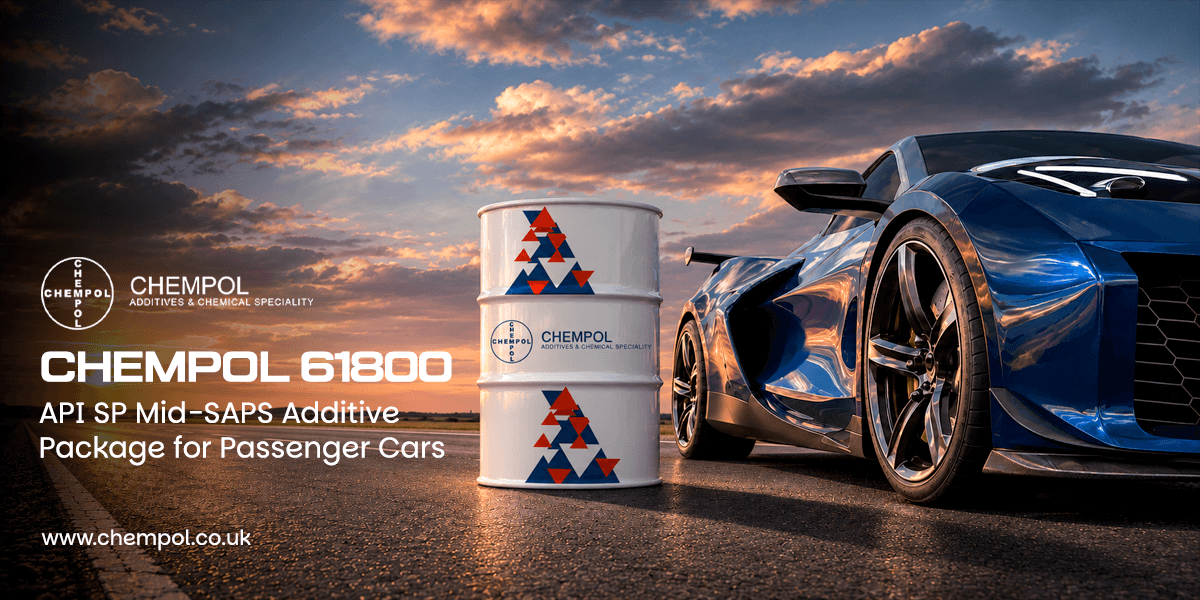
CHEMPOL 61800 API SP Mid-SAPS Additive Package for Passenger Cars
CHEMPOL 61800 is an API SP Mid-SAPS Additive Package that is used in energy-efficient passenger car engine oil formulations. It is aimed at manufacturers of modern gasoline engines, with a focus on compatibility with emission systems, engine cleanliness, and fuel economy goals.
The package supports API SP, SN Plus, and ACEA C-class formulation targets, making it a formulation option for lubricant manufacturers developing products for different passenger car applications.
Its formulation characteristics deal with various key demands of contemporary engine oil development. They are LSPI control in TGDI usage, turbocharger deposit protection, detergency, and sludge resistance. Also, its friction-reduction orientation assists manufacturers of passenger cars that focus on fuel-efficient lubricants.
CHEMPOL 61800 is also intended for use in modern engine applications with gasoline particulate filters and three-way catalytic converters. Its compatibility with most base stocks gives it added flexibility in formulating strategies.
For lubricant manufacturers, these properties make CHEMPOL 61800 applicable to the design of mid-SAPS engine oils that need to strike the right balance among engine protection, emissions-system factors, and energy efficiency.
The package may be regarded as a blend for businesses and lubricant formulators that need an additive solution to formulate modern passenger car engine oil.
Developing an API SP mid-SAPS passenger car engine oil? Contact CHEMPOL for technical information, product documentation, samples, or formulation support.
CHEMPOL 63390 API SP Full-SAPS Additive Package for Engine Oil Formulators
CHEMPOL 63390 is an API SP Full-SAPS Additive Package designed for use as an engine oil additive in passenger cars where full-SAPS additive technology is best suited.
It is aimed at maintaining high thermal stability, controlling wear, and controlling engine deposits. The package can support API SL and API SP formulation requirements and offers an option for manufacturers producing various passenger car lubricant products.
A major consideration in formulation is compatibility with Group III base oils. This makes CHEMPOL 63390 useful for manufacturers considering Group III-based engine oil formulations across a broad range of SAE viscosity grades.
The package can also be used with applications that involve turbocharged and high-output engines. Its development emphasis encompasses oxidation resistance, sludge management, piston cleanliness, and long-term oil functionality.
For lubricant manufacturers, these properties are important in developing passenger car engine oils that are designed to keep engines clean and functioning well in harsh operating environments.
CHEMPOL 63390 has the potential to be reviewed through the blending of companies and additive buyers interested in a Full-SAPS solution for their engine oil formulation needs. The end product will still need to undergo proper testing to verify its compliance with the desired performance specification.
How to Choose Between Mid-SAPS and Full-SAPS Engine Oil Additives
The choice between the two additive technologies depends on the intended use of the lubricant. Neither package is universally best, as they focus on different formulation priorities.
A mid-SAPS additive package could be a better starting point for manufacturers developing energy-efficient lubricants for gasoline particulate filter cars. The SAPS profile is especially useful, in a controlled manner, when an important formulation requirement involves the compatibility of the emissions system.
In contrast, manufacturers targeting passenger car applications where full-SAPS chemistry is permitted may consider a full-SAPS additive package. Thermal stability, wear protection, piston cleanliness, and oxidation resistance are still relevant considerations in formulation for these applications.
The decision should also be based on the base oil’s compatibility. Base stocks can be used with CHEMPOL 61800, but Chempol 63390 is only used with Group III base oils. Thus, manufacturers need to consider the entire formulation rather than selecting an additive package without regard to the base oil system.
Before procurement, the intended SAE viscosity grade, target API category, engine technology, and vehicle requirements should be specified.
Above all, a package of additives does not necessarily imply API or ACEA compliance. The final finished-oil formula should comply with the relevant requirements through proper laboratory and engine tests. Any licensing and approvals needed should also be handled independently.

Why Choose CHEMPOL for Passenger Car Engine Oil Additives?
Selecting an appropriate additive supplier is an important part of developing competitive passenger car engine lubricants. Manufacturers require solutions that meet their formulation goals, technical needs, and desired market applications.
CHEMPOL offers additive solutions to the manufacturers of lubricants, blending companies, distributors, and other B2B customers interested in passenger car engine oil formulations.
Its CHEMPOL 61800 and CHEMPOL 63390 additive packages address two distinct formulation directions: mid-SAPS and full-SAPS passenger-car engine oils.
With solutions for various formulation needs, CHEMPOL offers manufacturers a choice for formulating modern gasoline engine lubricants. Regardless of whether the goal is to be emissions-system-compatible, energy-efficient, thermally stable, or to control engine deposits, choosing the right additive technology is a great place to begin.
Looking for an additive solution for your next engine oil formulation? Contact Chempol to request product information, a quotation, a sample, or a technical consultation.
Selecting the Right API SP Additive Package for Your Business
The API SP Mid SAPS vs full SAPS additive package choice is based on the target engine oil specification, emissions-control technology, base oil choice, and finished-lubricant output needs.
CHEMPOL 61800 offers a mid-SAPS solution: an engine oil that is energy-efficient in passenger cars, and its formulation accounts for the use of GPFs and three-way catalysts. In the meantime, CHEMPOL 63390 provides a complete SAPS intended to enhance thermal stability, wear and oxidation resistance, and engine cleanliness.
For lubricant manufacturers, additive purchasers, and blending firms, the correct choice is the package that matches the targeted application and delivers the required finished-oil performance through appropriate formulation and testing.
Need the right API SP additive package for your passenger car engine oil formulation? Contact Chempol today to discuss your requirements and request a quotation.