[email protected]
Polypropylene: Properties, Grades & Industrial Applications
Polypropylene (PP) has emerged as one of the most commonly used plastics in industries worldwide due to its superb combination of strength, durability, flexibility, and cost-effectiveness. In food wrapping and automobile components, and in medical devices and industrial components, this lightweight thermoplastic is used in thousands of manufacturing processes worldwide.
As a versatile polypropylene manufacturing material, PP has properties that enable its use in demanding applications. Its chemical, moisture, and mechanical performance, coupled with a high melting point, enables manufacturers to produce reliable products, and the manufacturing process is also efficient.
For businesses that rely on a regular supply of raw materials, selecting the appropriate polypropylene supplier is crucial. The quality, availability of grades, and technical support directly affect production performance and the quality of the final product.
Chempol offers polypropylene solutions that meet industry needs, enabling manufacturers to choose the appropriate PP material for various applications.
Polypropylene resin can be used for injection molding, extrusion, packaging, fibers, or other industrial applications, and the correct choice of material can enhance your production outcomes.
Contact Chempol today for product guidance, technical assistance, and support in choosing the right polypropylene grade for your business requirements.
What is Polypropylene (PP)?
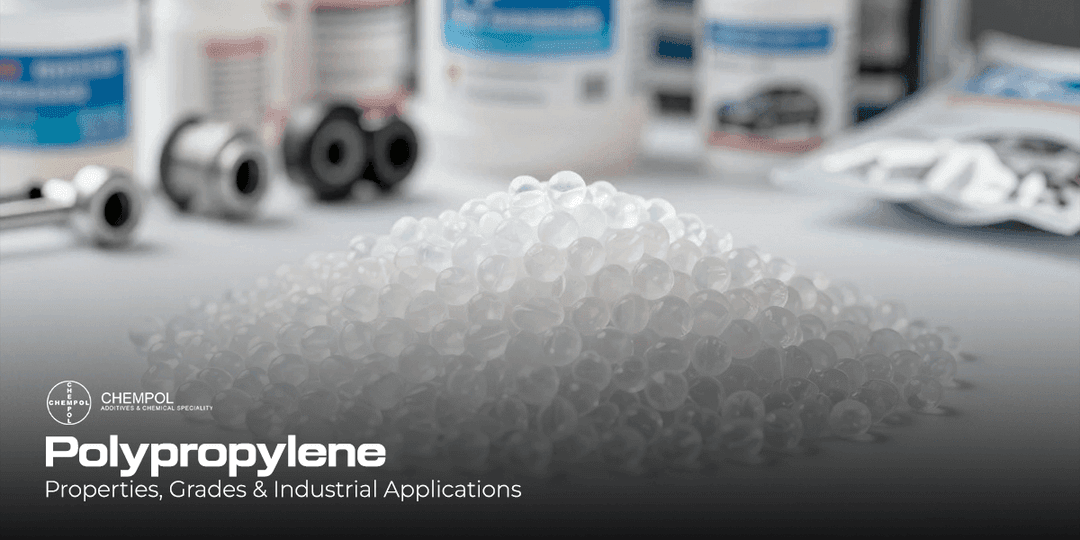
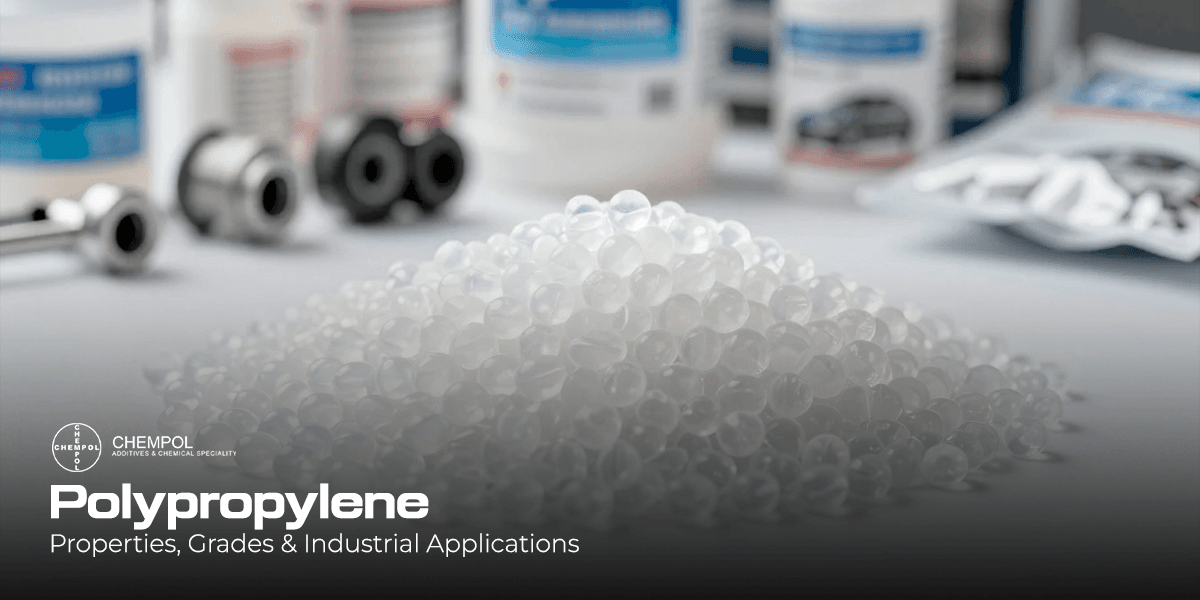
Polypropylene is a thermoplastic polymer manufactured by the polymerization of propylene, a chemical compound derived from petroleum and natural gas. As an industrial plastic resin, it is highly popular for its ability to be heated, molded, and remolded while still retaining its key characteristics.
Lightweight structure, durability, and flexibility are characteristics of PP plastic. Manufacturers use polypropylene resin for injection molding, extrusion, film manufacturing, and fiber production.
Polypropylene is popular because it can meet various industrial requirements. It can be made into hard products, flexible packaging films, woven materials, and specialized components.
Some important characteristics of polypropylene include:
- Lightweight construction
- Good mechanical strength
- Resistance to moisture
- Excellent chemical resistance
- High fatigue resistance
- Good processing performance
The above advantages make polypropylene a choice among thermoplastic polymers for industrial applications across various sectors.
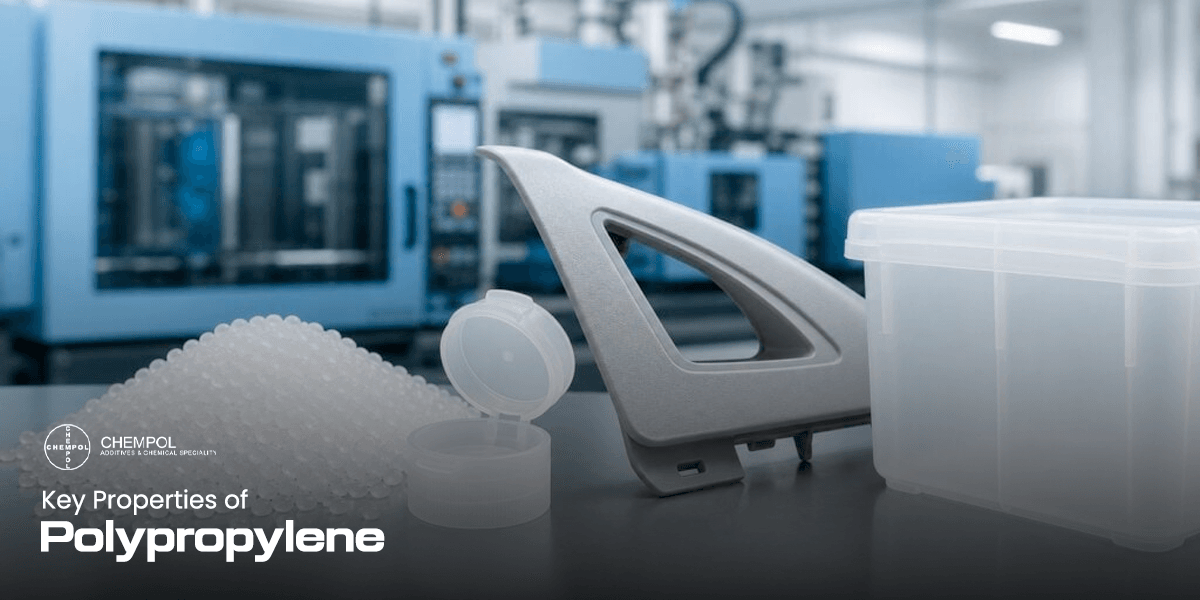
Key Properties of Polypropylene
Knowing polypropylene’s properties will enable consumers to select the correct material for their production needs.
Lightweight Thermoplastic
One of the major advantages of polypropylene is its low density. It provides strength and reduces the product’s weight.
Automobile manufacturing and other industries would find automotive polypropylene useful, as lightweight materials can enhance efficiency and convenience in the manufacturing process.
Moisture Resistance
PP naturally offers high moisture protection. This makes it extremely appropriate for packaging that requires resistance to water and humidity.
Manufacturers of food packaging usually use polypropylene for containers, closures, and protective packaging.
Food Safety
Food-grade polypropylene is a packaging material that is sometimes used in food containers, storage products, and packaging due to its suitability for numerous food-contact applications when manufactured according to required standards.
Fatigue Resistance
Polypropylene has excellent fatigue resistance, enabling products to retain performance even after repeated bending or movement.
This makes PP appropriate for living hinges, caps, closures, and reusable products.
Mechanical Strength and Durability
Polypropylene products can meet daily industrial needs because they are strong and flexible. Manufacturers can enhance component durability without necessarily adding significant weight to the materials.
Cost Efficiency
Polypropylene offers a strong balance between cost and performance. For most industries, it provides the necessary properties and enables large-scale manufacturing.
Types of Polypropylene Available
Polypropylene grades needed in different industries vary. The right grade will enhance processing efficiency and the final product’s performance.
PP Homopolymer
PP homopolymer offers good mechanical strength and high stiffness. It is widely used in fields where rigidity and structural performance matter. Typical uses include:
- Packaging containers
- Woven bags
- Houseware products
- Industrial components
PP Copolymer
PP copolymer has better impact resistance than the homopolymer grades. It is applicable in applications requiring toughness and durability. Common uses include automotive components, industrial products, and injection-molded products.
Random Copolymer
Random copolymer polypropylene is clearer and more flexible. It is commonly used in transparent packaging products and consumer applications. Typical applications include:
- Food containers
- Medical packaging
- Clear household products
Impact Copolymer
Impact copolymer is designed for use where strong impact performance is required. It is widely used in products that must resist mechanical stress. Applications include:
- Automotive components
- Heavy-duty containers
- Industrial molded products
Raffia Grade Polypropylene
Woven materials made of raffia-grade polypropylene include bags, sacks, and industrial fabrics. It finds a lot of applications in the packaging sector, where there is a need for a woven solution that is both strong and lightweight.
BOPP Film Grade Polypropylene
BOPP film-grade polypropylene is specifically designed for producing biaxially oriented polypropylene films. These films are commonly used in:
- Flexible packaging
- Labels
- Food packaging films
- Industrial wrapping materials
Non-Woven Grade Polypropylene
Non-woven polypropylene is used for manufacturing fabrics and filtration materials. Common applications include:
- Hygiene products
- Medical fabrics
- Protective materials
- Industrial textiles
Common Polypropylene Applications
Polypropylene is used in numerous industries due to its flexibility and consistency in performance.
Packaging Industry
One of the biggest areas of application is polypropylene used as packaging. PP is used by manufacturers in containers, films, caps, closures, and flexible packaging solutions.
It is moisture-resistant, durable, and food-compatible, making it applicable to a variety of packaging needs.
Automotive Manufacturing
Interior and exterior parts made of Automotive polypropylene are common due to their combination of lightweight nature, strength, and durability. Applications include:
- Interior panels
- Battery components
- Storage parts
- Automotive trims
Injection Molding
Polypropylene is a great injection molding material, offering flexibility in processing and strong mechanical performance. It is used for:
- Household products
- Industrial components
- Caps and closures
- Consumer goods
Medical and Laboratory Products
Laboratory products and medical equipment commonly require durable, chemically resistant, and reliable materials. Polypropylene is utilized in medical and laboratory applications.
Fibers, Ropes, and Non-Woven Fabrics
Polypropylene fibers are used in textiles, ropes, woven bags, and non-woven fabrics because they provide lightweight strength and durability.
Industrial Applications
Polypropylene is a highly reliable material used in many industrial products by manufacturers and factories due to its excellent performance and ease of processing.
Why Polypropylene is Better Than Many Other Plastics
Various types of plastics have different functions, yet polypropylene has a particular combination of performance advantages.
PP is also lighter than many other materials and retains valuable mechanical properties. This makes it useful in industries concerned with efficient production and lightweight product development.
Polypropylene is also highly resistant to chemicals and moisture; hence, it can be used in conditions where other materials might need extra protection.
Other advantages include:
- Good heat resistance for many industrial applications
- Long service life in suitable environments
- Efficient processing characteristics
- Competitive material cost
The correct decision lies in the needs of applications, the way it is produced, and the performance expectations.
How to Choose the Right Polypropylene Grade
Selecting the right grade of polypropylene is important for achieving the desired product quality and production efficiency. Consider these factors:
Packaging Applications
For food containers, films, and packaging products, manufacturers should consider clarity, flexibility, moisture resistance, and food-contact requirements.
Injection Molding Applications
The grades chosen by the injection molding firms should offer an appropriate combination of flow properties, strength and impact resistance.
Automotive Applications
Polypropylene grades in automotive manufacturing are frequently required to be durable, stiff, and impact-resistant.
Fiber Production
Fiber manufacturers normally utilize specialized grades that are processed into yarns, ropes, and non-woven materials.
Film Manufacturing
BOPP film-grade polypropylene is mostly preferred by film producers due to its suitability for film production.
Chempol can help companies analyze their application requirements and choose the best grade of polypropylene to meet their production objectives.
Why Businesses Choose Chempol Polypropylene
Selecting a polypropylene supplier is not just about purchasing raw material. Businesses require stable, high-quality, non-distracting communication and materials for manufacturing goods.
Chempol serves industrial customers by offering polypropylene solutions for applications including packaging, injection molding, automotive parts, fibers, and industrial products. Key advantages for buyers include:
- Reliable polypropylene quality suitable for industrial use
- Availability of multiple polypropylene grades
- Material options for different manufacturing processes
- Support in selecting suitable PP plastic material
- Capability to support bulk order requirements
For manufacturers, selecting the correct polypropylene resin can enhance production consistency, minimize problems arising from material use, and improve final product performance.
Contact Chempol for quotes, technical advice, and suggestions on polypropylene tailored to your manufacturing needs. Our team can assist you in finding the right grade for your application.
Ready to Order Polypropylene in Bulk?
Polypropylene remains among the most useful industrial plastics due to its lightweight performance, durability, chemical resistance, waterproofing, processability, and flexibility.
Polypropylene offers a reliable material solution for manufacturers of packaging, automotive parts, medical products, fibers, and industrial applications.
Selecting the right polypropylene supplier is vital to ensuring consistent production quality. Chempol assists companies in finding the right polypropylene resin for their use and production objectives.
For businesses seeking to use PP plastic in commercial production they can rely on, a good company can make a significant difference in efficiency and product performance.
Ready to source high-quality polypropylene for your business? Contact Chempol today to request a quotation, discuss your project requirements, receive product recommendations, explore bulk pricing options, and speak with a polypropylene specialist about the right solution for your industry.