[email protected]
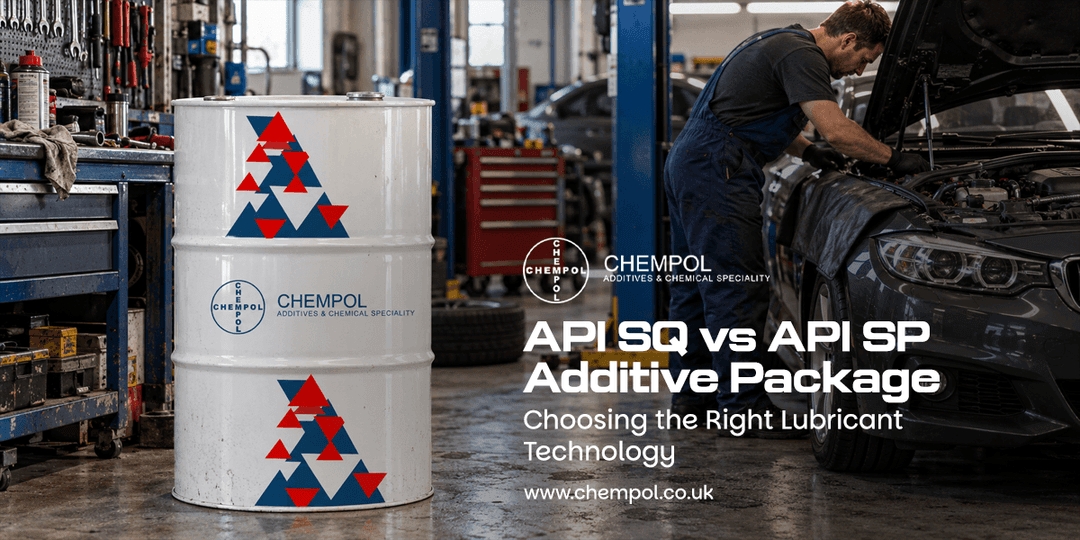
API SQ vs API SP Additive Package: Choosing the Right Lubricant Technology
The engine oil industry is entered a new frontier of performance demands driven by advanced engine designs, more stringent emission regulations, the growth of hybrid vehicles, and rising fuel-efficiency demands. For lubricant producers, appropriate additive technology is now a crucial concern in producing dependable engine oils that reach the market.
Knowledge of the differences between API SQ and API SP additive packages can assist formulators in making informed decisions about the production of passenger car engine oils for present and future vehicle platforms. Although API SP technology is still used to meet the needs of modern gasoline engines, API SQ and ILSAC GF-7 additive technology set new performance standards based on enhanced efficiency, durability, and suitability for changing engine systems.
Chempol collaborates with lubricant manufacturers, private-label brands, and oil-blending plants and technical departments to offer advanced additive solutions for evolving market needs. Two notable solutions in this field are CHEMPOL 61800 - API SP Mid-SAPS Additive Package and CHEMPOL 61557 - API SQ-ILSAC GF-7 Additive Package, which are designed to support various formulation strategies.
The choice between these technologies demands a keen understanding of specifications, engine requirements, and future market trends. This guide provides the technical distinction between API SP and API SQ additive packages and explains how lubricant manufacturers can select the appropriate solution to meet their product development objectives.
Get Technical Guidance Before Selecting Your Engine Oil Additive Package
The process of selecting the right additive package involves several factors, such as viscosity grade, OEM specifications, compatibility with the emission system, and the specifications of the target market. Chempol also offers technical consultation and formulation advice to lubricant companies to help them determine the best additive technology for their applications.
Contact Chempol to discuss your formulation requirements and receive expert guidance on selecting the right additive package for your engine oil products.
What is an API SP Additive Package?
One significant improvement in the performance of the gasoline engine oils is API SP additive technology. Formulated to meet the requirements of contemporary passenger cars, API SP formulations emphasize enhanced engine protection, fuel efficiency, oxidation resistance, and deposition containment in an ever more challenging operating environment.
A special additive for oil is an API SP lubricant additive, which is particularly important in turbocharged gasoline direct injection (TGDI) engines. TGDI engines are more powerful and efficient, but they operate at higher pressures and temperatures, which require more advanced additive chemistry.
The introduction of the API SP technology has brought one of the greatest enhancements to Low-Speed Pre-Ignition (LSPI) protection. LSPI can occur in turbocharged direct-injection engines and can cause severe engine damage unless it is properly managed. Current API SP engine oil formulations use optimized additive systems to help reduce this risk while keeping the engine clean and durable.
Other applications of API SP technology include enhanced oxidation stability, control of sludge and varnish, and protection against turbocharger deposits. These performance advantages position API SP for use in many existing passenger car engine applications.
CHEMPOL 61800 - API SP Mid-SAPS Additive Package is designed to meet the needs of lubricant manufacturers who require balanced performance, emissions system compatibility, and flexibility in the formulation of API SP engine oils. Its mid-SAPS approach facilitates applications where the protection of modern emission systems, such as catalytic converters and gasoline particulate filters, is significant.
What is an API SQ Additive Package?
API SQ is the next evolution of passenger car engine oil specifications, building on the development of API SP and ILSAC GF-6 technology. With the ongoing shift toward better fuel economy, hybrid engines, and lower-viscosity lubricants among vehicle manufacturers, additive technology must adapt to deliver greater protection in new operating environments.
To support ILSAC GF-7 engine oil formulations and those of future-generation vehicles, an API SQ engine oil additive package is created. The technology aims to enhance efficiency while preserving critical engine protection performance.
Modern API SQ lubricant formulations are likely to meet ultra-low viscosity engine oil requirements, high fuel economy demands, and hybrid cars. Such applications demand additive chemistry that can sustain wear protection, oxidation resistance, and deposit control despite reduced oil thickness and shifting engine operating modes.
CHEMPOL 61557 - API SQ-ILSAC GF-7 Additive Package assists lubricant manufacturers in formulating next-generation engine oils that meet new automotive demands. It assists formulators in developing advanced lubricants that are focused on fuel efficiency, engine durability, and compatibility with modern vehicle systems.
For manufacturers developing future-capable lubricant portfolios, API SQ technology offers a chance to match future market requirements with products without compromising engine performance.
API SQ vs API SP Additive Package: Understanding the Key Differences
Below are the key differences between the API SQ and API SP additive packages:
Industry Standards and Specifications: API SP, API SQ, ILSAC GF-6, and ILSAC GF-7
The main distinction between API SP and API SQ additive technologies lies in the evolving industry standards they help meet.
The API SP was introduced alongside the ILSAC GF-6 additive technology to address issues posed by new gasoline engines. These conditions were very keen on LSPI protection, enhanced fuel economy, timing chain wear protection, and enhanced oxidation performance.
Further development of engine design and environmental expectations shapes the API SQ to ILSAC GF-7 additive technology. The evolution from API SP to API SQ illustrates how lubricant standards are changing as automotive technology advances.
For lubricant manufacturers, it is important to understand these specification changes to determine how to approach product development strategies and the use of additive packages to remain competitive in the new, changing markets.
Fuel Economy Performance and Low-Viscosity Engine Oil Development
Efficiency in fuel consumption has emerged as one of the key considerations in the contemporary lubricant formulation. Automotive manufacturers are increasingly using low-viscosity engine oils to reduce friction and improve engine efficiency.
Both API SP and API SQ additive packages facilitate improved fuel economy additive package development. Nonetheless, API SQ is developed with future needs in mind, especially those of ultra-low-viscosity lubricants and hybrid cars.
The selection of additives in the development of low-viscosity engine oils is made with great care, since low viscosity should not compromise wear protection, thermal stability, or long-term engine life. Advanced additive technology helps sustain performance and enhance efficiency.
Engine Wear Protection and Long-Term Durability
Engine wear protection is also a basic need of any lubricant formulation. The engines of the modern day are more powerful, operate at higher temperatures, under heavy loads, and in demanding service conditions; therefore, additive performance is paramount.
API SP formulations provide strong wear protection due to optimized anti-wear chemistry and enhanced lubricant stability. The API SQ is based on this, with the addition that it can withstand the more rigorous requirements of future engine designs.
For lubricant manufacturers, it is important to note that choosing the right additive package should not sacrifice engine reliability for fuel economy improvements.
LSPI Protection and TGDI Engine Requirements
The use of turbocharged gasoline direct-injection engines has posed new challenges for lubricant developers. TGDI engines operate at higher pressures and temperatures, making advanced LSPI-protection additive systems more crucial.
Another significant specification for current turbocharged gasoline engines is the API SP, which introduces new demands for LSPI protection. The API SQ builds on this development to provide future engine technologies and more challenging operating conditions.
The presence of advanced TGDI engine additives assists manufacturers in creating lubricants that offer engine protection while meeting changing performance standards.
Oxidation Stability and Oil Life Performance
Oxidation resistance is a key factor in achieving a long lubricant life. High temperatures, higher engine efficiency requirements, and extended service intervals require high-oxidation-stability additive packages.
Good additive chemistry can reduce oil loss, maintain viscosity, and extend the life of a lubricant. Both API SP and API SQ technologies address oxidation issues, although the newer API SQ formulations are expected to be used in more challenging applications in the future.
Sludge, Varnish, and Deposit Control
The cleanliness of engines directly impacts performance, efficiency, and component life. The current additive packages consist of sophisticated detergent and dispersant systems that control the formation of sludge, varnish deposition, and contamination.
Strong deposit control will allow keeping engine parts clean and contribute to the stable performance of lubricants throughout the service life.
For lubricant manufacturers, selecting an additive package with an effective cleanliness technology is critical to meeting modern engine protection requirements.
Turbocharger and Emission System Protection
In the modern era, engines are highly dependent on turbochargers and advanced emission control systems. The lubricants should protect sensitive parts while remaining compatible with emission technologies.
The API SP and API SQ formulations can be used to meet the needs of turbocharger deposit protection, catalytic converter-compatible engine oil additives, and GPF-compatible engine oil additives.
Mid-SAPS formulations, such as those formulated with CHEMPOL 61800, are especially suitable for applications where protecting the emission system is a priority.

Hybrid Vehicles and Future Lubricant Requirements
Hybrid cars create novel operating conditions, such as frequent engine starts, varying temperature cycles, and greater emphasis on efficiency.
The API SQ technology facilitates such applications in the future by enabling lubricant producers to develop formulations for hybrid engines and ultra-low-viscosity oils.
With the ongoing development of automotive technology, the choice of advanced additive chemistry has become increasingly significant for manufacturers interested in long-term product competitiveness.
Which Additive Package Should You Choose?
The right additive package is based on your formulation objectives, target specifications, and customer requirements.
CHEMPOL 61800 API SP Mid-SAPS Additive Package is indicated for use by manufacturers who produce API SP passenger car engine oils and mid-SAPS formulations, and in current production programs where performance and compatibility with the emission system have been proven.
CHEMPOL 61557- API SQ-ILSAC GF-7 Additive Package is designed for manufacturers creating future-oriented lubricant formulations, such as API SQ formulations, hybrid car oils, and ultra-low-viscosity engine oils.
Technical requirements must be used in the selection process and not specification trends. Chempol can help manufacturers to assess the formulation targets and identify the most suitable additive technology in line with their business requirements.
Discuss Your Engine Oil Formulation Requirements with Chempol
The choice between API SQ and API SP additive packages involves a technical evaluation of your product goals, base oil system, viscosity criteria, and performance needs.
Chempol offers technical services to assist lubricant manufacturers in finding the right additive solutions, optimizing formulations, and developing competitive engine oils.
Speak with Chempol’s technical team today to discuss your requirements and receive guidance on selecting the appropriate additive package for your application.
Why Lubricant Manufacturers Choose Chempol
The creation of high-performance lubricants cannot be done by simply choosing an additive package. Manufacturers require technical know-how, consistent quality, and a partner capable of responding to evolving industry needs.
Chempol assists lubricant companies with sophisticated additive technology, product quality assurance, formulation expertise, and dedicated technical services.
In collaboration with lubricant manufacturers and technical teams, Chempol assists customers in overcoming specification changes, improving formulation efficiency, and creating products that meet the latest engine technologies.
Its strategy is based on long-term relationships with its partners, achieved through technical expertise, responsive services, and customer-oriented solutions.
Ready to Order API SQ or API SP Additive Package in Bulk?
The distinction between API SQ vs API SP additive package is the shifting needs of modern and future engine technologies. The API SP continues to be a key solution to existing passenger car engine oils, offering LSPI protection, TGDI compatibility, oxidation stability, and robust engine protection.
The next generation of lubricant performance is presented in API SQ, which promotes ILSAC GF-7 technology, hybrid cars, ultra-low-viscosity oils, and future fuel economy.
For lubricant manufacturers, the choice of additive package is critical to meeting performance objectives, regulatory requirements, and long-term market success. CHEMPOL 61800 offers consistent API SP Mid-SAPS formulations, and CHEMPOL 61557 assists the manufacturer in formulating advanced API SQ lubricants.
Chempol is a company that combines additive technology expertise with technical support to enable lubricant companies to develop reliable, high-performance engine oils.
Contact Chempol today to connect with our technical team, request product information, and discuss your engine oil formulation requirements. Our specialists are ready to support your next lubricant development project with the right additive technology solution.