[email protected]
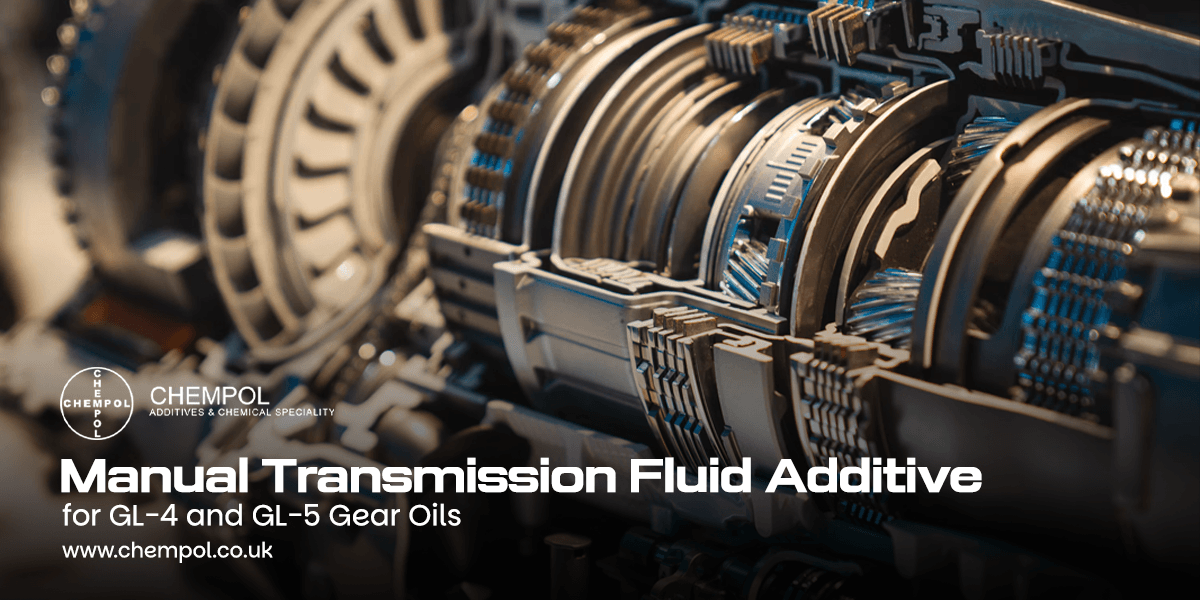
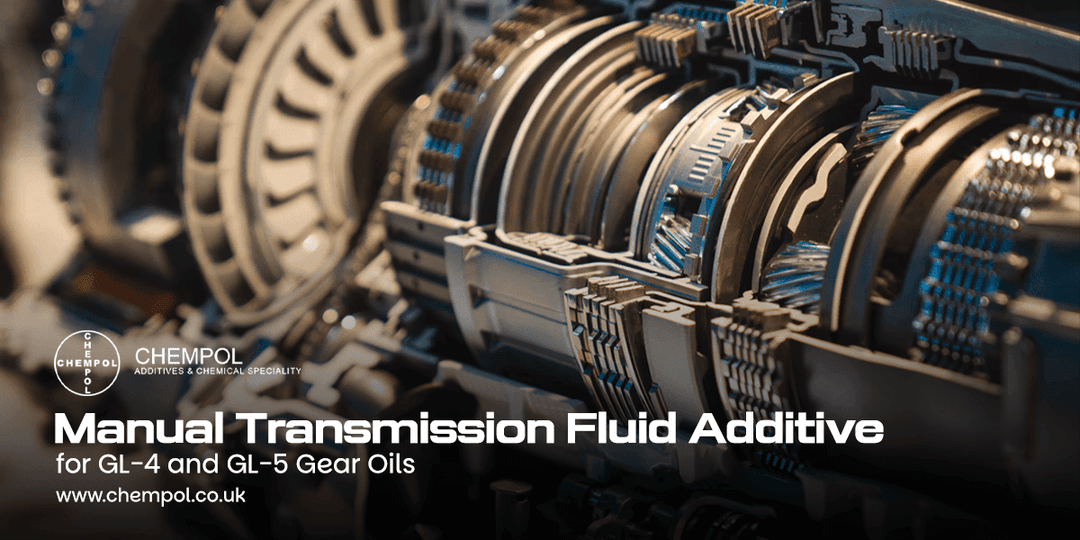
Manual Transmission Fluid Additive for GL-4 and GL-5 Gear Oils
Manual transmissions and loaded gear systems are a challenging balancing act for lubricant manufacturers. High loads are transferred across small contact surfaces between meshing gear teeth, and the oil film may be exposed to friction, pressure, and heat. Repeated contact may cause wear, surface damage, and decreased component reliability without the proper protection. Meanwhile, a finished lubricant should prevent corrosion and be compatible with the materials and operating conditions under which the material is intended to operate.
Selecting a manual transmission fluid additive, then, goes beyond picking an ingredient that enhances load-carrying capacity. Formulators need to put into consideration the service classification, base stock, extreme-pressure (EP) chemistry, treat rate, and the overall additive balance.
These are critical decisions to make when developing products for API GL-4 and GL-5 applications. The first step in selecting a commercially viable, technically suitable additive system is understanding what each level of performance requires.
What Does a Manual Transmission Fluid Additive Do?
Base oils provide the lubricant with a fluid base and determine its viscosity. Additives are used to meet performance requirements that the base oil may not meet. A manual gear oil additive can provide extreme-pressure and anti-wear functionality, helping protect contacting gear surfaces when operating loads become severe.
As a formulator, it is important to remember that a gear lubricant additive should not operate independently but be part of the completed lubricant.
The load-carrying capacity, wear control, and EP protection must be considered alongside corrosion management, viscosity, oxidation resistance, and friction behavior, depending on the application. The functions of some of them might involve others in the formulation; they cannot be ascribed to a single additive.
Whether it is a transmission lubricant additive or a more general gear oil performance additive, the goal is to achieve a balanced mixture with the performance profile required for the final use.
An effective selection process begins with the target specification and flows backward to chemistry, treat rate, and base oil selection.
Why Extreme Pressure Protection Matters in Gear Oil Formulations
The pressure on gear contacts is not evenly distributed. Localized stresses are greater under heavy loads, and sliding between surfaces may make it more difficult for a lubricating film to maintain separation.
In areas where the film is inadequate, there is an increased likelihood of scuffing, adhesive wear, and gear-tooth damage.
The aim of using a gear oil extreme-pressure additive is to help maintain protection within the limits of boundary lubrication. Protective reaction layers on stressed metal contacts can be formed via EP chemistry to minimize the risk of direct-contact damage.
In the case of a heavy-duty gear lubricant, such functionality is central to the desired load-carrying performance. However, the finished lubricant still needs to be evaluated as a complete system.
An EP non-chlorine additive provides the formulators with an option to chlorine EP chemistry.
The difference relates to chemical composition; it does not, in itself, determine environmental superiority, material compatibility, or a specific performance outcome. The buyers are expected to compare the EP system with the operating needs, corrosion needs, and performance goals of the finished lubricant.
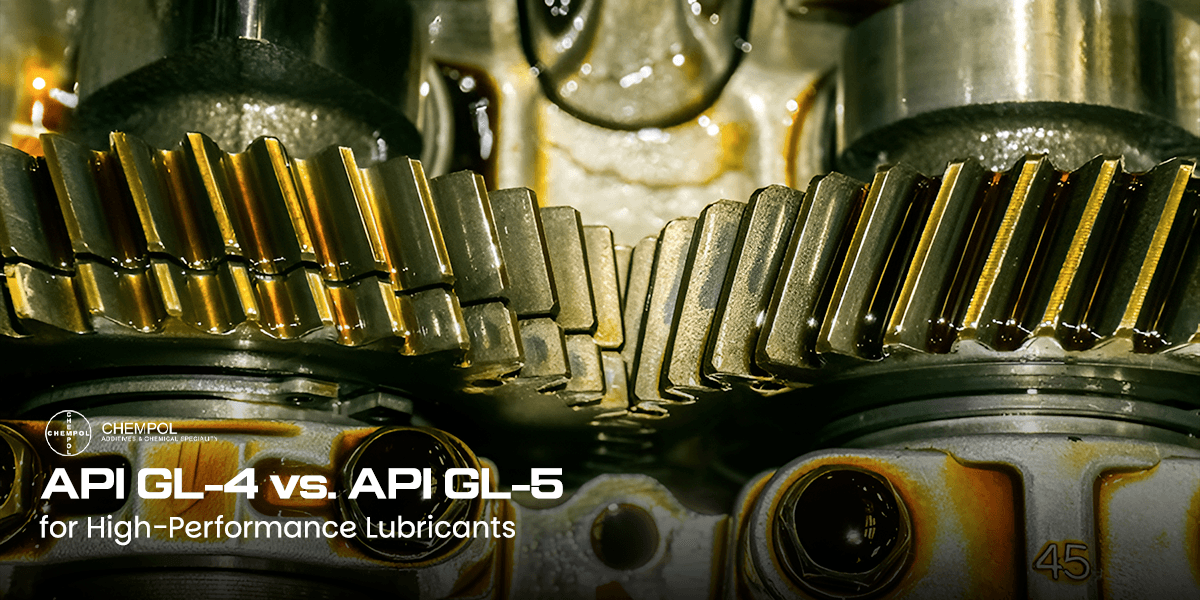
API GL-4 vs. API GL-5 Gear Oil Formulations
API GL-4 and GL-5 distinguish between oil service types of gears. They are not to be used as fungible terms, but rather steer the selection of additives. The target is dependent on the specific application.
API GL-4 Gear Oil Formulation
GL-4 is linked to gear applications where an average level of EP performance is necessary, compared to GL-5.
When formulating a GL-4 gear lubricant, the formulator needs to strike a balance between the load-carrying and wear-protection needs and the frictional and material demands of the target transmission or gearing.
Copper-containing components and synchronizers might require special attention. GL-4 does not determine synchronizer or material compatibility.
An API GL-4 Gear Oil Additive should be chosen with the entire application in mind.
Based on the product information provided by Chempol, CHEMPOL 4343 at 2.1 wt% is a lubricant suitable for API GL-4 applications. The completed formulation and base stock are still significant to performance.
API GL-5 Gear Oil Formulation
GL-5 is designed for more challenging EP service, such as heavily loaded gear contacts.
GL-5 gear lubricant formulations tend to place greater emphasis on severe-load and scuffing protection. It does not imply that all GL-5 oil can replace GL-4; transmission friction needs and component compatibility may vary.
An API GL-5 Gear Oil Additive should be compatible with the chosen base stock to ensure the finished lubricant meets the required performance.
According to information provided by Chempol, CHEMPOL 4343 at 4.2 wt% in appropriate base stocks results in finished gear lubricants with API GL-5 service classifications.
This is not an API treatment or license of the additive itself, but a finished-lubricant formulation statement.
CHEMPOL 4343: Non-Chlorine EP Additive for Gear Lubricants
For manufacturers interested in formulating a blend of these two service types, CHEMPOL 4343 manual transmission fluid additive is a reasonable starting point.
It is a high-quality, non-chlorine, extreme-pressure additive system for manual gear oils, suited to EP and heavy-load applications.
Its defined levels of use provide formulators with two possible development paths:
- 2.1 wt% for lubricants suitable for API GL-4.
- 4.2 wt% in suitable base stocks for finished gear lubricants meeting API GL-5 service classifications.
These numbers provide manufacturers with a reference point for developing unique formulations, not a universal, interchangeable oil.
For manufacturers, these numbers guide additive screening and blend planning. It remains to be determined through final suitability assessment, based on the choice of base stock, the entire formulation, and validation with reference to the intended application.
Looking for a Manual Transmission Fluid Additive?
Developing GL-4 or GL-5 gear oil? Send your target classification, base oil strategy, and formulation goals to CHEMPOL for discussion to determine whether CHEMPOL 4343 fits your program.
Where Can CHEMPOL 4343 Be Used?
Here is where you can use Chempol 4343:
Manual Gear Oils
Manual gear oils require a suitable compromise between EP performance and application specificity.
CHEMPOL 4343 can be used in manual gear oil formulations, and the mentioned GL-4 and GL-5 treat-rate paths can serve as a foundation for its development. Specific compatibility and friction requirements of gearboxes should still be verified.
Heavy-Duty Gear Lubricants
High tooth loads raise the importance of boundary protection.
CHEMPOL 4343 is a heavy-load lubricant additive system, so it is applicable in formulations where the formulation brief focuses on extreme-pressure performance. Determine protection requirements before establishing concentration.
Industrial Lubricants
Contacting surfaces may also be subjected to heavy loads in industrial gear and lubricant applications.
Chempol refers to CHEMPOL 4343 for use in industrial lubricant programs that require EP performance.
Manufacturers exploring related products can also review Chempol’s range of industrial lubricant additives.
Grease Formulations
Grease might be required to maintain protection at loaded contact points under boundary conditions.
The information provided by Chempol indicates that CHEMPOL 4343 is the right choice for grease formulations that demand extreme-pressure and heavy-load performance.
The finished grease’s thickener system, consistency, and compatibility still require separate assessment.
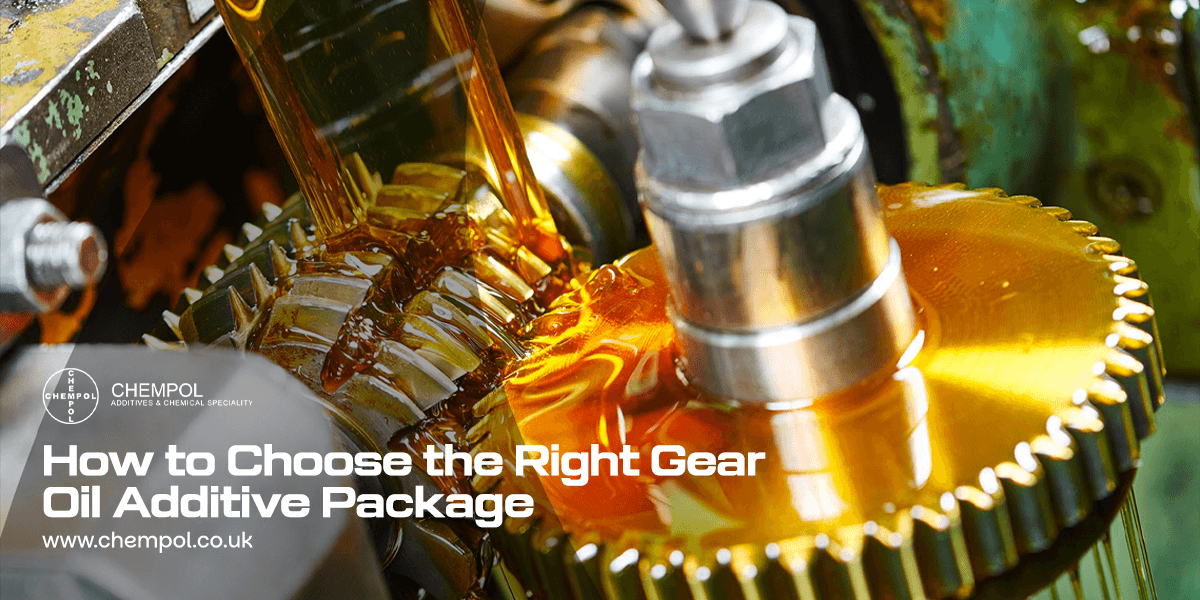
How to Choose the Right Gear Oil Additive Package
The advantage of evaluating an additive package against a clear technical brief is enjoyed by procurement teams and formulation specialists, who do not have to make price-per-kilogram selections.
Supplier discussions can be more productive using the following questions:
- What is the required performance level? Establish whether the development target is GL-4, GL-5, or another application-specific requirement. Record any additional friction, wear, or corrosion objectives.
- What EP performance is needed? Define the intended load severity and protective function before comparing a Gear Oil Extreme Pressure Additive with other candidate chemistries.
- What treat rate is appropriate? Evaluate recommended concentrations against the proposed formulation and finished-oil cost. Unit price alone can be misleading.
- Which base oils and components will be used? Assess solubility, compatibility, viscosity contribution, and interaction with the rest of the additive system. Different non-chlorinated extreme pressure additives may behave differently across base stocks.
- What must the finished lubricant demonstrate? Plan appropriate evaluation of EP, wear behavior, corrosion response, material compatibility, and other properties relevant to the application.
- What technical information can the supplier provide? Ask for product literature, recommended use guidance, and a discussion of formulation constraints before committing to a purchasing specification.
For buyers who have to compare gear oil additive solutions, the most appropriate is the one that supports the complete lubricant design and its target market.
Treat rate, performance needs, technical support issue and price of raw materials are important.
Need the Right Gear Oil Additive for Your Formulation?
Before finalizing an additive selection, discuss your application, GL-4 or GL-5 target, expected treat rate, base stock and finished-lubricant requirements with Chempol.
Why Choose Chempol for Lubricant Additives?
Chempol is the manufacturer and distributor of lubricant additive solutions such as the driving lubricant additives and industrial lubricant additives.
Buyers have the opportunity to compare a manual gearbox oil additive with alternatives of other product lines.
The supplier consultation must be based on particular formulation issues.
Technical teams can compare GL targets and buyers evaluate treat rates and economics.
Chempol provides an outlet to those discussions with its portfolio of lubricant additives and the CHEMPOL 4343 product information.
Ready to Order Chempol 4343 in Bulk?
The choice of a manual transmission fluid additive implies suitability of EP chemistry to loads, materials and service demand of the finished gear lubricant.
GL-4 and GL-5 applications have different priorities in formulation and a non-chlorine EP system must be evaluated in the whole oil and not by chemistry alone.
CHEMPOL 4343 provides a specific starting point 2.1 wt% in API GL-4-suitable lubricants and 4.2 wt% in API GL-5 service classifications in suitable base stocks with further possibilities in industrial lubricants and greases.
If you are planning a new blend or even revising your current gear oil additive package, contact Chempol to discuss your specifications and request information that will enable you to make a sound formulation decision.
Talk to Chempol About CHEMPOL 4343
Request product information and share your target application, performance classification, base oil selection, and formulation questions. A focused discussion can help determine whether CHEMPOL 4343 belongs on your additive shortlist.