[email protected]

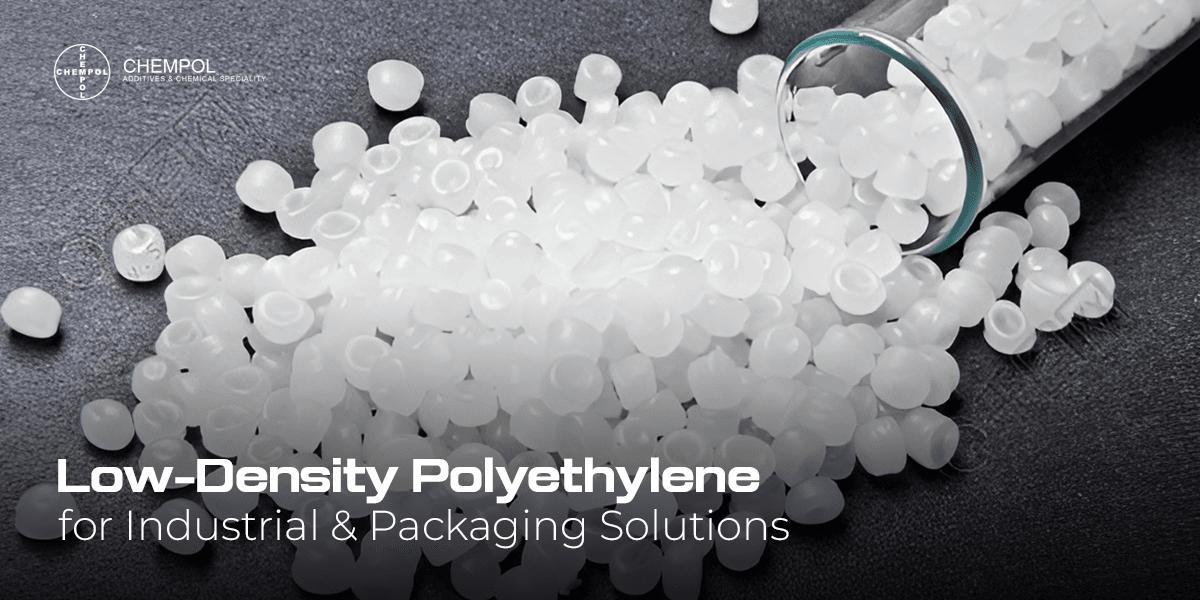
Low-Density Polyethylene for Industrial & Packaging Solutions
Plastic materials used by modern manufacturers must be lightweight, durable, flexible, and easy to process. Low-Density Polyethylene, commonly referred to as LDPE, fits these specifications in a wide variety of packaging and industrial applications.
LDPE is used in packaging films, protective sheets, liners, molded parts, containers, coatings, and extrusion products. Its flexible structure provides good environmental stress crack resistance (ESCR), moisture resistance, chemical resistance, and impact resistance. These attributes make LDPE an ideal choice for manufacturers that require reliable performance without unnecessary weight or expenses.
Chempol supplies plastic packaging companies, industrial clients, manufacturers, converters, and product engineers with high-quality LDPE materials. Chempol’s material solutions can support different production methods, performance targets, and end-use requirements.
Chempol can assist you in choosing the right solution, whether you require film-grade resin, extrusion resin, flexible sheet materials, or resins for molded products. Chempol combines material expertise, dependable sourcing, and customer-focused service to support efficient production.
What is Low-Density Polyethylene (LDPE)?
Low-Density Polyethylene (LDPE) is a flexible thermoplastic polymer produced from the polymerization of ethylene. A thermoplastic is a substance that becomes soft when heated and hard when cooled. This behavior enables LDPE to be processed through extrusion, molding, coating, and film production applications.
LDPE has a branched molecular structure. These branches do not allow close packing of polymer chains. As a result, LDPE is less dense and more flexible than most rigid polyethylene materials.
Other important polyethylene polymer properties are toughness, lightweight construction, resistance to moisture, chemical stability, and versatility in processing. LDPE also offers a smooth surface and good transparency as it is made in the form of a thin film.
In contrast to brittle materials, LDPE can bend, stretch, and absorb moderate impact without breaking. This qualifies it as a good impact-resistant polymer for packaging, protective coverings, containers, and flexible parts in industry.
LDPE is capable of being processed at relatively manageable temperatures using standard thermoplastic processing equipment. It is usually manufactured by companies that produce blown films, cast films, sheets, tubes, coatings, and molded products.
Chempol delivers industrial-grade LDPE to companies that want to ensure consistent processing and reliable product performance. Chempol can assist customers in comparing grades in terms of flexibility, strength, flow behavior, clarity, and manufacturing methods.
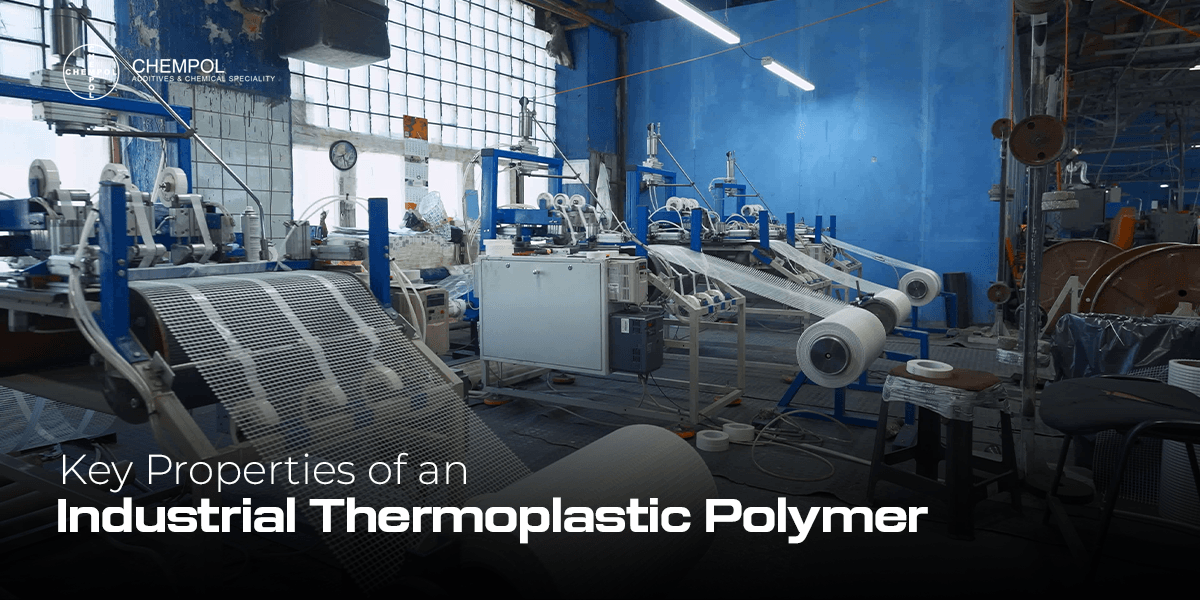
Key Properties of an Industrial Thermoplastic Polymer
The value of LDPE is that it integrates multiple performance advantages in a single material. It protects products, eases processing, reduces packaging weight, and facilitates high-volume production.
LDPE, being an industrial thermoplastic polymer, is suitable for both non-technological and technologically challenging applications. Its key properties are the following.
Exceptional Flexibility and Impact Resistance
LDPE can be manipulated within normal operating conditions. It can easily be folded, compressed, stretched, or bent.
This highly flexible plastic is particularly effective when packaging or components must withstand movement during handling, storage, or transportation. It is also flexible, making it easy to handle and wrap products.
Compared to other rigid plastics, LDPE can withstand minor shocks and impacts. This property can be used in protecting films, caps, flexible lids, squeeze containers, and cushioning applications.
Effective Moisture Barrier Performance
LDPE is resistant to water and moisture vapor. It is commonly used as a moisture-barrier plastic for products that need protection against dampness, spills, or environmental exposure.
Moisture resistance is important in food packaging, agricultural films, industrial liners, shipping covers, and construction membranes. It helps preserve product condition during storage and distribution.
LDPE may additionally be used as a coating on paper, board, foil, or other substrates. This produces better sealing and moisture protection.
Chemical Resistance for Industrial Applications
LDPE offers resistance against most of the diluted acids, alkalis, alcohols, and common chemical substances. This makes it a handy chemical-resistant plastic for selected industrial applications.
Its resistance helps minimize surface damage, swelling, or degradation when exposed to compatible chemicals. Nonetheless, performance is influenced by chemical concentration, temperature, pressure, and exposure time.
The compatibility of a material with chemical contact should always be evaluated before manufacturers choose a material. Chempol can assist in choosing the material based on the target operating environment.
Lightweight and Efficient Design
LDPE has a low density, helping manufacturers reduce the total weight of packaging and components. Reduced weight may facilitate handling and more convenient transportation.
Lightweight plastic sheets can be used to produce products that consume less material than heavier ones. This can minimize shipping loads while offering reasonable protection and flexibility.
Lightweight design is particularly beneficial in a high-volume packaging operation. Even small weight savings can add up to significant savings across thousands of units.
Reliable Heat-Sealing Performance
LDPE can be heat sealed to form safe packaging seals. This aspect matters for bags, pouches, liners, and film-based packaging.
Controlled sealing provides reliable edges that sustain high production rates. LDPE's sealing capability is also applicable as an inner layer in multi-layered packaging structures.
Discover Chempol’s LDPE solutions for your industrial and packaging requirements. Contact Chempol to discuss the right grade for your production process.
Flexible Packaging Material for Modern Industries
Packaging should secure products while being cost-effective, lightweight, and simple to produce. Many flexible packaging systems have this balance with LDPE.
LDPE, being a flexible packaging material, can be made into films, bags, pouches, wraps, liners, sleeves, and protective covers. The packaging can take the shape of the product without breaking, due to its softness.
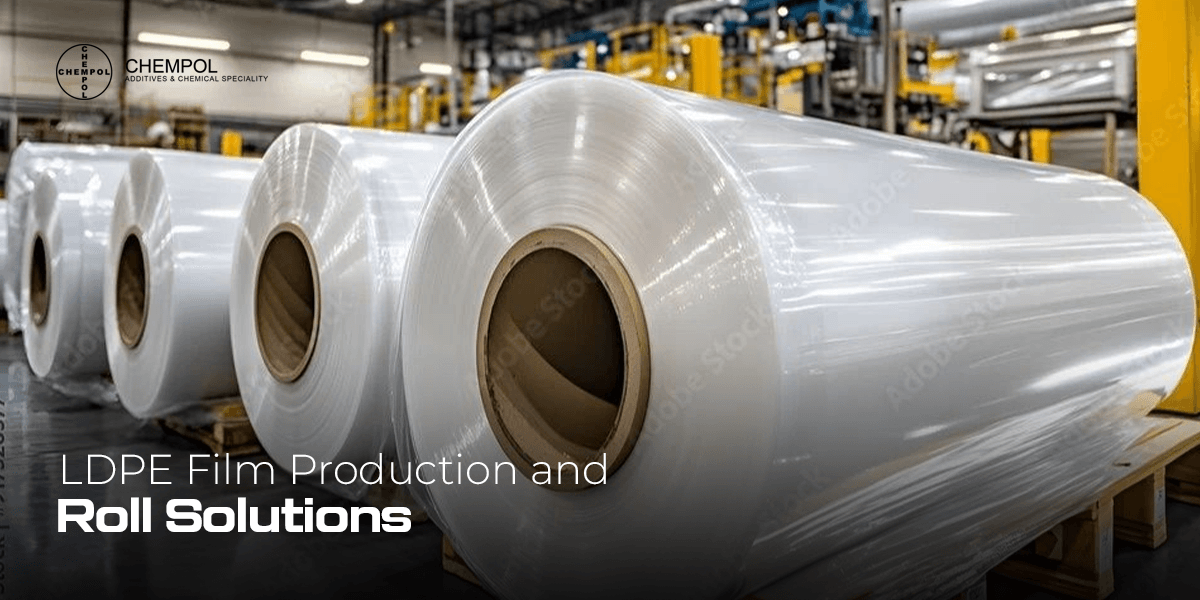
LDPE Film Production and Roll Solutions
LDPE film production commonly involves blown-film or cast-film extrusion. In the process, LDPE resin is melted and pressed to a thin continuous film.
Blown-film extrusion produces tubular films that can be used to make bags, liners, or rolls. Cast-film extrusion manufactures planar film that has a defined thickness and surface properties.
LDPE roll films are widely used to wrap items by hand, safeguard goods, and wrap surfaces, as well as to package products in the industry. They are available in various widths, thicknesses, colors, and finishes.
One can also customize the film properties to the needs of the application. Manufacturers might need better clarity, puncture resistance, sealing properties, slip resistance, strength, or printability.
Chempol can assist customers in finding LDPE materials that meet their extrusion line and finished-film requirements.
Lightweight Plastic Sheets for Efficient Packaging
Lightweight plastic sheets provide protection without adding unnecessary weight to a package. LDPE sheets may be used as protective layers, pallet covers, interleaving materials, construction barriers, and industrial liners.
LDPE sheets are easy to cut, fold, seal, or fabricate. They are flexible and can accommodate irregular surfaces and large industrial products.
Thermoplastic sheets can also be flexible and can be used on the inside of drums, boxes, crates, and containers. These sheets can shield items against dust, moisture, and contamination during handling.
Food and Consumer Packaging
LDPE is widely used for food packaging, subject to applicable food-contact requirements and material certification. Typical ones are bread bags, frozen-food wrappings, produce bags, and inner liners.
It is moisture-resistant, which helps maintain product quality. Its transparency also enables customers to check the item that is packaged.
Consumer-product wrapping, household bags, tissue wrapping, garment wrapping, and personal-care product wrapping are also made with LDPE.
Industrial and E-Commerce Packaging
In the industrial market, LDPE is used by suppliers to bag their parts, cover their components, wrap their pallets, protect equipment, and line their warehouses. Flexible mailers and protective wrapping can be utilized in e-commerce operations with lightweight products.
These light packaging solutions can reduce material consumption and shipping weight while protecting products during distribution.
Chempol's LDPE packaging solutions are ideal for converters and packaging manufacturers seeking processing, sealing, and flexibility.
Molded LDPE Components and Sheet Applications
Films and bags are not the only uses of LDPE. It may also be molded into components, profiles, tubes, and protective industrial products.
LDPE Extrusion and Molding
LDPE extrusion and molding enable manufacturers to make products of various shapes, thicknesses, and performance attributes. Films, sheets, profiles, wire coatings, and tubing are typical products of extrusion.
Closures, flexible caps, container parts and some household or industrial parts can also be injection molded. Squeezy bottles and hollow items can also be made by using blow molding.
The flexibility of processing LDPE allows simple products and customization. The proper grade of material is based on the flow rate, equipment, mold design, wall thickness, and performance.
Chempol could help manufacturers to choose the material to use in various thermoplastic processing methods.
Molded LDPE Components
Molded LDPE components are used when parts need to be soft, flexible, impact-resistant, or chemically stable. Common examples include:
- Flexible caps and closures
- Squeezable containers
- Protective plugs
- Packaging inserts
- Tubes and dispensing parts
- Industrial covers
- Flexible housings
- Laboratory and storage items
These components can be produced in different shapes and colors. They can also be tailored to suit the purpose of the product.
Chemical-Resistant Polymer Sheets
Chemical-resistant polymer sheets can be used to offer protective surfaces in industrial, agricultural, building and storage settings. Where moisture resistance and compatibility with other chemicals are needed, LDPE sheets could be used.
Common uses are equipment covers, storage liners, protective barriers, flooring layers and temporary containment systems.
Even though LDPE is resistant to most of the chemicals, it is still important to test it. Performance could be affected by temperature, chemical concentration, stress, and the duration of exposure.
Before suggesting a chemical-resistant plastic solution, Chempol consults with its customers to understand these conditions.
Coatings and Insulation Applications
LDPE is used as a coating on paper, cloth, foil, wire and cable products. The coating can enhance moisture protection, electrical insulation, sealing or surface durability.
Its electrical characteristics also facilitate selected cable and wire applications. The required formulation must be determined based on voltage, temperature, flexibility, and environmental exposure.
- Shopping and merchandise bags
- Food and frozen-product films
- Shrink and protective wrapping
- Agricultural and greenhouse films
- Construction membranes
- Industrial drum and container liners
- Pallet covers
- Flexible tubing
- Cable coatings
- Squeezable bottles
- Caps and closures
- Protective sheets
- Courier and mailing bags
- Packaging for textiles and consumer goods
The advantages of LDPE in these applications include its flexibility, low weight, sealing properties, moisture resistance, and easy processing.
The high-performance polyethylene produced by Chempol can be used in various product designs and manufacturing conditions. Chempol also assists buyers in comparing grades used in film extrusion, molding, sheeting, and coating, among others.
Why Choose Chempol’s High-Performance Polyethylene?
The quality of materials has a direct influence on processing stability, waste in production, product appearance, and the performance of the finished product. The selection of a supplier is thus as significant as the polymer itself.
Chempol helps manufacturers and industrial purchasers with reliable high-performance polyethylene. Chempol pays attention to the equipment, application, product design, and performance expectations of the customer. Key reasons to work with Chempol include:
- Reliable material sourcing
- Consistent product quality
- Application-focused material selection
- Support for packaging and industrial uses
- Solutions for extrusion, molding, films, and sheets
- Responsive customer service
- Customized supply support
- Competitive solutions for different production volumes
Chempol can assist customers who need durable thermoplastic materials for regular production or the development of new products. Chempol aims to help achieve processing efficiency and reliable products.
Manufacturers should consider overall production performance rather than choosing material solely on price. Stable material can minimize stoppages, rejected products, thickness variation, sealing issues, and unnecessary waste.
Contact Chempol today to get high-performance polyethylene tailored to your production, packaging, and industrial requirements. Request a quote from Chempol for industrial-grade LDPE products.
Choose Chempol for Premium LDPE Solutions
Low-Density Polyethylene offers a good balance of flexibility, moisture protection, impact resistance, chemical stability, and lightweight. These properties make it useful for packaging films, sheets, liners, molded products, coatings, and industrial components.
The right LDPE grade can enhance production, protect the product, and improve the quality of the finished product. Chempol helps manufacturers in choosing materials based on processing, technical requirements, and commercial goals.
Chempol can offer you quality support whether you require a flexible packaging material, molded resin, film-grade polymer, or industrial sheets.
Request a quote now and experience Chempol’s premium LDPE solutions. Contact Chempol to discuss your application and get industrial-grade LDPE for your next production requirement.