[email protected]
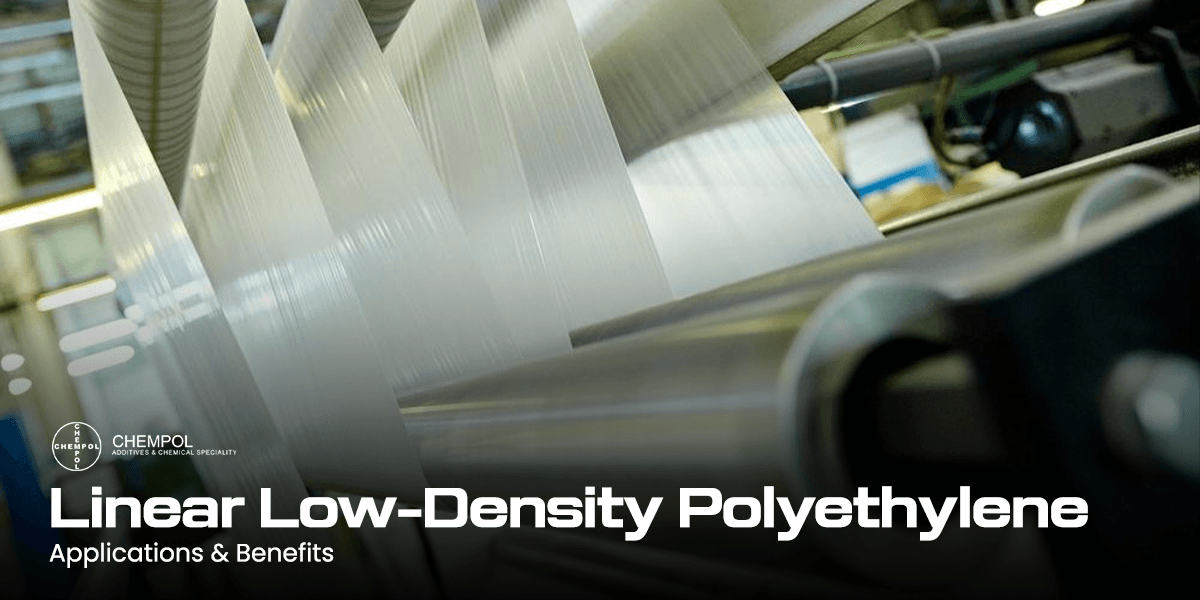
Linear Low-Density Polyethylene: Applications & Benefits
For packaging converters, film manufacturers, agricultural plastic manufacturers, and industrial processors, resin consistency directly influences production and final product performance. Linear Low-Density Polyethylene is a material with great popularity in applications where bendability, tensile strength, puncture resistance, and consistent processing are critical.
Nevertheless, selecting an inappropriate resin grade or working with non-uniform material may prove costly. Film breakage, non-uniform thickness, inadequate puncture resistance, excessive material usage, production downtime, and delays in resin supply can easily affect output and margins.
Chempol provides Linear Low-Density Polyethylene solutions for industrial processing needs, including film, molding, packaging, agricultural, and other polyethylene applications. With industrial packaging options, technical assistance, and the ability to bulk-purchase, Chempol assists manufacturers in choosing an LLDPE Polymer that meets their processing specifications and end-product needs.
Looking for a reliable LLDPE supplier for your manufacturing needs? Contact Chempol to discuss your application requirements and receive expert product recommendations.
What is Linear Low-Density Polyethylene (LLDPE)?
Linear Low-Density Polyethylene, also referred to as LLDPE, is a flexible thermoplastic predominantly composed of ethylene with some alpha-olefin comonomers.
Its molecular structure provides an appropriate combination of flexibility, tensile behavior, impact resistance, and durability compared with conventional low-density polyethylene.
Linear Low Density Polyethylene Resin is especially useful for industrial consumers, as it can be used to create thin yet strong products without adding excessive weight. This makes it appropriate for packaging films, stretch films, agricultural films, heavy-duty liners, and molded products, as well as for many industrial applications.
Chempol LLDPE comes in grades suited to various manufacturing processes, such as blown film, cast film, injection molding, roto-molding, and stretch-film production.
How LLDPE is Manufactured
LLDPE is produced through the copolymerization of alpha-olefins and ethylene. Controlled short-chain branching of the polymer backbone can be achieved with comonomers, depending on the desired resin properties.
This Ethylene Copolymer structure produces the properties that make LLDPE superior over most traditional polyethylene grades.
The Alpha Olefin Polymer system is used to enhance flexibility, strength, impact resistance, and resistance to tearing and punctures. Manufacturers are thus able to choose grades based on density, melt-flow properties, processing equipment, and the properties of the required final products.
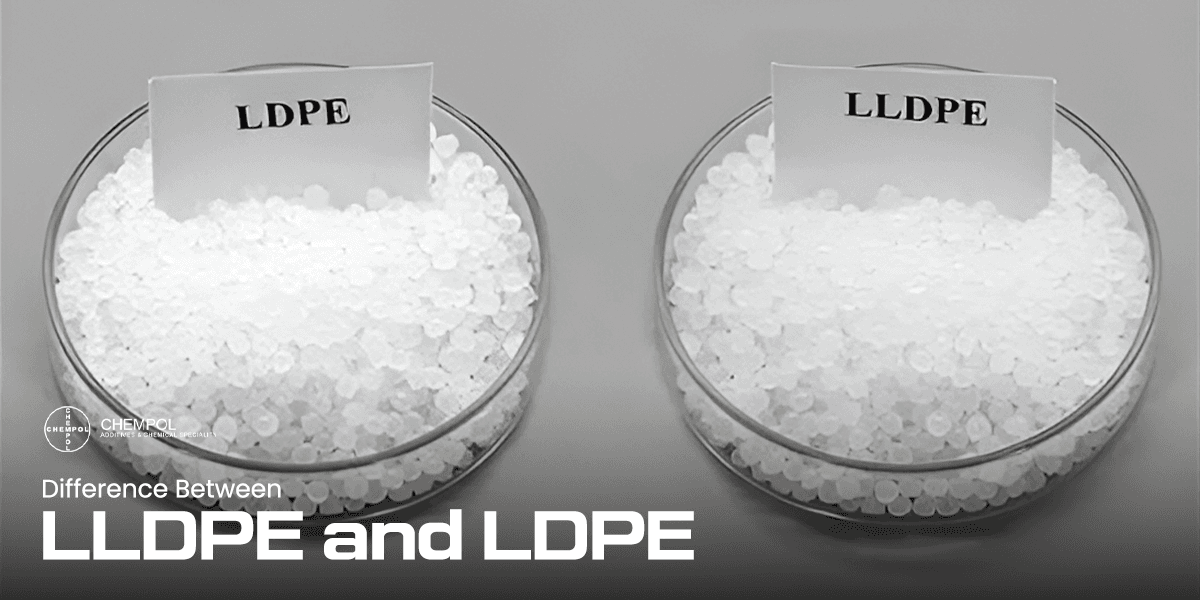
Difference Between LLDPE and LDPE
Both LLDPE and LDPE are of the polyethylene family, but they differ in their molecular structures.
The structure of LDPE is more highly branched, and LLDPE is more linear with short-chain controlled branching. This structural variation provides LLDPE with increased tensile strength, tear strength, and puncture performance in most applications.
LDPE could still be used when certain optical or processing properties are required. But for manufacturers of durable thin films, stretch films, liners, sacks, or agricultural products, LLDPE is the material of choice when higher mechanical performance is required.
The right decision must always be based on the equipment design, the film formulation, the desired thickness, the process temperature, and the needs of the finished product, not on the resin name.
Key Properties of Linear Low-Density Polyethylene
A useful combination of mechanical performance, processing versatility, and economic efficiency drives the demand for Industrial Grade LLDPE.
Superior Tensile Strength
One of the major advantages of LLDPE is its tensile strength.
A high-tensile-strength plastic can better withstand pulling, stretching, and other mechanical stresses during manufacturing, packaging, transportation, and final use.
This is especially important in stretch film, industrial packaging, sacks, agricultural film, and heavy-duty use, where ineffective film may lead to tearing, spoiled product, and increased material consumption.
Excellent Tear Resistance
Tearing in the films during conversion or packing may slow production and increase scrap.
The tear propagation strength of LLDPE is very high due to its molecular structure; hence, it is a valuable tear-resistant polyethylene for flexible packaging as well as challenging industrial applications.
For manufacturers, improved tear resistance may enable thinner-film designs without compromising performance, subject to formulation and processing conditions.
High Puncture Resistance
Sharp edges, irregular surfaces, pallet corners, agricultural surfaces, and industrial parts can perforate weak polyethylene films.
LLDPE has a high puncture resistance and is often chosen as a puncture-resistant film material for stretch wrapping, heavy-duty liners, industrial bags, and agricultural uses.
Improved puncture resistance will help minimize product failures, packaging rejections, and material waste.
Chemical Resistance
LLDPE has good resistance to many chemicals commonly found in industry; hence, it can be used in packaging, liners, containers, and protective applications.
As a Chemical-Resistant Thermoplastic, it can be considered for applications involving moisture, dilute chemicals, detergents, and other industrial substances, though compatibility testing for the specific chemical and operating conditions must be performed.
Environmental Stress Crack Resistance
Plastic parts can be exposed to mechanical stress and, at the same time, to chemicals, temperature changes, moisture, or long-term loading.
Good Environmental Stress Crack Resistance helps LLDPE products maintain integrity under demanding service conditions.
This property is especially applicable to containers, molded items, liners, and industrial packaging, where premature cracking may cause product failure.
Low Temperature Impact Performance
Some plastics become brittle as temperature decreases. LLDPE is also useful for flexibility and toughness at relatively low temperatures.
The product's low-temperature impact resistance is also useful for packaging, storage, outdoor use, agricultural applications, and products that undergo temperature changes in transit.
Major Industrial Applications of LLDPE
The LLDPE Plastic Granules leverage the polymer's versatility, enabling processors to use it across a broad spectrum of conversion technologies and end markets.
Flexible Packaging Films
They are mainly made of LLDPE due to its ability to combine sealability, flexibility, toughness, and mechanical strength.
It is used in industrial wrapping films, food and non-food packaging structures, protective films, pouches, and other laminated or multilayer packaging structures.
Chempol provides LLDPE grades for film processing, where manufacturers need reliable resin performance and mechanical properties.
Stretch Films
The manufacturers of stretch film use resins that can be stretched a long way while still retaining the load and avoiding punctures.
LLDPE is popular for cast and blown stretch films used in pallet wrapping, logistics, warehousing, and industrial transportation.
The quality of the resin used in a consistent supply is especially vital, as melt behavior and mechanical properties can influence film thickness, stretch performance, winding, and production speed.
Heavy-Duty Bags and Liners
They require strength, flexibility, and resistance to tearing.
LLDPE is commonly used in industrial bags, bin liners, shipping bags, drum liners, construction, and waste management.
For converters, an appropriate LLDPE formulation can minimize bag failures and help regulate polymer use.
Agricultural Plastic Films
The agricultural industry uses large amounts of polyethylene film for crop protection, greenhouses, silage, mulching, irrigation, and other farming needs.
Agricultural plastic films have a significant place in LLDPE due to its flexibility, toughness, puncture resistance, and resistance to mechanical handling.
Real-world agricultural film formulations can also include UV stabilizers and other additives, depending on climatic exposure and intended service life.
Cable Insulation Applications
Wire and cable applications can also use polyethylene due to its suitability for electrical use, flexibility, and resistance to moisture and chemicals.
Depending on the formulation, LLDPE may form part of a Cable Insulation Compound for selected insulation, jacketing, and protective applications.
The selection of grades has to be based on electrical requirements, processing technology, operating temperature, additives, and industry standards.
Rotational Molding Products
LLDPE Roto-molding grades are applied in hollow products where impact resistance and durability matter.
Common uses can be tanks, containers, bins, recreational products, industrial components, and storage products.
Chempol provides processors with roto-molding-grade polyethylene resin options tailored for rotational molding.
Injection Molding Applications
Some grades of LLDPE can also be used as Injection Molding Materials, where flexibility, toughness, and impact resistance are needed.
Its potential applications are caps, flexible components, closures, industrial components, and consumer or commercial products.
The optimal injection molding grade would be based on the melt flow rate, cycle requirements, mold design, part geometry, and required mechanical properties.
Need the right LLDPE grade for packaging films, liners, agricultural films, or molding applications? Reach out to Chempol's technical team for guidance and bulk supply options.
Why Manufacturers Prefer Industrial Grade LLDPE
Polymer manufacturers are not just buying polymer granules. They are buying production dependability.
Unstable extrusion pressure, film gauge variation, poor mechanical performance, high scrap, downtime, and complaints from downstream customers can be caused by inconsistent resin.
High-quality industrial-grade LLDPE can help manufacturers achieve more predictable processing and finished-product properties when the appropriate grade and operating conditions are used.
A combination of low density, mechanical strength, flexibility, tear resistance, and puncture resistance can also support material optimization. With proper testing, processors can, in certain applications, achieve the necessary performance at a lower film thickness than with weaker materials, provided the requirements are met.
LLDPE is also lightweight and affordable for use in large volumes. The fact that it can be used in Blown Film Extrusion and cast film processing provides packaging manufacturers with considerable formulation flexibility.
Consistent supply is also important to procurement teams. Even a technically appropriate polymer will offer little value if sourcing is unreliable, resulting in production disruptions.
Chempol thus guarantees not just the availability of resin but also reliable supply solutions, industrial packaging, bulk-order solutions and export-ready solutions.
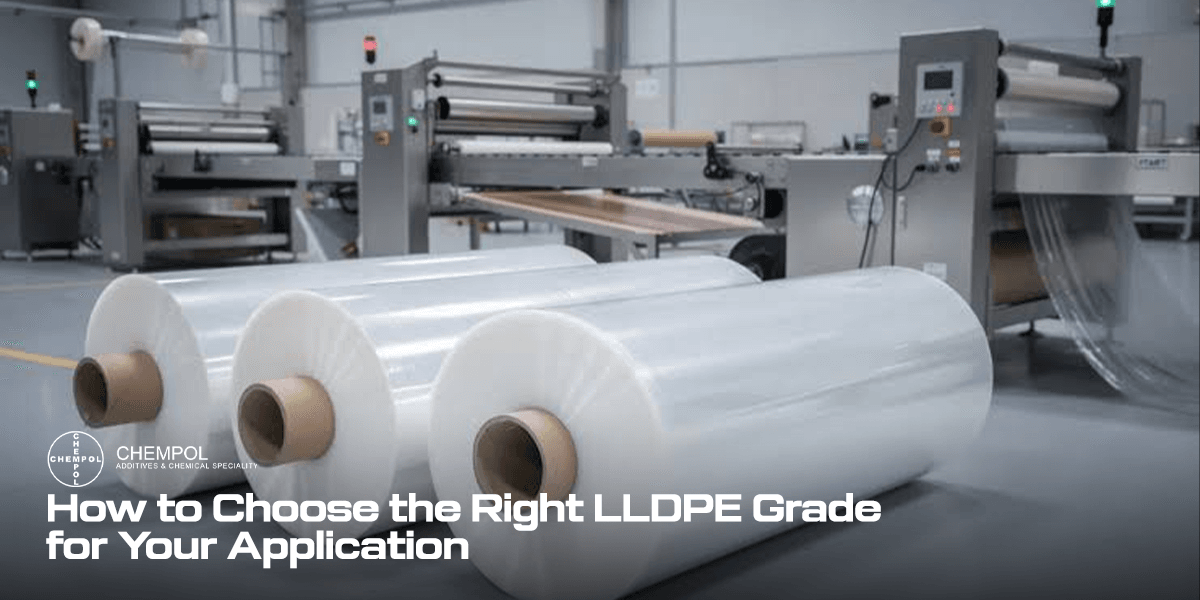
How to Choose the Right LLDPE Grade for Your Application
The selection of the right LLDPE grade cannot be made based on the price per kilogram.
Processors should consider melt flow, density, mechanical requirements, processing technology, required film thickness, sealing requirements, production speed, and the product's final use.
Film Grade LLDPE
It is used for flexible film applications in which strength, toughness, and processability are critical.
The specific film grade used by manufacturers should depend on the extrusion technique, film thickness, required clarity, sealability, and mechanical performance.
Roto-Molding Grade
Roto-molding grades are used in rotational molding processes where consistency in melt performance and finished-part toughness is needed.
These can be tanks, containers, bins, and hollow industrial products.
Injection Molding Grade
The injection molding grades of LLDPE have processing properties suitable for molded parts that demand flexibility and impact resistance.
Melt flow is especially critical when balancing the resin with the capabilities of the equipment and mold geometry.
Blown and Cast Film Grades
Chempol provides LLDPE for use in blown film and cast film.
Blown Film Extrusion is widely used for bags, liners, packaging films, and agricultural films. In contrast, cast film processing is often used in situations where high production rates and controlled film thickness are important.
The right choice of resin grade helps processors enhance extrusion stability and minimize production waste.
Stretch Film Grades
High extensibility, puncture strength, and load-retention properties are developed in stretch-film grades.
The properties are used in pallet wrapping, logistics, warehousing, and industrial packaging processes.
Targeted stretch ratios, film thickness, wrapping equipment, pallet type, and load characteristics are a few factors buyers should consider when choosing a grade.
Why Choose Chempol as Your LLDPE Supplier
The selection of an LLDPE Supplier is a technical and commercial choice.
When choosing the grades for new or existing applications, manufacturers require material that meets their processing needs, as well as dependable communication, dependable availability, suitable packaging, and assistance.
Chempol markets Linear Low-Density Polyethylene for various industry needs, including Film Grade LLDPE, Roto-Molding Grade, Injection Molding Grade, Blown Film Grades, Cast Film Grades, and Stretch Film Grades.
The product range is designed to assist manufacturers seeking excellent tensile strength, tear strength, flexibility, puncture strength, chemical resistance, environmental stress resistance, and low-temperature impact performance.
The packaging types are 25 kg bags, palletized packaging, shrink-wrapped packaging, bulk supply, and export-ready packaging. These alternatives assist procurement departments in planning for material handling, warehouse storage, container loading, and large-volume production.
Chempol also assists industrial purchasers in selecting grades and provides technical consultations to ensure that buying decisions are based on application needs rather than price.
The availability of products, technical support, and flexible supply is a combination that distributors, importers, OEMs, converters, and export buyers can use to reduce sourcing uncertainty.
Request a quote from Chempol today and discover dependable LLDPE supply, consistent quality, technical support, and export-ready packaging solutions.
Request LLDPE Pricing, Bulk Supply & Technical Support
Ready to source high-quality Linear Low-Density Polyethylene for your next production requirement?
Contact Chempol to inquire about your plans, ask for up-to-date quotations, and discuss LLDPE grades for film extrusion, agricultural films, packaging, liners, stretch film, roto-molding, or injection molding.
Chempol is open to bulk orders, export requests, distributor relationships, regular industrial supply, and consultations.
Whether you are evaluating a new LLDPE Polymer, need to switch from an inconsistent supplier, minimize production disruptions, or plan to buy in greater quantities, Chempol can assist you in finding an appropriate product and supply solution.