[email protected]

High-Density Polyethylene: Applications, Benefits & Uses
One of the most common thermoplastic polymers that is currently used in manufacturing is High-Density Polyethylene. Its durability, chemical and moisture resistance, stiffness, and processing versatility make it useful in packaging, infrastructure, consumer products, chemical storage, and industrial manufacturing.
For procurement managers and manufacturers, though, the purchase of HDPE does not merely consist of the lowest resin price. The appropriate grade should be in accordance with the production process, the necessary mechanical performance, chemical exposure, environmental conditions, and the regulatory requirements of the finished product.
Chempol serves industrial buyers seeking reliable solutions in High-Density Polyethylene for a variety of applications, including bottles and containers, molded components, films, and pipes. In its efforts to help businesses make better-informed decisions about their raw-material purchases, Chempol will focus on product consistency, appropriate grade selection, availability in large quantities, and technical support.
Looking for a reliable HDPE Raw Material Supplier? Contact Chempol today for product recommendations and bulk supply solutions.
What is High-Density Polyethylene (HDPE)?
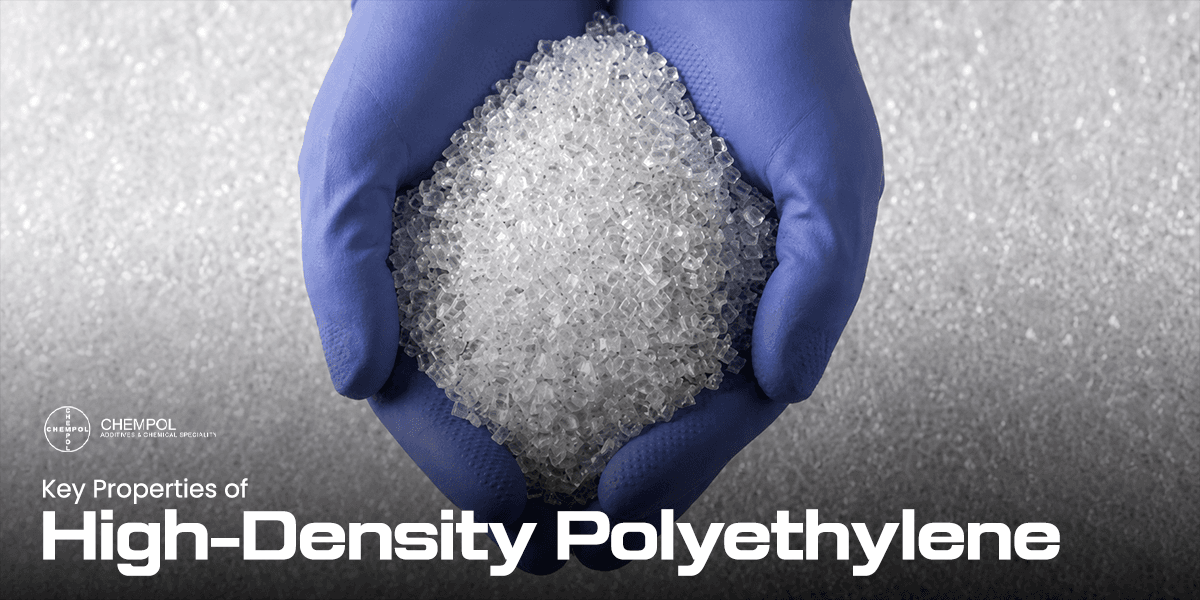
High-Density Polyethylene, often abbreviated as HDPE, is a thermoplastic polymer made from ethylene. Its molecular structure has quite limited branching, which enables the close packing of the polymer chains.
This structure gives HDPE relatively high density, rigidity, strength, and resistance to many chemicals compared to other polyethylene materials.
Due to HDPE’s ability to soften under heat and capability to be molded through several production procedures, it is widely used as an industrial plastic raw material.
Common processing methods include:
- Blow molding
- Injection molding
- Film extrusion
- Pipe extrusion
- Profile and sheet extrusion
The key attribute of HDPE is that it is a durable thermoplastic material, and manufacturers can select various grades to achieve combinations of toughness, impact performance, flow behavior, stiffness, and processability.
Density also matters; however, buyers must not choose a resin solely on the basis of its density. Purchasing decisions should be made depending on melt flow, molecular weight, mechanical properties, processing conditions, additives, certification requirements, and end-use performance.
Key Properties of High-Density Polyethylene
HDPE is applicable in challenging industries due to its ability to offer a convenient blend of physical and processing properties.
High Stiffness
HDPE can also be used to ensure adequate rigidity in products that need to retain their shape during handling, stacking, transportation, or everyday use.
It is this that makes appropriate grades useful for rigid bottles, containers, crates, caps, closures, pipes, and industrial elements.
Chemical Resistance
HDPE has been widely regarded as a versatile, chemical-resistant plastic polymer used in numerous industrial, household, and agricultural applications.
This is one of the reasons manufacturers often consider HDPE for Chemical Containers.
One should still consider chemical compatibility with the particular substance, concentration, temperature, and anticipated exposure time when choosing a resin.
Moisture Resistance
HDPE, being a moisture-resistant polymer, is used in applications where moisture may enter products or where water may damage them.
This property is useful in packaging, liners, bottles, containers, piping systems and outdoor products.
Impact Performance
Appropriate grades of HDPE can withstand daily handling and impacts.
This can assist manufacturers of crates, drums, bottles, industrial components or transport packaging to minimize product damage during storage and distribution.
Food-Contact Potential
Appropriate grades of HDPE can be utilized in food-contact containers and packaging.
But when companies seek food-grade polyethylene resin, the specific grade used must comply with the regulatory requirements of the specific product and market.
Long Service Life
The ability of HDPE to resist moisture, corrosion, and numerous chemicals can help increase service life when the appropriate material is used in the operating environment.
Such properties also render HDPE an effective corrosion-resistant polymer resin in applications where conventional materials might require additional corrosion protection.
Why Industries Prefer High-Density Polyethylene for Manufacturing
Manufacturers prefer to use HDPE since it balances product performance, production efficiency, and overall material cost.
Cost Efficiency
High-volume production is sensitive to material cost, whereas total production cost is more important.
Consistent resin processing can help reduce scrap, production downtime, excessive machine repositioning, and rejected finished products.
The procurement teams should therefore consider the price of resin as well as production performance.
Durability
HDPE provides the toughness, resistance, and stiffness needed for rigorous packaging and industrial applications.
This helps the business produce items that can withstand handling, transportation, filling, storage, and reuse.
Low Maintenance Requirements
Because HDPE is moisture- and corrosion-resistant, most finished products require less maintenance than those made from certain other materials.
Manufacturing Versatility
Several production processes can convert HDPE into various products, enabling manufacturers to use it to make thin films, heavy-duty pipes, and containers.
This flexibility makes HDPE plastic for industrial applications of great importance in a diverse variety of industries.
Product Consistency
For industrial customers, resin consistency will matter.
Raw material variation may cause unexpected changes in cycle times, size, surface appearance, performance, extrusion stability, and efficiency throughout the production process.
A reliable HDPE Polymer Supplier can serve buyers with precise product specifications and supply consistently.
Sustainability Considerations
HDPE is mechanically recyclable when proper collection, sorting, processing, and recycling facilities are in place.
Even manufacturers that have added sustainability objectives must take into account regulatory progress, recycled-content specifications, product safety, performance criteria, and end-market recycling conditions.
Major Industrial Applications of HDPE
The fact that various grades of High-Density Polyethylene can be adapted to different processing technologies and performance requirements underscores why it is used in many industries.
Blow-Molded Bottles and Containers
One of the most common applications of HDPE is blow molding. Blow molding grades are used to create:
- Household product bottles
- Cleaning chemical containers
- Industrial bottles
- Drums
- Jerry cans
- Personal care containers
- Water containers
- Hollow molded products
HDPE is especially effective in blow-molded plastic containers since it offers rigidity, waterproofing, impact resistance, and chemical resistance.
The companies buying HDPE Packaging Material must consider container design, wall thickness, filling conditions, chemical compatibility, stacking, transportation conditions, and predicted shelf life.
Businesses that purchase HDPE to manufacture Chemical Containers must also ensure the resin is compatible with the chemical being packed.
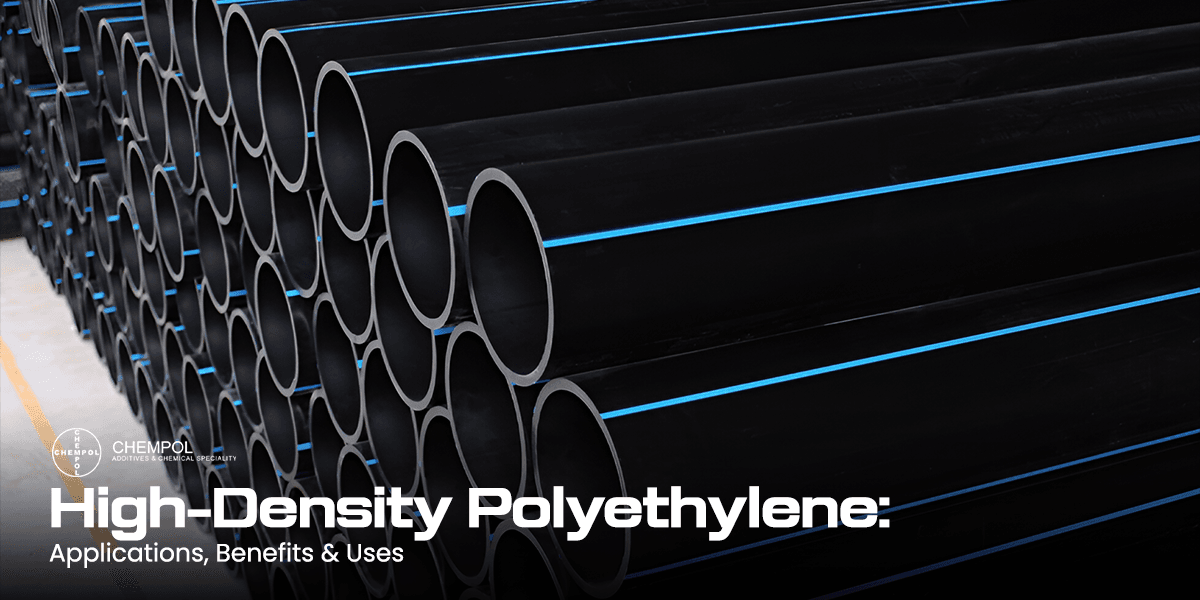
HDPE Pipes and Infrastructure Projects
HDPE is extensively used in piping and infrastructure applications. Typical uses include:
- Water distribution systems
- Drainage pipes
- Industrial piping
- Irrigation systems
- Gas distribution applications
- Infrastructure projects
Manufacturing HDPE pipes requires specialized pipe-manufacturing materials that meet proper mechanical and processing requirements.
Manufacturers are supposed to use pipe-grade resin based on the pressure demand, the pipe size, the extrusion conditions, the environment in which the pipe will be used, the pipe’s expected life, and the technical standards.
In the production of pressure pipes, price must never be the determining factor in the resin to be used.
Injection-Molded Products
HDPE is a popular injection molding plastic resin for both consumer and industrial products. Typical applications include:
- Caps
- Closures
- Lids
- Crates
- Buckets
- Storage products
- Industrial components
- Household products
Melt flow, stiffness, impact strength, dimensional stability, mold geometry, and required cycle time are among the factors injection molders should consider.
High-flow grades can be beneficial for some complex or thin-walled applications, whereas high-stiffness grades can be used where rigidity is the primary factor.
Film Applications
HDPE film is used in flexible packaging and industrial applications. Typical products include:
- Shopping bags
- Industrial liners
- Protective packaging
- Thin films
- Flexible packaging materials
An appropriate grade of HDPE film resin should match the extrusion equipment, required film thickness, mechanical properties, processing conditions, and end-use needs.
The manufacturers of the plastic resin used in the packaging business must also consider the resin’s strength, processability, sealing requirements, and the finished product’s performance.
Need Bulk HDPE Resin for your manufacturing operations? Speak with Chempol’s technical team to find the right grade for your application.
Available HDPE Grades from Chempol
Resin characteristics are needed in different manufacturing processes. Chempol will be able to assist industrial customers seeking HDPE grades that meet various processing and end-use needs.
Blow Molding Grade
Blow molding grades are used in bottles, drums, chemical containers, and tanks, among other hollow products.
The buyers should consider stiffness, impact performance, environmental stress resistance, processing properties, and chemical compatibility.
Injection Molding Grade
Applications of injection molding grades include caps, closures, crates, lids, household products, and industrial components.
The correct grade is determined by the melt flow, mold design, product dimensions, stiffness requirements, and production speed.
Film Grade HDPE
HDPE film-grade is used for bags, liners, and packaging films.
The nature of the resin required is determined by the extrusion conditions, film thickness, required strength, and packaging purpose.
Pipe Grade HDPE – PE80 and PE100
Pipe-grade materials are manufactured for extrusion into pipes used in infrastructure and fluid-handling tasks.
The PE80 or PE100 material used must be appropriate and selected based on the project requirements and applicable standards.
Firms seeking an HDPE Granules Supplier or an HDPE Compound Supplier should discuss their specific processing procedures and usage, rather than buying based solely on a generic description of HDPE.
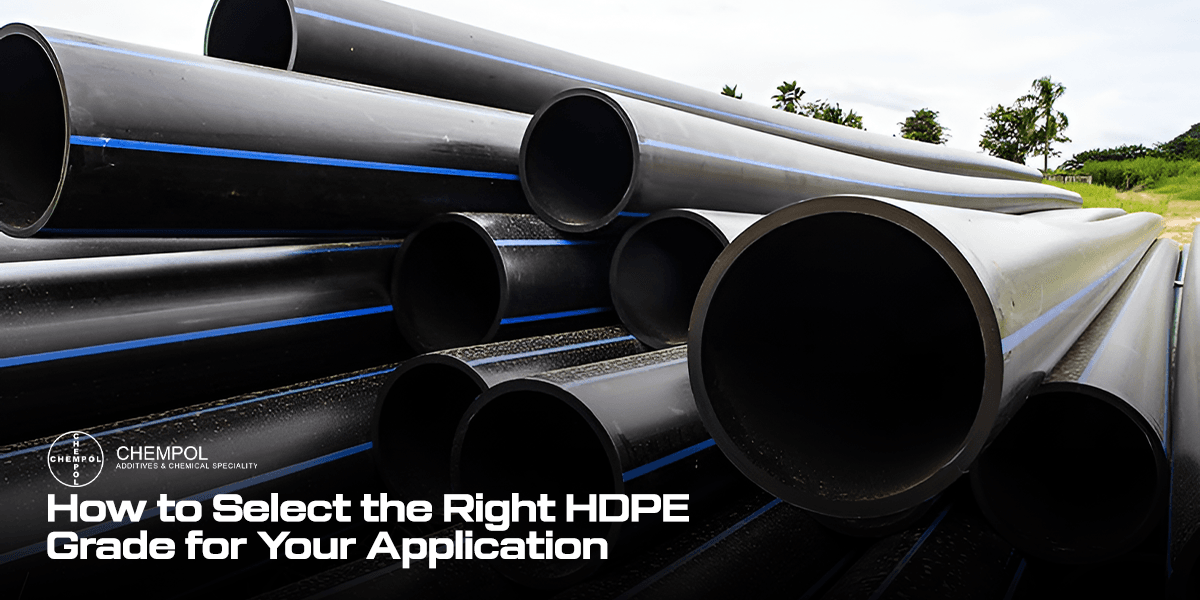
How to Select the Right HDPE Grade for Your Application
One of the most significant buying choices that an HDPE processor faces is selecting the right grade.
Define the End Use
Begin by determining what the finished product should do.
Will it be a carrier of chemicals, water, food, industrial goods, or consumer products? Will it be exposed to pressure, loads, piling, sunlight, or temperature changes?
Identify Mechanical Requirements
Consider stiffness, toughness, impact performance, tensile properties, dimensional stability, and stress resistance. Various applications demand various proportions of such properties.
Match the Processing Method
The various processing behaviors needed in blow molding, injection molding, pipe extrusion, and film extrusion differ.
When a grade is used in the wrong production process, it may lead to poor processing, inconsistent dimensions, excessive scrap, or a weak finished product.
Evaluate Chemical Exposure
In chemical packaging, determine the substance, concentration, storage temperature, and anticipated duration of contact.
Application-specific compatibility assessment should not be substituted with general chemical resistance.
Consider Environmental Conditions
UV stabilization may be needed in outdoor products. Special mechanical or impact properties may also be required in products that are operated at different temperatures.
Review Regulatory Requirements
Certificates, approvals, or even material standards may be required for food-contact packaging, water systems, gas pipes, and certain industrial applications.
Before approving a grade, procurement managers are supposed to demand appropriate documentation.
This organized selection system will minimize the possibility of acquiring a less expensive resin that will eventually become scrap, cause production issues, or result in product failure.
Why Choose Chempol as Your HDPE Supplier?
The selection of the supplier is nearly as crucial as the selection of the grade.
Product Quality
Manufacturers demand HDPE that delivers consistent performance after every production run.
Chempol specializes in delivering industrial materials for specific applications and assists customers in sourcing resin to meet manufacturing and finished-product needs.
Consistent Supply
The lack of supply may halt production lines and cause costly delivery delays.
Engaging a reliable HDPE Raw Material Supplier can assist procurement teams in planning their inventory more effectively and minimizing the need for emergency sourcing.
Technical Support
Different production processes require different resin properties.
Chempol can facilitate discussions of processing methods, finished-product requirements, environmental conditions, and other factors that impact grade selection.
Industrial Experience
Industrial purchasers require an item name and cost.
They should have a supplier who is well aware of the correlation among raw materials, processing conditions, production efficiency, and the performance of the finished product.
These buying choices are supported by Chempol’s specialization in supplying polymers to industries.
Bulk Order Capability
Big manufacturers, packing firms, distributors, and pipe manufacturers usually demand huge quantities of material.
Chempol can assist companies seeking Bulk HDPE Resin and repeat industrial purchases.
Reliable Logistics
When the availability of raw materials is directly tied to production schedules, reliable delivery planning is vital.
The request for quotations should include a discussion of the anticipated quantity, packaging, destination, order frequency, and delivery requirements.
Customer-Focused Service
Communication is essential in relationships with suppliers.
Chempol also collaborates with industrial clients to understand specifications and application requirements, and then suggests suitable supply solutions.
This can be more valuable to procurement managers than the acquisition of a generic polymer, even at the same price.
Looking for a trusted HDPE Polymer Supplier for bulk industrial requirements? Contact Chempol today to discuss your specifications, request a quotation, and secure a reliable supply partner.