[email protected]
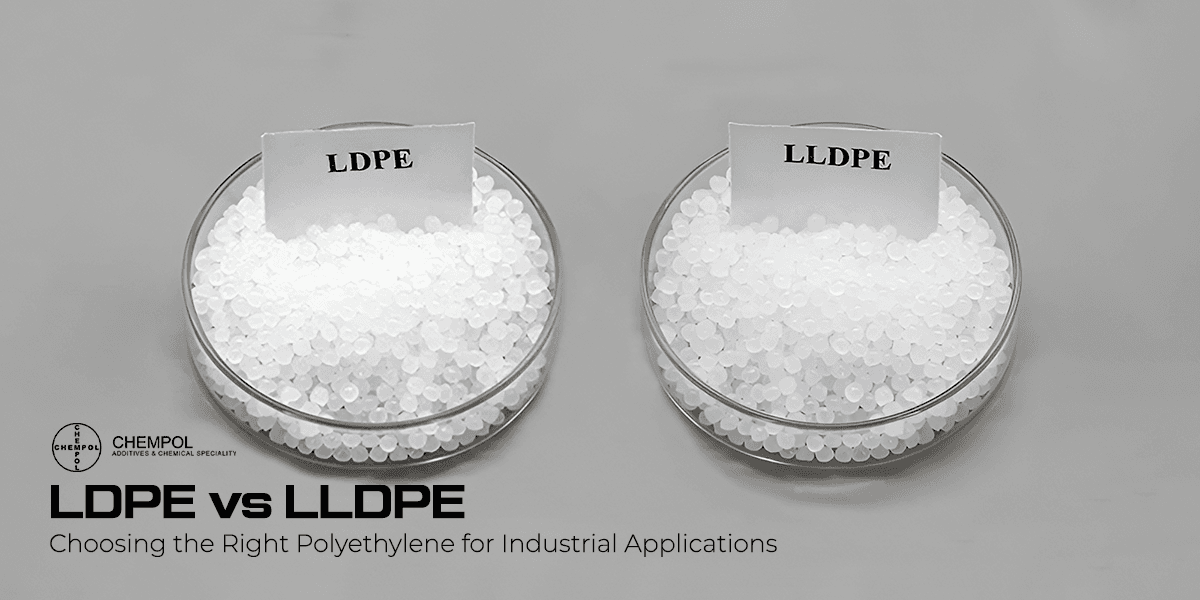
LDPE vs LLDPE: Choosing the Right Polyethylene for Industrial Applications
Choosing the right polyethylene material is a crucial choice for manufacturers, packaging firms, converters, and industrial purchasers. The selection of the right polymer grade is critical to the performance, durability, processing efficiency, and final quality of the product. Low-Density Polyethylene (LDPE) and Linear Low-Density Polyethylene (LLDPE) are two of the most commonly used polyethylene materials, each with distinct benefits in its usage.
Knowledge of LDPE vs. LLDPE allows businesses to make a sound buying decision based on strength requirements, flexibility, processing, and final application. Although LDPE is recognized as soft and flexible and has high moisture barrier properties, LLDPE offers higher tensile strength, puncture resistance, and durability.
The two materials are crucial to modern packaging, agriculture, industrial manufacturing, and consumer product use. Nevertheless, the wrong grade choice can increase production costs, reduce product performance, and cause processing problems.
CHEMPOL supplies stable polyethylene solutions in various grades of LDPE and LLDPE, tailored to industry needs. Contact CHEMPOL today to make the right choice of polyethylene grade for your application.
Read further to understand the difference between LDPE and LLDPE, their properties and applications, and how companies can select the appropriate material to achieve superior performance and cost efficiency.
What is LDPE?
Low-Density Polyethylene (LDPE) is a flexible thermoplastic polymer widely used in the production of products that require softness, transparency, and high moisture resistance. With a highly branched structure, LDPE offers excellent flexibility and lower density than other polyethylene materials.
Among the most important benefits of LDPE is the ability to make soft, flexible products while preserving impact resistance. This ensures that it can be used in packaging films, consumer products, and industrial applications where ease of handling and stability are of great concern.
Low Density Polyethylene Properties
Important LDPE characteristics include:
- Exceptional flexibility and softness
- Excellent moisture barrier performance
- Lightweight structure
- Good impact strength
- High chemical resistance
- Easy processing capability
Some common LDPE products include plastic bags, food packaging films, shrink films, stretch films, lamination films, agricultural films, bottle caps, container caps, toys, and household products.
To cater to a wide range of manufacturing requirements, CHEMPOL offers a variety of LDPE grades, including film-grade, injection-molding-grade, blow-molding-grade, and roto-molding-grade LDPE.
What is LLDPE?
Linear Low-Density Polyethylene (LLDPE) is an advanced polyethylene material designed to offer greater strength and toughness than traditional LDPE. Its linear molecular structure provides it with higher mechanical performance and flexibility.
LLDPE is particularly appreciated in applications where manufacturers need more robust films with higher puncture resistance and durability. Modern packaging industries have developed a preference for it due to its ability to use thinner films without compromising performance.
Linear Low Density Polyethylene Properties
Key LLDPE properties include:
- Excellent tensile strength
- Superior puncture resistance
- High flexibility
- Strong environmental stress crack resistance
- Excellent chemical resistance
- Lightweight performance
- Cost-effective material usage
LLDPE is widely used for stretch films, industrial packaging, heavy-duty liners, agricultural films, consumer packaging, cable insulation, and rotational molding products.
CHEMPOL provides different grades of LLDPE, such as film grade, injection molding grade, roto molding grade, blown film grade, cast film grade, and stretch film grade.
Difference Between LDPE and LLDPE
The difference between LDPE and LLDPE mainly lies in their molecular structures and resulting performance characteristics.
The molecular structure of LDPE is more branched, offering greater flexibility, softness, and sealing properties. Conversely, LLDPE has a predominantly linear molecular structure with controlled short-chain branching.
LDPE vs LLDPE Properties
In the case of LDPE vs LLDPE properties, businesses should consider:
Flexibility
LDPE is softer and more flexible and can be used in cases where the products require bending or offering a smooth feel.
Flexibility can also be achieved with LLDPE, though it is stronger, making it suitable for applications that require stress resistance.
Strength Performance
LLDPE tends to have a better tensile strength and puncture resistance than LDPE. This makes it highly appropriate for demanding packaging applications.
LDPE has excellent impact strength; however, it is used in applications where sealing performance and flexibility are more important.
Moisture Barrier Performance
Both materials are superb for moisture protection. However, LDPE is generally known to have high moisture barrier properties, making it suitable for food packaging and protective films.
Chemical Resistance
Both LDPE and LLDPE offer excellent resistance against many chemicals. This allows them to be effective for industrial packaging, containers, and protective applications.
For businesses comparing materials, CHEMPOL can provide technical advice to determine the best polyethylene grade based on production needs and, ultimately, the final product’s performance.
Mechanical Performance: Strength, Durability, and Processing
One of the key factors in selecting polyethylene materials is mechanical performance.
LLDPE Tensile Strength and Puncture Resistance
LLDPE also has very high tensile strength, giving manufacturers the ability to work with strong and light films. It has better puncture resistance, minimizing the risk of tearing during transportation and handling.
This makes LLDPE an excellent choice for:
- Heavy-duty packaging
- Stretch films
- Industrial liners
- Transportation packaging
LDPE Flexibility and Softness
LDPE is still in use due to its smooth texture and flexibility. It is useful in applications where it is necessary to easily open, seal, and protect a product. Common examples include:
- Shopping bags
- Food packaging
- Shrink films
- Consumer packaging
Both materials offer valuable advantages, although the best option will depend on the application needs.
LDPE vs LLDPE Film Properties and Packaging Applications
One of the most significant materials in the modern packaging industry is polyethylene film. Nonetheless, manufacturers have to choose the right resin based on the film’s performance.
LLDPE Stretch Film Material
Due to its great elasticity, tensile strength, and puncture resistance, LLDPE is commonly used in stretch films.
It assists companies in developing packaging designs that safely hold products during storage and transportation. Common applications include:
- Pallet wrapping
- Industrial packaging
- Warehouse protection
- Logistics applications
LDPE Packaging Material
LDPE is used when soft, clear, and excellent sealing qualities are needed. Typical uses include:
- Food packaging films
- Retail bags
- Shrink packaging
- Lamination films
Which is Better: LDPE or LLDPE for Flexible Packaging?
The solution lies in the appropriate packaging requirement. No material is the best for all applications.
Food Packaging
The choice of LDPE for food packaging is mostly due to its excellent moisture barrier, flexibility, and sealing properties.
Shopping Bags
LDPE is also effective in lightweight shopping bags where its softness and flexibility are essential. But when stronger bags with higher load capacity are needed, LLDPE can be chosen.
Stretch Films
Stretch film production requires LLDPE because of its higher tensile strength and puncture resistance.
Heavy-Duty Liners
LLDPE is appropriate for heavy-duty liners due to its better toughness and tear resistance.
Agricultural Films
Both materials are used in agricultural films. LDPE is flexible and provides moisture protection, while LLDPE offers strength and durability.
Industrial Packaging
LLDPE is commonly chosen for industrial packaging because it can handle higher mechanical stress
Blow Molding
Products made from LDPE are often used in blow molding, where they need to be flexible and lightweight.
Injection Molding
LDPE and LLDPE can be injection molded based on the product needs, design, and performance levels.
Companies interested in selecting the appropriate materials can contact CHEMPOL for application-related guidance and technical assistance.
Industrial Applications of LDPE and LLDPE
Polyethylene materials are also important in various industrial sectors due to their durability, chemical resistance, and flexibility in processing.
Agricultural Film Materials
Agricultural industries use polyethylene films for greenhouse covers, mulch films, and protective applications.
LLDPE offers strength, whereas LDPE offers flexibility and moisture protection.
Industrial Plastic Packaging Solutions
Manufacturers use polyethylene to make:
- Protective packaging
- Storage liners
- Industrial bags
- Containers
- Cable insulation
They are lightweight, chemically resistant, and suitable for demanding conditions.
Consumer and Manufacturing Products
Polyethylene is used in domestic products, toys, bottle caps, and molded parts.
How to Choose the Right Polyethylene Material
The decision between LDPE and LLDPE involves weighing some crucial factors.
Application Requirements
Know the purpose of the final product in the first place. A food packaging film might need to possess different attributes than an industrial liner.
Flexibility and Strength
LDPE could be a good choice in case softness and flexibility are of interest. LLDPE can be a better performer when strength and durability are needed.
Durability and Environmental Conditions
Consider exposure to chemicals, stress, temperature changes, and mechanical pressure.
Moisture Protection
Polyethylene grades with appropriate barrier properties should be considered in products that demand high moisture resistance.
Processing Method
The manufacturing process also determines material selection. Different grades are available for:
- Blown film production
- Cast film production
- Injection molding
- Blow molding
- Rotational molding
Budget and Product Performance
The right choice of material may help minimize waste, enhance productivity, and reduce overall production costs.
CHEMPOL engages with industrial customers to understand their needs and prescribe appropriate polyethylene solutions.
Cost Considerations: LDPE vs LLDPE
The cost of materials is a significant concern for any manufacturer. The cheapest choice is, however, not necessarily the most economical choice.
LLDPE may allow for thinner films due to its higher strength, thereby reducing material consumption. Applications in which flexibility and sealing performance are more significant may benefit from LDPE due to its possible cost advantage. The best choice depends on balancing:
- Raw material cost
- Processing efficiency
- Product quality
- Performance requirements
- Customer expectations
A technical evaluation can assist companies in achieving higher value from their investment in polyethylene.
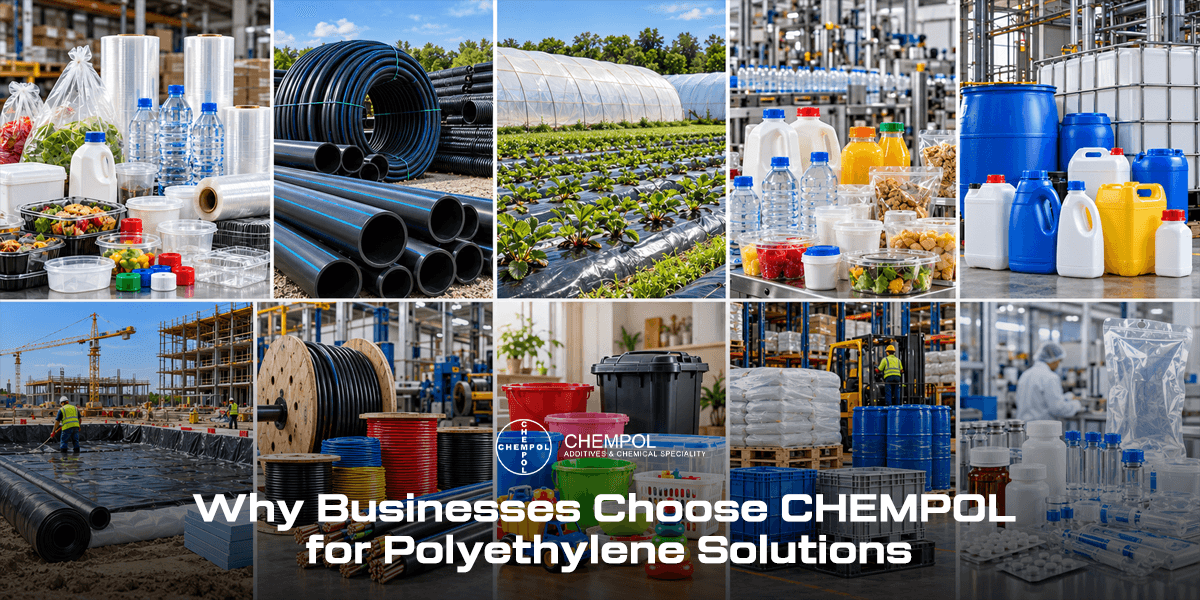
Why Businesses Choose CHEMPOL for Polyethylene Solutions
Selecting a reliable polyethylene supplier is essential for maintaining consistent production quality. CHEMPOL offers manufacturers, converters, and distributors premium polyethylene grades for a range of industrial applications. Customers benefit from:
- Multiple LDPE and LLDPE grades
- Consistent material supply
- Technical application support
- Reliable customer service
- Solutions tailored to manufacturing needs
Be it packaging films, industrial materials, agricultural films, or molded products, CHEMPOL offers reliable polyethylene solutions to ensure your business’s long-term success.
Get a quote, technical advice, or a product recommendation from CHEMPOL to find the correct polyethylene grade for your application.
Ready to Order LDPE or LLDPE in Bulk?
Knowledge of LDPE vs. LLDPE is critical for manufacturers who want to enhance product quality, minimize production challenges, and select the appropriate polyethylene for their applications.
LDPE is still a favorite for products that need to be flexible and soft, have high moisture-barrier properties, and be easy to work with. LLDPE offers greater strength, puncture resistance, and durability, making it suitable for rigorous packaging and industrial applications.
The correct option depends on the application’s needs, processing mode, performance, and costs.
Partnering with an experienced polyethylene supplier can help companies achieve reliability in quality and supply. CHEMPOL offers high-quality LDPE and LLDPE grades, along with technical assistance to customers, helping them select materials that meet their production objectives.
CHEMPOL can support your requirements, whether for polyethylene in flexible packaging, agricultural films, industrial applications, blow molding, or injection molding.
Contact Chempol today for customized polyethylene recommendations, technical consultation, quotations, Technical Data Sheets (TDS), product availability, and bulk order inquiries.