[email protected]

API CF/SF Engine Oil Additive for Reliable Mixed Fleet Oils
Lubricant manufacturers serving older diesel and gasoline engines face a challenging balancing act: they need to provide safe engine protection, control formulation costs, maintain lot consistency, and meet the expectations of markets where legacy vehicles and equipment remain commercially viable.
An API CF/SF Engine Oil Additive can make that challenge a lot easier by offering the detergent, dispersant, wear control, corrosion protection, and alkalinity performance needed in practical mixed-fleet lubricants.
As a formulation platform, CHEMPOL 7998A can offer a commercially viable solution for lubricant blenders, industrial formulators, private label brands, and distributors seeking to develop API CF/SF engine oils. Chempol is a lubricant technology company that integrates formulation services with lubricants to assist customers in producing reliable products for older diesel engines, gasoline-powered vehicles, commercial vehicles, agricultural machines, and off-road applications.
Rather than overcomplicating legacy lubricant development, the objective is straightforward: achieve the required performance while controlling formulation cost and maintaining consistent finished-oil quality.
Contact Chempol to discuss your API CF/SF lubricant requirements, target viscosity grades, base oil system, market positioning, and formulation objectives.
Introduction to API CF/SF Engine Oil Requirements
The performance levels of API CF and API SF remain commercially viable in markets where older cars, industrial equipment, construction fleets, agricultural equipment, and legacy engine platforms are still in use.
An API CF Diesel Engine oil additive formulation should address operating stresses, including deposits, oxidation, degradation, acidic contamination, soot, wear, and corrosion. Diesel engines may impose significant thermal and chemical stress on lubricants, especially when fuel quality, maintenance cycles, operating temperatures, and duty cycles vary.
There is a different set of requirements that is developed by API SF gasoline applications. Strong API SF gasoline engine oil performance relies on engine cleanliness, protection of critical metal surfaces, control of oxidation-related deposits, and dependable lubricant performance in daily operation.
This makes API CF/SF oils commercially attractive for lubricant makers that offer them to markets with a mix of vehicle populations.
An appropriate Legacy Engine Oil Additive Package must thus assist in achieving technical and commercial objectives. Manufacturers are not in need of an oil that performs under laboratory conditions. They require a formulation system that can be produced in large quantities at reasonable cost, tailored to the base oils at hand, and reliably delivered to distributors and final consumers.
The practical formulation priorities have been considered in the development of CHEMPOL 7998A.
Challenges in Legacy Engine Oil Formulation
It may seem less complicated to make older engine lubricants than to develop products that meet the latest emission-control standards for vehicles. As a matter of fact, legacy engine markets also create their own technical challenges.
Increased mechanical clearances, deposits, oil consumption, variable fuel quality, harsh duty cycles, and irregular maintenance regimes can characterize older engines. Lubricants thus require reliable defenses as opposed to bare-bone chemistry that is simply a point of sale.
Acid Build-Up and Lubricant Degradation
By-products of combustion may add to the acidic contaminants in crankcase lubricants. If there is not enough reserve alkalinity in the formulation, it can make it harder to regulate lubricant degradation and corrosive conditions.
Successful acid neutralization in engine oils is thus a vital aspect of lubricant design, particularly in diesel applications and operating conditions where fuel quality may fluctuate.
Sludge, Soot, and Deposit Accumulation
The contaminants produced during engine operation should be well contained in the lubricant.
Poor control may lead to piston deposits, sludge, contaminated engine parts, limited lubricant circulation, and reduced overall oil performance.
This is among the reasons why detergent dispersant technology, diesel engine deposit control, and appropriate soot-handling performance in diesel oils remain vital considerations in API CF engine oil formulation.
Wear and Corrosion
To sustain high-load components, a stable lubricant film and efficient engine wear protection technology are essential. Meanwhile, the formulation must enhance the corrosion resistance of lubricants to ensure that critical metal surfaces are not exposed to corrosion during operation and service.
Such difficulties are especially significant in commercial vehicles, farm equipment, mining equipment, generators, and other equipment expected to operate under demanding conditions.
Why High TBN Performance Matters in Diesel Engine Oils
The total base number (TBN) is a measure of the lubricant’s reserve of alkali and its capacity to neutralize acidic contaminants produced during operation.
A high TBN diesel engine oil would be beneficial in the right environment, where engines are exposed to harsh operating conditions, extended service life, or fuel contamination.
To formulators, though, the increase in TBN should not be an unto-itself goal. The lubricant should have a balanced chemistry that sustains detergency, wear protection, corrosion control and deposit management.
CHEMPOL 7998A is developed as a balanced formulation technology for API CF/SF lubricants; it assists the manufacturer in meeting these intertwined demands by using a single, convenient performance system.
Acid Neutralization Capability
Proper alkalinity can help neutralize acidic contaminants formed during service. This helps to enhance the formulation strength of challenging diesel applications.
Protection Throughout the Oil’s Service Period
The ability of lubricants to remain intact over time helps protect engines against wear, deposits, corrosion, contamination, and lubricant degradation during service.
For lubricant brands, this may take the form of stronger product positioning and greater confidence in marketing a heavy-duty diesel oil additive-based formulation to fleet operators and industrial customers.
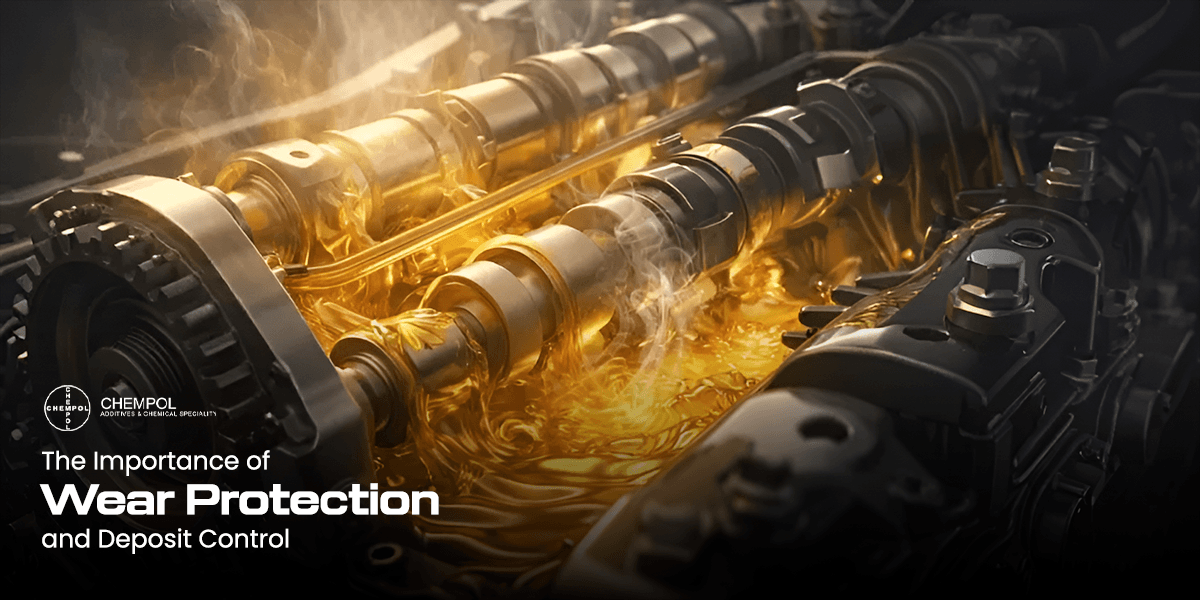
The Importance of Wear Protection and Deposit Control
A lubricant used in an engine should not just be a friction reducer.
Its chemistry should help keep surfaces clean, retain contaminants, reduce harmful deposits, protect highly loaded components, and ensure reliable service throughout the intended oil service life.
CHEMPOL 7998A aids in the production of a heavy-duty crankcase lubricant in which wear protection and cleanliness are of commercial significance.
Wear Protection Performance
Contact between metals at highly loaded engine components may increase the wear rate when the lubricant film is overstretched.
An adequately balanced formulation provides protective chemistry to sustain critical surfaces under the operating conditions that older diesel and gasoline engines frequently face.
Deposit Management Performance
Control of deposits is also important.
Detergent components help ensure surface cleanliness, and dispersant chemistry helps ensure that contaminants remain suspended rather than settling into sludge or toxic deposits.
This combination is especially useful in lubricants for older-generation engines, where deposits already present in the engine, different operating conditions, and varying maintenance routines may put extra strain on the oil.
CHEMPOL 7998A provides blenders with a viable pathway to balancing these performance needs without creating undue complexity in formulation.
Request technical support from Chempol’s formulation specialists to discuss CHEMPOL 7998A, recommended formulation approaches, base oil selection, and your target finished-lubricant performance.
Mixed Fleet Lubrication Requirements for Diesel and Gasoline Engines
It is not always possible to separate many lubricant markets into diesel and gasoline categories.
Distributors can provide workshops that can service both types of engines. Fleet operators can operate delivery vehicles, old passenger cars, tractors, generators, and work equipment simultaneously. The private label companies may also prefer a smaller, more easily commercially manageable product portfolio.
This underscores the need for high-quality mixed-fleet lubricant technology.
A mixed-fleet engine oil additive must support the various lubrication needs of diesel and gasoline engine applications while enabling the finished oil to meet the intended API performance requirements.
CHEMPOL 7998A assists formulators in developing oils for API CF/SF applications and provides brands with greater flexibility in targeting mixed fleets and markets where legacy equipment is prevalent.
Compatibility with Older Engine Designs
Older engine platforms are economically viable over time, when newer lubricant specifications are already available in the market.
In such applications, it is not always the aim to apply the latest and the costliest chemistry. The aim is to offer the appropriate lubricant technology based on the engine design, operating environment, service needs, and OEM recommendations.
This is especially critical in developing markets which could have several generations of engine technology in the vehicle fleet.
How CHEMPOL 7998A Supports Cost-Effective Formulations
The performance of lubricants is not the sole ingredient of an effective commercial formulation.
The manufacturers also need to manage the cost of raw materials, production efficiency, product positioning, inventory, supply security, and margin.
CHEMPOL 7998A is intended to assist in addressing such commercial realities.
Through a coordinated performance system, the product has the potential to streamline the development of a cost-effective diesel lubricant formulation compared with sourcing and balancing various performance components separately.
In the case of blenders, this can offer various business benefits:
- Simplified formulation development
- More consistent batch-to-batch performance
- Reduced complexity in raw-material management
- Stronger control over finished-product positioning
- Support for API CF/SF lubricant development
- Flexibility for private label and regional lubricant portfolios
- Access to Chempol technical formulation guidance
This has led to the API CF/SF engine oil additive solution, which is not merely about chemistry but also about assisting lubricant companies in producing commercially viable finished products.
That performance-to-cost ratio can be crucial for manufacturers operating in highly price-sensitive markets.
Supporting Lubricant Service Life
Relevant lubricant performance during the required service life can also be achieved through good formulation stability, acid control, cleanliness, and wear protection.
Where supported by the complete formulation, engine condition, operating environment, OEM instructions, and field validation, these characteristics may help manufacturers target dependable or extended oil drain performance.
Establishing claims about drain intervals must invariably be done through proper formulation validation and application requirements.
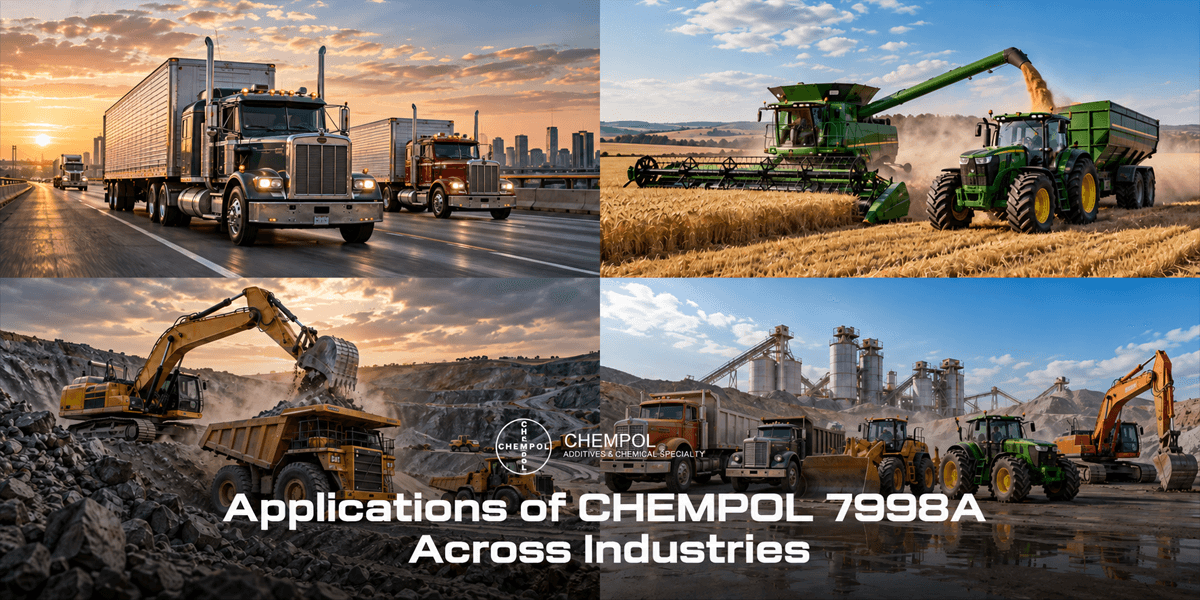
Applications of CHEMPOL 7998A Across Industries
CHEMPOL 7998A has the potential to aid in the development of engine oils for a wide range of legacy and mixed-fleet applications where API CF/SF performance is suitable.
Commercial Vehicles
Older trucks, buses, vans, and fleet vehicles can be kept in constant commercial use. Crankcase protection: Sellers of fleet lubricants can provide convenient oils to low-end operators with reliable crankcase protection.
Agricultural Machinery
Agricultural equipment such as tractors, pumps, and harvesters is often used in dusty conditions, changing temperatures, and long hours of work.
Appropriate on-road and off-road lubrication solutions thus require high cleanliness, wear protection, and effective contamination management.
Construction and Mining Equipment
The excavators, loaders, generators, compressors, and old diesel-powered equipment can experience heavy loads and tough operating cycles. An API CF lubricant, properly formulated, can provide effective protection for the right legacy equipment.
Mixed Fleet Operations
Rationalized lubricant portfolios, based on appropriate mixed-fleet engine oil additive technology, could be used by business organizations that operate gasoline cars as well as diesel trucks and equipment.
Private Label Lubricant Portfolios
Emerging brands and established private label companies can also use CHEMPOL 7998A in developing API CF/SF products without having to develop a complex chemistry system from the ground up.
Chempol technical recommendations and product documentation should be used to verify actual formulations, treat rates, performance claims, and application suitability.
Why Lubricant Manufacturers Choose Chempol
Selecting a lubricant technology supplier is not just a buying choice. It may affect formulation reliability, production planning, product quality, customer satisfaction, and expansion into new markets.
Chempol serves B2B clients based on a strategy grounded in technical competence and commercial practicality.
Technical Formulation Expertise
The Chempol team can speak with lubricant manufacturers about base oils, viscosity grades, target markets, performance requirements, and formulation objectives.
This support can minimize trial and error in the product development process and assist the customers in making informed formulation decisions.
Consistent Product Quality
Batch consistency is necessary when lubricant companies produce products under their own brand or supply major distributors. Trustworthy formulation components enable manufacturers to have a more predictable finished-oil performance.
Global Commercial Support
Chempol collaborates with lubricant companies, importers, distributors, and industrial buyers across various markets to assist them in planning their supply based on operational and commercial needs.
Support for Growing Lubricant Brands
New lubricant brands frequently require a supplier of raw materials. They may also need formulation advice, product-choice support, and a solid technical partner to help them grow their portfolio.
CHEMPOL 7998A can be part of such a growth strategy of companies aiming to address the legacy diesel and gasoline lubricant market.
Contact Chempol to request CHEMPOL 7998A product information, technical data, formulation guidance, samples where available, pricing, and commercial supply details.