[email protected]

Sulfurized Isobutylene Additive for Gear Oils & Industrial Lubricants
Under heavy loads, high temperatures, and demanding contact conditions, effective extreme-pressure (EP) and anti-wear protection is essential for industrial lubricants. The choice of additive chemistry is a key aspect of the lubricant manufacturer’s process for creating products that meet the application’s performance requirements. Sulfurized Isobutylene Additive is a key ingredient in formulations for Industrial Gear Oils, Metalworking Fluids, Cutting Oils and Greases. It is sulfur-based and helps protect metal surfaces under high-pressure operating conditions. Chempol offers CHEMPOL 5321, a chlorine-free, sulfurized isobutylene product developed for industrial lubricant formulations that require extreme-pressure performance, thermal stability, and oil solubility.
What Is a Sulfurized Isobutylene Additive?
A sulfurized isobutylene additive is a sulfur-containing chemical compound formed by reacting isobutylene with sulfur. It is part of a family of sulfurized olefin additives, which are primarily used in industrial lubricant formulations that require high anti-wear and extreme-pressure properties.
In industrial activities, gears, bearings, cutting tools, and other mechanical elements are constantly subjected to friction and high contact pressure. This can cause the surfaces to come into contact metal-to-metal, leading to failure of the lubricant film. This means that direct contact may result in scuffing, adhesive wear, surface damage and early component failure.
Sulfurized Isobutylene Lubricant Additive can solve these problems through sulfurized extreme-pressure chemistry. In high-load conditions, reactive sulfur may react with the metal surface to form protective reaction films. These films prevent damaging metal-to-metal contact and aid load-carrying ability.
Sulfurized isobutylene offers an opportunity for lubricant manufacturers and formulators to create specialized industrial gear oils, metalworking fluids, and greases. But effectiveness depends on the base oil, additive concentration, additive chemistry, and operating conditions.
Key Benefits of Sulfurized Isobutylene in Lubricants
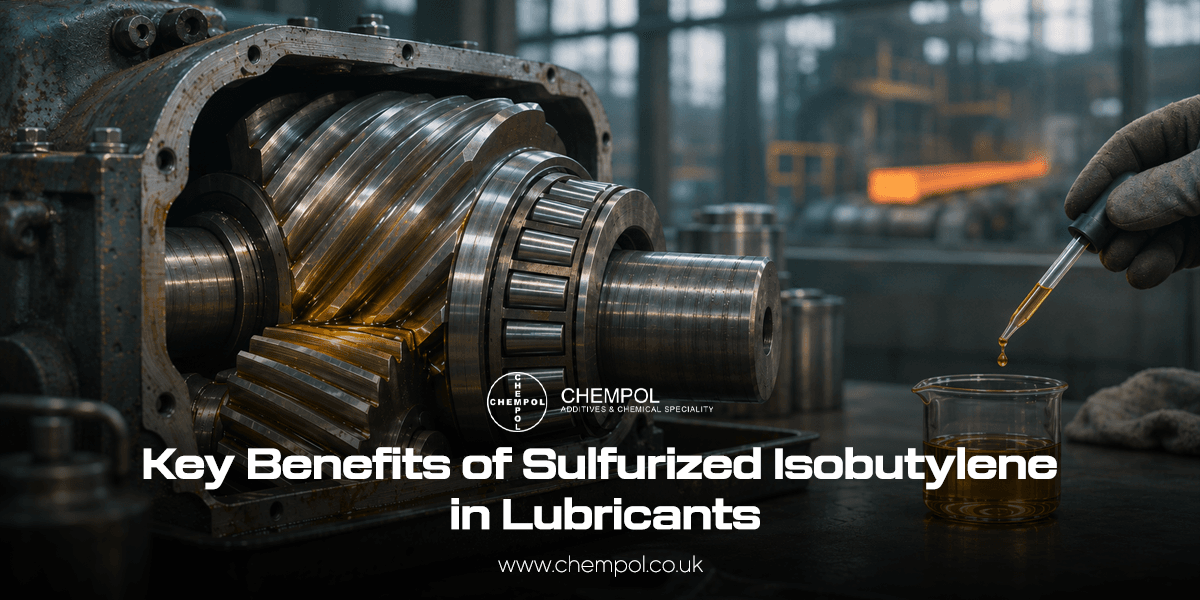
The choice of the right Sulfurized Isobutylene EP Additive is based on the evaluation of several technical properties, and not only on the sulphur content. Its suitability for finished lubricant formulations is impacted by oil solubility, thermal stability, compatibility, and performance under extreme pressure.
Extreme Pressure Protection Under Heavy Loads
The main role of sulfurized isobutylene is to protect against extreme pressure. High contact loads are common in industrial gears and machining equipment and can be detrimental to surfaces when the lubricant film is inadequate.
Sulfur-based extreme-pressure chemistry reacts with metal surfaces under severe contact conditions and provides protective surface films. Thus, proper formulation of the lubricants can enhance scuffing resistance, adhesive wear and surface damage resistance.
This makes sulfurized isobutylene applicable to the formulation of extreme-pressure additives for lubricants used in industrial applications in heavy-duty operating environments.
Anti-wear Performance for Industrial Equipment
Anti-wear protection is a must for machinery subjected to constant mechanical stress. Too much friction or surface contact will eventually wear down gears, bearings and other moving parts.
Under boundary lubrication conditions, sulfurized isobutylene may help minimize direct metal-to-metal contact, thereby enhancing anti-wear performance. In addition, compatible sulfur-based chemistry and anti-wear additives can help the manufacturer formulate a balanced lubricant.
Thermal Stability Under Demanding Conditions
One of the most common conditions that industrial lubricants encounter is high operating temperatures, especially in heavily loaded gear systems and metalworking applications. Hence, thermal stability of lubricant additives is a concern in lubricant formulation.
The sulfurized additive should retain the desired properties in the finished lubricant. CHEMPOL 5321 has been documented to have high thermal stability, which is important for challenging industrial lubrication applications.
Oil Solubility and Additive Compatibility
Solubility in oil will affect an additive’s ability to be incorporated into a lubricant formulation. If compatibility is poor, blending may be problematic, or separation and/or variability of finished-product properties may occur.
A proper Oil-Soluble Sulfur Additive should blend well with the chosen base oil and the other ingredients in the formulations. The oil solubility of sulfurized isobutylene and the good compatibility of CHEMPOL 5321 with other additives are documented.
Discuss your requirements for extreme-pressure and anti-wear additives with Chempol. Contact the Chempol team to explore suitable additive solutions for your gear oil, metalworking fluid, and industrial lubricant formulations.
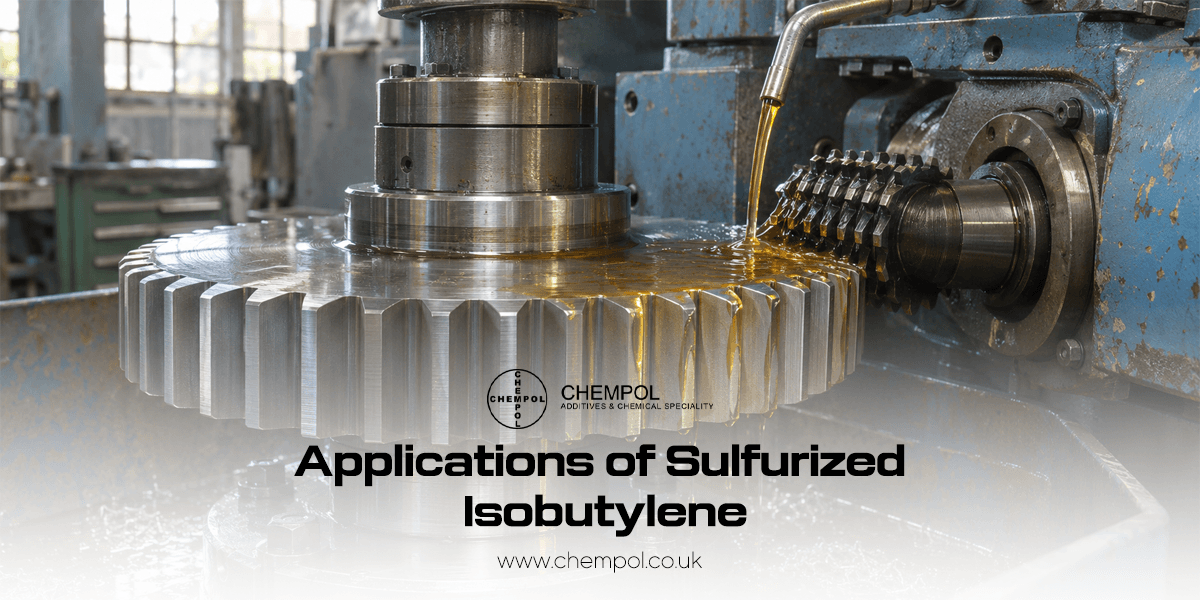
Applications of Sulfurized Isobutylene
Sulfurized isobutylene is used in several industrial lubricant applications where pressure protection and surface durability are critical factors. The suitability of a specific formulation, however, depends on the operating environment, metal compatibility, and finished lubricant requirements.
Sulfurized Isobutylene for Gear Oils and Industrial Gear Lubricants
Industrial gear systems are those that are constantly exposed to mechanical loading, such as in industrial transmissions, manufacturing equipment, and heavy machinery. The machines used in these applications demand lubricants that provide the necessary load-carrying properties and minimize excessive wear between moving surfaces.
Sulfurized Isobutylene for Gear Oil is especially important in formulations that require sulfur-based extreme-pressure performance. It can also be used in a sulfur-phosphorus (S/P) gear oil system, which offers additional protection from sulfur and phosphorus chemistry.
Manufacturers, for instance, must take gear geometry, operating temperatures, load conditions, and the desired performance rating into account when formulating industrial gear lubricants. Also, when using sulfur-containing additives, copper corrosion and compatibility with non-ferrous metals should be considered.
Sulfurized Isobutylene for Metalworking Fluids and Cutting Oils
In metalworking processes such as machining, drilling, tapping, and cutting, friction occurs between the tools and workpieces, producing heat. These interactions can cause excessive tool wear, surface damage, and a loss of machining efficiency under demanding conditions.
Sulfurized Isobutylene for Metalworking Fluids can help protect contacting surfaces during high-load metalworking and support extreme-pressure lubrication.
In addition, sulfurized cutting oil additives are considered in the development of formulations for cutting operations with significant cutting pressures. Manufacturers, however, need to consider the type of metal being processed, the machining conditions, the fluid formulation, and its compatibility with other additives.
Sulfurized Isobutylene for Greases and Other Extreme Pressure Lubricants
Industrial greases for heavily loaded applications must provide the necessary extreme-pressure (EP) and wear protection. Sulfur additives can be added to grease to enhance lubrication under extreme contact conditions, depending on the application.
Similarly, Sulfurized Isobutylene for Extreme Pressure Lubricants can be considered for specialized industrial products where load-carrying properties are important.
For grease manufacturers, compatibility with the thickener system, base oil, and other additives should be assessed through appropriate formulation testing before commercial production.
Sulfurized Isobutylene vs. Other Extreme Pressure Additives
There are several extreme-pressure additive chemistries available to lubricant manufacturers: sulfur-based, phosphorus-based, sulfur-phosphorus or chlorine-containing compounds. The chemical properties and formulations differ for each type.
Sulfurized isobutylene is of special interest in applications that require extreme-pressure performance and where sulfur is needed to achieve it. Under such heavily loaded contact conditions, reactive sulfur can contribute to the formation of protective surface films, which in turn help minimize adhesive wear and scuffing.
At the same time, phosphorus-based additives can provide anti-wear and extreme-pressure properties in various ways. Sulfur-phosphorus formulations are used to provide the proper balance of protection for specific gear oil applications.
Why Consider a Chlorine-Free Extreme Pressure Additive?
In the past, some extreme pressure lubricants have been formulated with chlorinated compounds. But when manufacturers design products with targeted environmental, regulatory, and formulation goals, they are increasingly considering alternative chemistries.
A Chlorine-Free Extreme Pressure Additive provides an alternative for the formulator who wants sulfur-based EP chemistry but does not want to include chlorine-containing additive components.
Therefore, sulfurized isobutylene may be considered for producing chlorine-free gear oils, cutting oils, and industrial lubricants. However, chlorine-free alone does not indicate the environmental or regulatory acceptability of a finished lubricant. There are still formulation properties and requirements to be evaluated.
How to Choose the Right Sulfurized Isobutylene Supplier
Choosing a reliable Sulfurized Isobutylene Supplier is a critical purchasing decision for lubricant manufacturers, industrial oil blenders, and formulation companies. In addition to product availability, buyers should consider technical consistency, oil compatibility, documentation and commercial supply arrangements.
First, it is important to understand that the sulfur content is a key property of sulfur-based EP additives, and this needs to be checked. But no guarantee that increasing the sulfur content will provide better finished-lubricant performance. Chemistry, reactivity, solubility, and behavior throughout the formulation are also important.
Second, the manufacturer needs to evaluate compatibility with the base oil and other chosen formulation ingredients. This is especially important when sulfurized isobutylene is mixed with phosphorus-containing additives, antioxidants, corrosion inhibitors, and other performance additives.
Third, product selection should be based on application-specific testing. Gear oil manufacturers may need extreme-pressure and copper corrosion tests, and metalworking fluid manufacturers may need to determine machining capability and compatibility with a fluid system.
Lastly, buyers should look out for technical data sheets, safety documents, batch information, technical assistance and commercial supply information. These factors can guide manufacturers in making an informed procurement decision and ensure consistency in blending.
Why Consider CHEMPOL 5321 Sulfurized Isobutylene Additive?
CHEMPOL 5321 Sulfurized Isobutylene is a transparent, oily, chlorine-free liquid produced from sulfur and isobutylene. It is developed for lubricant formulations that require extreme-pressure and anti-wear performance. It is targeted for use in high-quality gear oils, metalworking fluids, cutting oils and greases. Furthermore, it is an important additive in sulfur-phosphorus-type gear oil formulations.
High Sulfur Content for Extreme Pressure Applications
The sulfur content of CHEMPOL 5321 is specified as 40-48% by mass and typically about 46%. Its high sulfur content makes it of interest to manufacturers of sulfur-bearing extreme-pressure lubricants.
The product offers a sulfur-containing additive option for gear oil formulators for applications that require load-carrying and anti-wear properties. But the right treat rate needs to be determined during formulation development and testing.
Chlorine-Free Formulation for Industrial Lubricants
CHEMPOL 5321 is based on sulfurized isobutylene chemistry, which is chlorine-free. This makes it suitable for lubricant manufacturers seeking to use EP additives in chlorine-free formulations.
It is suitable for use in industrial gear oils, metalworking fluids, and greases where sulfur-based EP chemistry is required.
Oil Solubility, Thermal Stability, and Compatibility
Another key feature of CHEMPOL 5321 is its proven solubility in oil and compatibility with other additives. These properties help formulate multi-component industrial lubricants.
It can withstand high temperatures and is suitable for high-temperature lubrication applications. However, compatibility and finished-fluid performance should always be verified using the base oil and formulation to be used in the finished fluid.
Discover CHEMPOL 5321
The choice of Sulfurized Isobutylene Additive is critical to the process for formulating industrial lubricants with proper extreme-pressure and anti-wear properties. Regarding the selection of products for use in the manufacture of gear oils, metalworking fluids, cutting oils, and greases, considerations should be based on factors such as sulfur content, oil solubility, thermal stability, and additive compatibility.
CHEMPOL 5321 offers a chlorine-free, high-sulfur formulation designed for demanding industrial lubrication applications. Chempol offers lubricant manufacturers, industrial blenders, and formulators to try this product for their formulation and procurement needs.
Looking for a Reliable Supplier of Sulfurized Isobutylene Additives?
Contact Chempol to enquire about CHEMPOL 5321, request technical documentation, discuss bulk supply requirements, and explore application-specific formulation solutions.