[email protected]

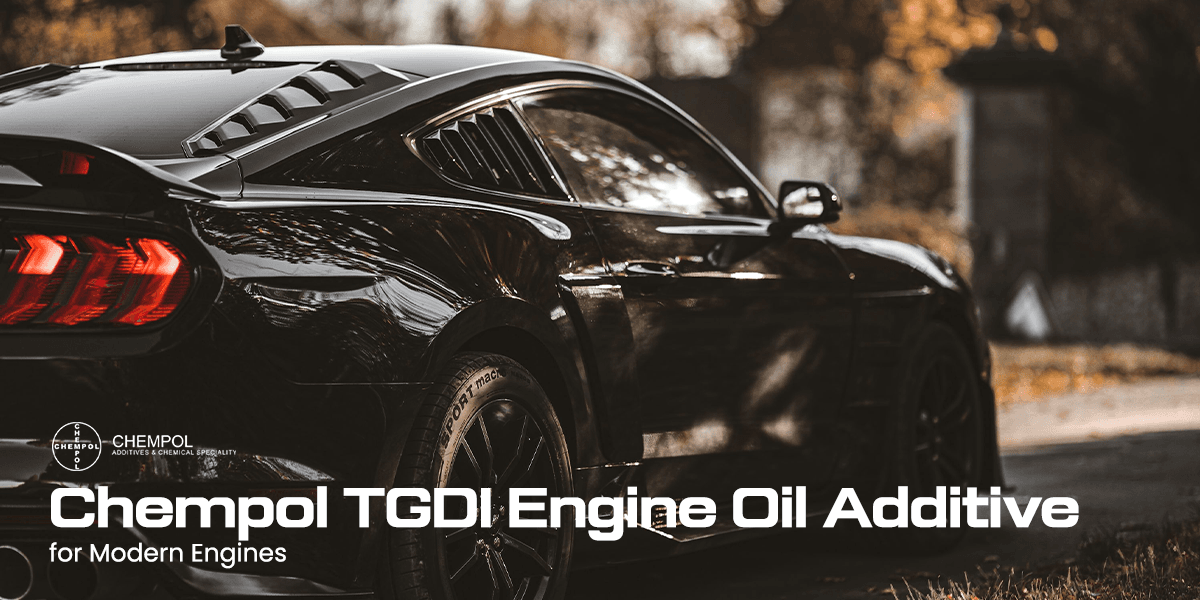
Chempol TGDI Engine Oil Additive for Modern Engines
The turbocharged gasoline direct-injection engines provide high power, higher fuel economy, and reduced emissions while maintaining a compact engine size. These benefits, however, pose challenging conditions within the engine. Elevated cylinder pressures, higher operating temperatures, high turbocharger speeds, soot contamination, and increased stress on timing chains may push the limits of ordinary lubricants.
One of the most serious risks is Low-Speed Pre-Ignition, or LSPI. This anomalous combustion may happen at the time when the fuel-air mixture ignites prior to the desired spark and creates abrupt pressure surges that can damage pistons, rings, connecting rods, and other important parts. The engine can also be affected by oxidation, sludge, deposits, timing chain wear, and reduced fuel economy in modern engines with poorly formulated lubricant.
Chempol TGDI Engine Oil Additive is designed to help lubricant formulators address these issues through modern, balanced engine oil formulation technology. It aids LSPI regulation, wear protection, oxidation resistance, deposit management, and longevity and cleanliness. For oil marketers, lubricant blenders, automotive suppliers, and technical buyers, it provides a solid basis for formulating reliable gasoline direct-injection engine oils.
Chempol recognizes that modern passenger car motor oils should not be used only to reduce friction. They should maintain turbocharger cleanliness, protect highly loaded parts, support catalytic converter protection, and performance during the drain interval.
Contact Chempol today to discover the ultimate TGDI engine protection solution.
Developing a lubricant for modern gasoline vehicles? Speak with Chempol about your target viscosity grade, base oil system, performance level, and market positioning.
What is a TGDI Engine Oil Additive and Why Does It Matter?
A TGDI engine oil additive is a precisely formulated mixture of chemical compounds blended into base oil to form a complete lubricant for turbocharged gasoline direct injection engines. The major lubricating film is formed by the base oil, which cannot provide all the protection modern engines need. Additive chemistry provides detergency, dispersancy, anti-wear performance, oxidation control, friction management, corrosion resistance, and foam control.
Chempol TGDI Engine Oil Additive is designed for formulations where performance must remain balanced. When one property is increased without considering the other properties, it can lead to some problems. An oil must contain deposits and not undue strain on emission systems. It has to minimize wear, maintain fuel economy, maintain constant viscosity, and protect high-temperature engines.
The importance of this balance is especially evident because GDI and TGDI engines may introduce soot and combustion by-products into the oil. These pollutants can cause abrasive wear, viscosity changes, and elongation of timing chains. Oil is also subjected to high temperatures in turbochargers, which increase the risk of oxidation and deposits.
Thus, a high-performance TGDI engine additive is a strategic formulation tool. It assists lubricant firms to react to new vehicle technology, increased performance demands, and client demand for longer engine life. Get in touch with Chempol to negotiate the engine oil segment that you intend to serve.
How Chempol Supports LSPI Protection and Wear Control
Another characteristic of the oils used in turbocharged gasoline engines is Low-Speed Pre-Ignition Protection. The most common operating conditions for LSPI are low-speed, high-load operation, e.g., high-gear rapid acceleration. In this state, unnatural combustion may cause harmful pressure before normal spark-triggered combustion occurs.
Lubricant chemistry can be used to affect LSPI frequency. The development of modern formulations thus involves meticulous balancing of detergents, dispersants, anti-wear agents, antioxidants, friction modifiers, and other ingredients. The Chempol TGDI Engine Oil Additive is designed to meet the requirements of current TGDI engine protection, enabling formulators to create oils that work harder to control the risks of abnormal combustion.
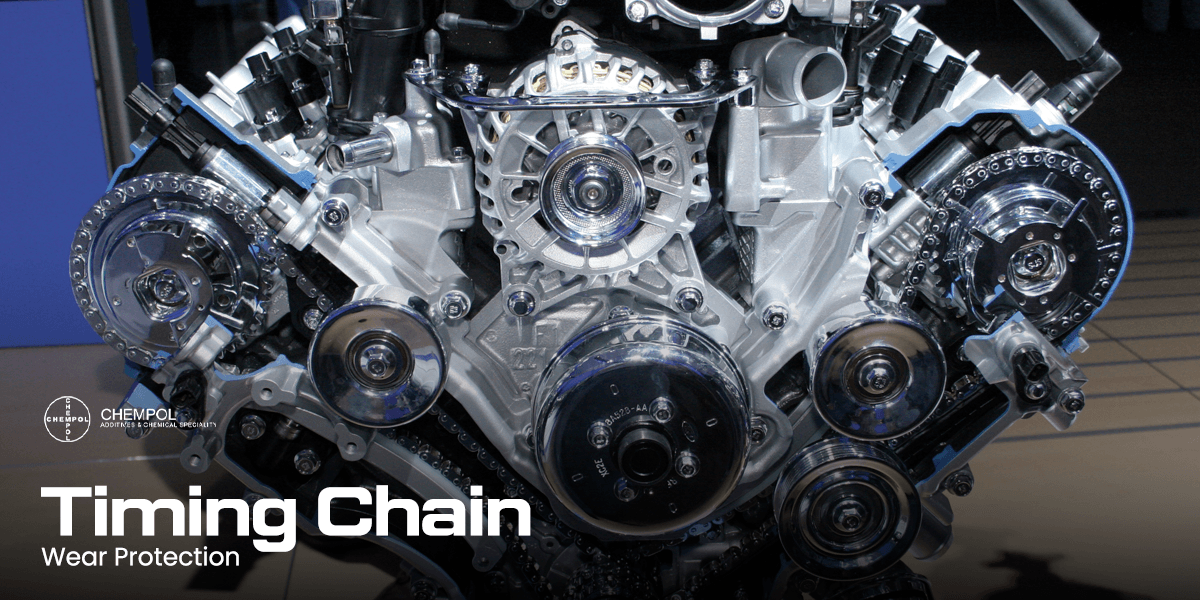
Timing Chain Wear Protection
Another issue with direct injection engines is timing chain wear. Soot can create abrasive conditions around chains, pins, guides, and sprockets. This can eventually lead to chain elongation, noise, incorrect valve timing, poor performance, and costly repair.
Optimization of timing chain wear protection involves managing soot, ensuring robust film formation, controlling deposits, and maintaining viscosity stability. The balanced additive strategy used by Chempol allows for the maintenance of the suspension of contaminants and a protective film on highly loaded surfaces.
Protection in Stop-Start Driving
There is a high rate of stop-start cycles, prolonged idling, fuel dilution, and moisture contamination in urban vehicles. These circumstances may hasten sludge and wear. Chempol TGDI Engine Oil Additive helps control engine sludge and protects components under varying operating conditions.
The practical gains are reduced maintenance risk, maintained engine responsiveness, and increased service life. The same benefits provide lubricant brands with a compelling value proposition to workshops, distributors, fleets and vehicle owners.
Request a free sample of Chempol TGDI Engine Oil Additive now!
Discuss your target treat rate, formulation objectives, and testing requirements with Chempol.
Fuel-Efficiency Benefits of High-Performance TGDI Additives
One of the key factors that manufacturers adopt smaller turbocharged engines is fuel economy. The lubricant should enable this efficiency without compromising protection. A low-emission fuel engine lubricant additive helps reduce unnecessary friction, regulate viscosity changes, prevent contamination, and maintain lubrication throughout the oil's service life.
The Chempol TGDI Engine Oil Additive can facilitate the current development of low-viscosity oil, in which retaining fuel economy is a significant goal. Its oxidation and deposit-control properties help keep the oil closer to the desired performance profile. Oiled oil may thicken, circulate less efficiently, and increase drag. Deposits on piston rings can also increase oil consumption and reduce sealing performance.
A well-formulated oil will aid in easier cold starts, quicker circulation, reduced pumping losses, and dependable protection at high temperatures. Hybrid cars are particularly suitable for these advantages, as are compact turbocharged cars and fleets in congested cities.
Could your current formulation more effectively retain fuel-economy performance across the drain interval? Contact Chempol to evaluate the opportunity.
API SP and ILSAC GF-6 Additive Technology Explained
The API SP and ILSAC GF-6 are designed to meet the needs of contemporary gasoline engines, especially turbocharged direct-injection engines. Their areas of performance are LSPI protection, timing chain wear, oxidation stability, piston cleanliness, sludge control, fuel economy, and compatibility with the emission system.
An ILSAC GF-6 Additive system should help form a balanced finished oil that meets rigorous laboratory and engine-test demands. On the same note, API SP performance requirements place greater emphasis on modern engine protection than on older gasoline engine oils.
Chempol TGDI Engine Oil Additive is designed to assist formulations in meeting these new performance demands. The ultimate claims and approvals rely on the entire formulation, base oils, viscosity modifiers, pour point depressants, treat rates, laboratory testing, engine testing, and formal licensing where necessary.
This difference establishes credibility. Chempol does not promote unsubstantiated claims about specifications. Rather, Chempol advocates responsible formulation, validation, and positioning of products. Prior to commercialization, technical teams can negotiate compatibility, formulation direction, and target performance.
Are you targeting API SP, ILSAC GF-6, or another regional specification? Contact Chempol before finalizing your formulation.
Detergent Dispersant Technology for Cleaner Engines
Durability requires engine cleanliness. Deposits may interfere with piston ring movement, limit oil flow, reduce turbocharger performance, and cause hot spots. Cooler areas may have sludge that builds up during short journeys, extended idling, infrequent maintenance, and stop-start driving.
Chempol TGDI Engine Oil Additive is based on detergent-dispersant technology to help control these contaminants. Washing agents help counteract acidic by-products and keep hot surfaces cleaner. The use of dispersants aids in the suspension of soot, oxidation products, and microscopic contaminants in order to reduce the chances of combination to sludge or harmful deposits.
This dual procedure aids with cleaner oil galleries, pistons, rings, and valvetrain parts. It also helps the lubricant remain more stable under mixed driving conditions.
Resistance to oxidation is also crucial. The breakdown of lubricants can be accelerated by heat, oxygen, and catalytic metals. An oxidation-resistance additive system helps delay the development of acids, varnish, viscosity increase, and deposits. This is critical in turbocharged gasoline engines, where the oil flowing through the turbocharger may be subject to high thermal loads.
Cleaner engines may offer benefits known to customers: more predictable operation, reduced maintenance risk, extended component life, and reduced chances of deposit-related failures. Chempol assists those who market lubricants to translate these technical benefits into viable commercial value.
Is your current additive package delivering the cleanliness required by modern TGDI applications? Ask Chempol for product and formulation information.
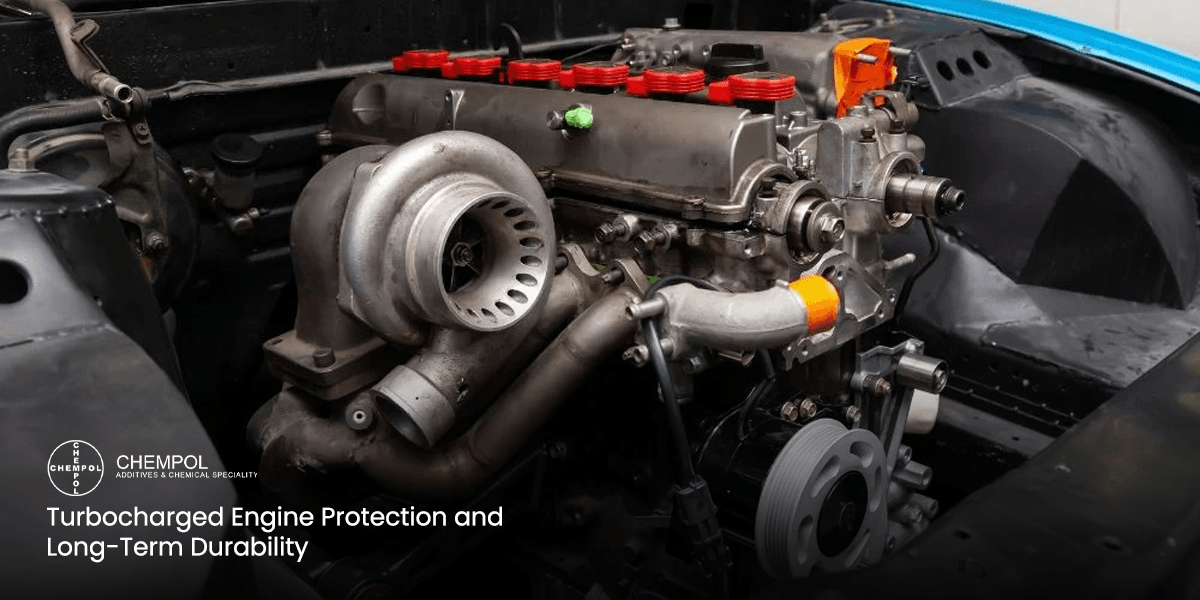
Turbocharged Engine Protection and Long-Term Durability
Turbochargers operate at very high speeds and temperatures. Engine oil has to lubricate turbo bearings, dissipate heat, resist oxidation, and not form deposits in small passages. Inappropriate oil may lead to varnish, coking, inadequate lubrication, and early wear of turbochargers.
Chempol TGDI Engine oil additive aids oils that are to operate under these harsh conditions by offering anti-wear, oxidation resistance, deposit control, and detergent dispersant technology. This moderate treatment will safeguard the turbocharger and the entire engine system.
Long-term durability is also determined by the ability to perform reliably at extreme temperatures. Oil should be circulating rapidly at startup. It has to maintain film strength under heavy load. In city traffic, it has to deal with contaminants and dampness. It should be able to endure heat on highways.
Chempol assists formulators in managing the entire operating cycle. This is aimed at cleaner parts, less wear, predictable lubrication, and increased confidence in harsh environments. The responsible additive design is also sensitive to catalytic converter protection and compatibility with modern emission systems.
For lubricant marketers, durability can be a powerful sales message: less preventable maintenance, increased engine life, and better protection of vehicle value. Contact Chempol to discuss a formulation designed for turbocharged engine protection.
Why Choose Chempol as Your TGDI Additive Manufacturer?
Selecting a TGDI Engine Oil Additive Manufacturer is not a mere buying process. It is a business-and-technical alliance. The additive package influences product quality, specification strategy, testing requirements, manufacturing consistency, customer confidence, and the lubricant's brand image.
Chempol integrates market awareness and a solution-oriented strategy. The company empathizes with the problems faced by lubricant blenders, such as shifting engine technology, more demanding standards, competitive pricing, variability in base oil, operating conditions in the region, and the need to introduce cost-effective products
Chempol TGDI Engine Oil Additive offers a performance-oriented product for gasoline direct injection engine oils, fuel-efficient lubricants, and passenger car motor oil. The technical discussions on target specifications, treat rates, formulation compatibility, testing, and product positioning can also be supported by Chempol.
Consistency and transparency help to build trust. Chempol urges customers to specify their target, perform proper testing, and claim based on the prepared formulation. This helps protect both the lubricant manufacturer and the consumer.
Whether you are launching a new API SP oil, upgrading an existing range, targeting ILSAC GF-6 Engine Oil Technology, or developing a high-performance TGDI engine additive product for a regional market, Chempol can help you move forward with greater confidence.
Give the Chempol team your desired viscosity grade, your choice of base oil, desired performance level, market, and desired production volume. Such information will facilitate a narrow technical discussion and an easier development process.
Partner with Chempol and ensure your engines run cleaner, cooler, and more efficiently.
Contact Chempol today to request product information, discuss sample availability, or begin a technical consultation for your next-generation TGDI engine oil formulation.