[email protected]

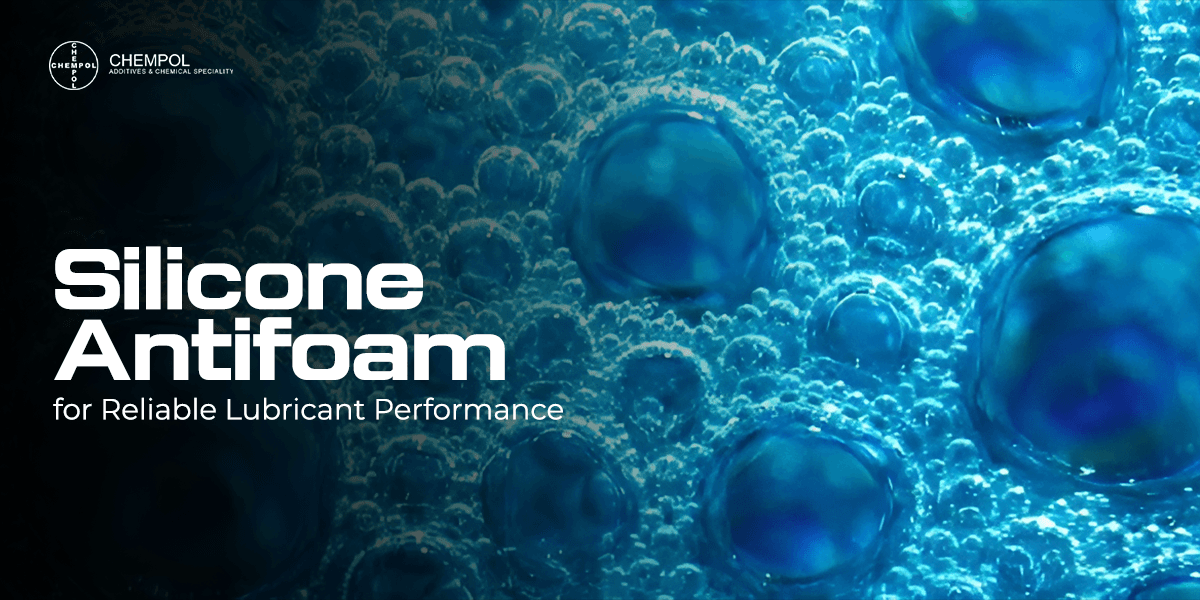
Silicone Antifoam for Reliable Lubricant Performance
Foam is not just a nuisance that can be seen in lubricant manufacturing. The entrapment of air in oil may cause the lubricant film to be weakened, disrupt oil pressure, enhance oxidation, diminish heat transfer and cause pump cavitation. Persistent foam can also delay the production during blending and filling, incorrect fill quantities, inconsistency of batches and waste.
One of the ways manufacturers of many products can manage these risks before they impact on the quality of the product or the life of the equipment is through a high-performance Silicone Antifoam. CHEMPOL 5177 - Silicone Based Antifoam, a foam-control solution that is ready to use in industries is offered by Chempol, which is composed of linear-chain Dimethylpolysiloxane polymers. It is designed to be used as a foam inhibitor in motor oil formulations and has reliable performance at elevated temperatures, oxidation, and mechanical shear.
For lubricant manufacturers, chemical importers, purchasing departments, and industrial formulators, CHEMPOL 5177 can offer a viable path towards more stable production, finished lubricants, and a reduced number of foam-related performance issues.
Contact Chempol for technical guidance, product specifications, and formulation support for CHEMPOL 5177.
What is Silicone Antifoam?
Silicone Antifoam is a special additive that eliminates or collapses unwanted foam in lubricants and compatible industrial formulations in a rapid manner. It operates at a low treatment level as it permeates through the thin liquid films that cover air bubbles in the liquid and deteriorate their structure.
A silicone antifoam agent is particularly beneficial as silicone polymers have minimal surface tension. This allows the additive to penetrate the foam films rapidly, destabilize the films and release the entrapment air. A Silicone Based Antifoam is thus widely applied in systems that are subjected to pumping, splashing, blending, circulation, high temperature or mechanical agitation.
A silicone based defoamer may also have quick action, durable results and economical treatment when compared to most traditional foam-control methods. This assists in batch control in lubricant production and in the finished application, ensuring reliable operation.
How CHEMPOL 5177 Works as a Foam Inhibitor
CHEMPOL 5177 is made out of the dimethylpolysiloxane polymers of linear chains. These polymers become dispersed on the surface of the bubble when foam forms and lead to a decrease in the stability of the liquid film. The damaged film breaks, the bubble bursts and air is expelled.
It is the surface-active process that enables CHEMPOL 5177 to be used as an effective Dimethylpolysiloxane Antifoam. It is used as a silicone foam inhibitor in blending and service, and is used to suppress any existing foam and prevent repeated foam formation.
Its linear molecular structure facilitates quick distribution by appropriate non-aqueous preparations. Being a linear silicone polymer antifoam, it is capable of providing high-potency foam control with a precisely optimized dosage. To manufacturers, this could translate to quicker blending, clean filling, reduced product loss and uniform lubricant performance.
Key Features and Performance Benefits of CHEMPOL 5177
CHEMPOL 5177 is also designed to perform in harsh lubricant environments where temperature variations, oxidation, pressure and shear can reduce the effectiveness of ordinary additives.
Excellent Thermal Stability
This is highly resistant to heat and can be used at high operating temperatures to be a reliable heat-resistant silicone antifoam in motor oils as well as industrial lubricant systems.
Good Resistance to Combustion
This aids performance in formulations that are exposed to extreme engine and equipment temperatures.
Good Oxidation and Shear Resistance
CHEMPOL 5177 maintains its foam-control capability in circulation, pumping, and other mechanical stress conditions. This renders it a potent oxidation-resistant silicone antifoam for demanding service.
Low Viscosity Variation with Temperature
Stable viscosity ensures dependable handling, dispersion, and performance amidst fluctuating temperatures.
Low Freezing Point
The product can be stored cold, shipped, and operated at low temperatures without becoming impractical.
Good Dielectric Properties
They can be useful in dedicated industrial applications where the behavior of electrical insulation is of interest.
High Compressibility
Its silicone structure performs reliably under changing pressure conditions.
No Ageing Under Weather Exposure
CHEMPOL 5177 offers strong environmental stability during normal storage and handling.
Useful Solvent Compatibility
It is soluble in aromatic, aliphatic, and chlorinated solvents.
Suitable for Non-Aqueous Systems
It is not soluble in water and alcohols, and is not miscible with most organic substances. Such characteristics make it an efficient non-aqueous silicone antifoam when used appropriately with the formulation.
These advantages assist manufacturers in cutting down on foam without affecting the efficiency of production or putting the finished lubricant at an unwarranted risk of instability.
Applications of Silicone-Based Antifoam in Lubricants
Foam may occur any time a lubricant is mixed, sprayed, circulated, or pumped. CHEMPOL 5177 is mainly designed as a foam inhibitor in motor oil formulation, and its performance properties can also be tested in other lubricant systems with which it is compatible.
Motor Oils
Engine oils are exposed to high temperatures, high circulation, splashing, oxidation and mechanical shear. An effective Lubricant Antifoam Agent will aid in preventing the formation of persistent foam that may interfere with the delivery of lubricants, lowering the strength of the film, and increasing the rate of lubricant breakdown. CHEMPOL 5177 helps to maintain the controlled foam levels in the motor oil formulations under harsh environments.
Industrial Lubricants
Air may be continually entrained in circulating oils, compressor oils, machine oils and other industrial lubricants. An appropriate lubricant antifoam additive can be used to ensure a steady operation, enhance the performance of the fluid, and minimize the downtime of the foam.
Hydraulic Oils
To ensure precision in transferring power, hydraulic systems depend on fluid. Compressibility is enhanced by trapped air, which may lead to delayed response, pressure variations, noise, heat, and cavitation. Good foam management promotes easier hydraulic operation and enhanced protection of pumps.
Gear Oils and Greases
Gear oils are highly agitated and sheared, with grease making might entrap air during mixing and filling. When compatibility and dosage are properly verified, a lubricant-grade silicone antifoam can be used to help prevent foam or entrained air.
Compatible Industrial Processing Systems
CHEMPOL 5177 can also be evaluated in the appropriate non-aqueous systems with aromatic, aliphatic, or chlorinated solvents. Always test compatibility using laboratory testing before commercial use.
Need a high-performance silicone antifoam for lubricant manufacturing? Request CHEMPOL 5177 pricing, technical data, sample availability, packaging options, and bulk supply terms from Chempol.
Why Industrial Manufacturers Choose Chempol
CHEMPOL 5177 targets manufacturers who are concerned with ensuring that the batch-to-batch consistency of foam-control remains consistent. Consistent quality of additives can minimize changes in formulations, manufacturing delays, filtration issues, and customer feedback.
Chempol is also aware that the antifoam performance is dependent on the entire formulation. Results can be affected by the use of base oil, detergents, dispersants, viscosity modifiers, mixing sequence, temperature and shear conditions. Technical advice assists buyers in judging CHEMPOL 5177 effectively in place of experimentation.
In case of repetitive production needs, Chempol can assist in bulk purchases, scheduled buying, commercial packaging, and supply agreements. Cost effectiveness can also be enhanced with optimized low dose treatment since foam is regulated without needless additive consumption.
Whether the requirement is a sample, quotation, technical discussion, distribution opportunity, or regular industrial supply, Chempol provides commercially responsive support for lubricant manufacturers and chemical buyers.
Why Foam Control is Critical in Industrial Lubricants
Lubricant performance can be directly damaged by foam and entrained air. Air decreases the persistence of the oil film, which separates moving surfaces, resulting in the enhanced likelihood of friction, heat, and wear.
A significant issue is cavitation. High-pressure pump areas can cause bubbles to collapse, creating vibration, noise, surface pitting, and ultimate damage to the component. Foam also increases the exposure of oil to oxygen, which accelerates the oxidation process and adds to the acidity, sludge, deposits and reduced life of the lubricant.
A good Industrial silicone Defoamer will assist in mitigating these threats by managing the persistent surface foam and emancipating the imprisoned air. On motor oils and circulating systems, this helps to maintain consistent oil flows, reliable pressure and enhanced protection of bearings, gears, pumps and other parts.
An oil-soluble silicone antifoam is sometimes sought after by buyers, but the real performance is subject to dispersion and compatibility in the entire oil system. CHEMPOL 5177 is not soluble in water and alcohols and thus is recommended in non-aqueous lubricant formulations.
How to Select the Right Silicone Antifoam
The best antifoam does not necessarily have to be the strongest one. Customers should pick a product that is consistent in the full formulation and in actual operating conditions.
Confirm Formulation Compatibility
Test the antifoam using the real oil base and additive package. It must not form unacceptable haze, separation, deposits, filter blockage or reaction with detergents, dispersants or viscosity modifiers.
Match the Operating Temperature
The additive should not be unstable in both production and use. CHEMPOL 5177 has good thermal stability and minimum viscosity change with temperature, and therefore it can be used in harsh lubricant conditions.
Review Solubility and Dispersion
CHEMPOL 5177 dissolves in aromatic, aliphatic and chlorinated solvents, but it is insoluble in water and alcohols. These attributes have to be matched to the proposed formulation and manufacturing procedure.
Optimize the Dosage
Adding more antifoam is not necessarily a good thing. Excessive treatment can affect the air release or stability of the product. Determine the right dosage by laboratory tests, pilot tests and final tests.
Test Under Realistic Conditions
The foams should replicate anticipated temperature, agitation, circulation, pressure, and shear. This provides a more accurate measure of performance than a mere room-temperature measure.
Evaluate Supplier Reliability
Dependable quality, documentation, packaging, lead time, and bulk availability should support technical suitability. Chempol assists purchasers in meeting formulation as well as long-term requirements.
Choose CHEMPOL 5177 for Dependable Foam Control
Foams that are not controlled may also decrease the lubricant efficiency, hasten oxidation, destroy pumps, raise equipment wear, and disrupt production. CHEMPOL 5177 is a high-quality Silicone Antifoam solution, which is built on the technology of linear-chain Dimethylpolysiloxane, has good thermal stability, oxidation and shear resistance, low freezing point, weather stability and handy solvent compatibility.
Chempol collaborates with industrial customers by providing quality, reliability, technical support, sample support, ordering in bulk, and rapid business response.
Contact Chempol today to request a CHEMPOL 5177 sample, technical data, product inquiry response, or bulk-order quotation. Get dependable industrial support and a reliable silicone antifoam solution for your lubricant formulations.