[email protected]


Best Railroad Engine Oil Additives for Diesel & Lubrication
Railroad locomotives are designed to withstand some of the most demanding mechanical workloads on the planet. These powerful diesel engines haul heavy freight across deserts, plains, and mountains. They often run for thousands of miles without rest. In such conditions, the lubricant system needs to perform flawlessly. At the heart of this performance are specialized railroad engine oil additives. These additives are made to extend oil life, protect engine components, and maintain efficiency under extreme operating conditions.
In this comprehensive guide, we’ll explore what makes the best additives for railroad engines, and how advanced products from Chempol are setting new standards in locomotive lubrication. We’ll also look at how these formulations help solve real railroad lubrication challenges while supporting environmental and operational goals.
What Are Railroad Engine Oil Additives?
In simple terms, railroad engine oil additives are special chemical compounds added to base oils to enhance performance. They are used to control wear, preserve viscosity under load, prevent soot dispersion, and neutralize acids formed during fuel combustion. The raw base oil cannot offer the same protection and performance due to the high levels of thermal and mechanical stress to which locomotive engines are exposed. That is where railroad engine additives come in.
These additives are not generic; they are designed to meet the specific needs of heavy-duty diesel applications in rail service. It is important to prevent soot buildup at high temperatures, enhance the film's properties under heavy loads, and in all cases, use quality additives to ensure engine reliability and minimize maintenance costs.
Why Standard Lubricants Don’t Cut It
Railroad diesel engines do not work like automotive or industrial engines. They operate at high loads for long periods, periodically change load, and operate under very harsh combustion conditions that form soot and acid byproducts. Automotive-grade engine oils are not designed to work in such extreme conditions.
In the absence of the right railroad lubricant additives, the oil would tend to wear quickly, oxidize, form sludge, and eventually lead to early engine failure. Since locomotives cannot be pulled out of service for regular maintenance, the quality of the lubricants they use directly influences the fleet's productivity and operating costs.
Advanced additive packages would overcome these problems by improving key lubricant characteristics. They enhance the stability at high temperatures, improve the durability of the oil film under extreme pressure, and ensure contaminants are suspended rather than depositing on engine surfaces.
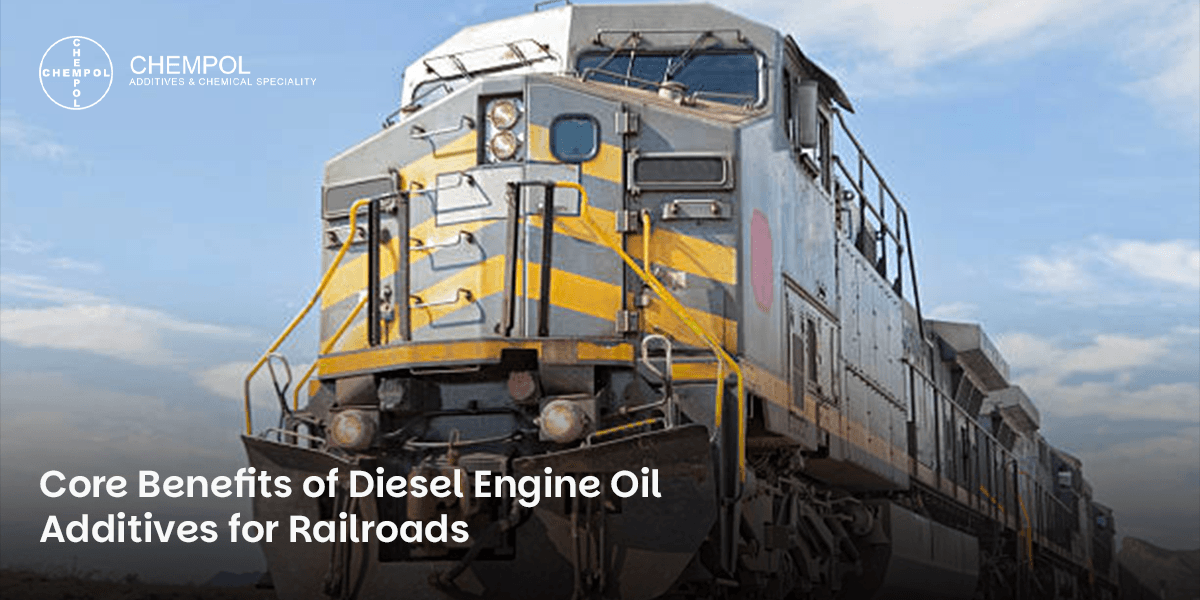
Core Benefits of Diesel Engine Oil Additives for Railroads
The right diesel engine oil additives for railroad locomotives do not just extend oil life. They provide all forms of performance enhancement that ensure engines are cleaner, run smoother, and live longer. Here’s how:
Stronger Wear Protection
Railway engines experience very high mechanical loading forces. Additives help create a protective layer that reduces the metal-to-metal contact, lowering wear on bearings, camshafts, pistons, and other essential engine parts, particularly under heavy load.
Enhanced Oxidation Resistance
Extensive high-temperature operation increases the rate of oil oxidation. The effects of oxidation include thickening, sludge formation, and acid generation. Quality additive packages prevent oxidation, make oil long-lasting, and prevent performance deterioration.
Improved Dispersancy and Detergency
Diesel engines produce combustion byproducts and soot. Additive packs of dispersants and detergents keep these contaminants in the oil rather than allowing them to form damaging deposits on engine parts. This is particularly significant with railroad engines, where long oil-drain intervals are common.
Acid Neutralization
The corrosion of engine metals can be caused by the combustion of fuels that produce acidic compounds. Internal surfaces are coated with additives with strong neutralizing properties, thereby minimizing corrosion risk.
Viscosity Control
Maintaining correct viscosity is important for lubricant performance. Oil viscosity tends to decrease at elevated temperatures and pressures. Advanced packages ensure the lubricant maintains its optimal thickness, preventing wear and improving fuel efficiency.
The Rise of Zinc‑Free Oil Additives for Railroad Engines
In the past, heavy-duty oils also used such anti-wear additives as zinc dialkyldithiophosphate (ZDDP). Although effective, zinc may form ash and exacerbate emissions problems, particularly when applied in systems with advanced after-treatment equipment. This has created high demand for zinc-free oil additives for railroad engines that deliver good performance while mitigating environmental impacts associated with metal-containing chemistries.
Longer oil life and cleaner piston surfaces are also encouraged by zinc-free formulations, which are essential to long-drain interval engines with rough operating cycles. These qualities are game changers in railroad environments where uptime matters.
What Makes High-Load Railroad Engine Oil Additives Different?
This is not the case with all additives. High-load railroad engine oil additives are designed to manage the extreme pressures and temperatures present in railroad diesel engines. They improve the strength and resiliency of the base oil, providing protection where it is most needed.
The oil film between bearing surfaces becomes thin, and stress levels increase under heavy load. The additives to which the high load is added make the film solid, ensuring constant protection. In addition, it even works in situations where the engine is pushed to extremes. It is this feature that makes high-load additives an ingredient in high-quality locomotive lubricant formulations.
These additives are also used to preserve the oil's structural integrity during thermal shear and mechanical degradation, a critical aspect for engines that must operate with long-term durability at high speeds and loads.
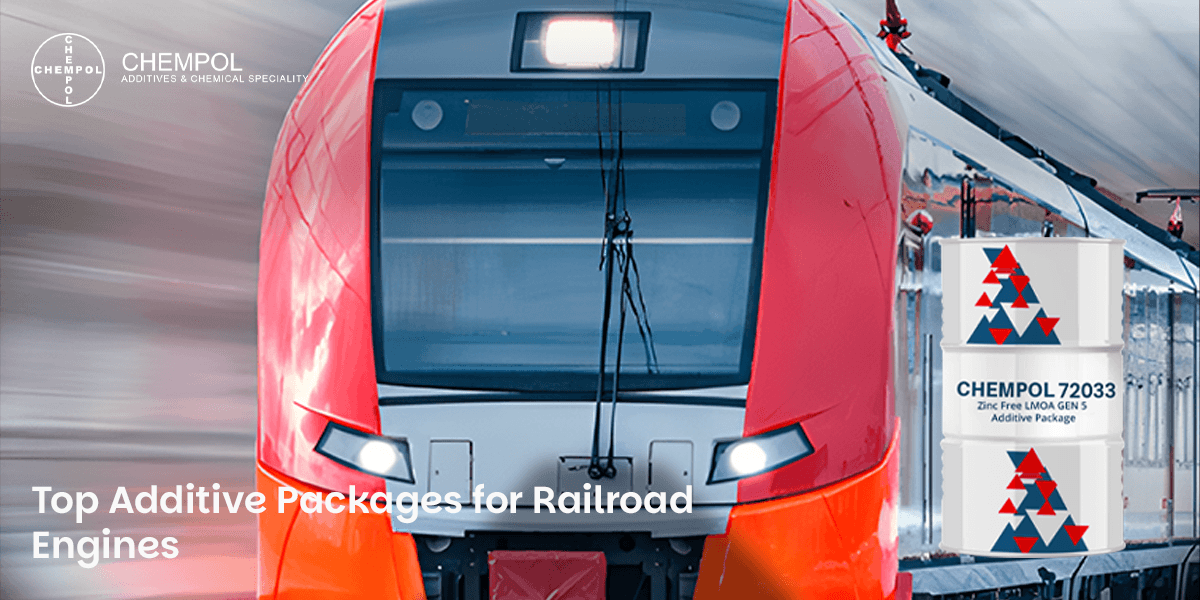
Top Additive Packages for Railroad Engines
Chempol 72033 – Zinc Free LMOA GEN 5 Additive Package
It is a high-performance additive package that is suited to medium-speed railroad diesel engines. It provides outstanding detergency, dispersancy, and thermal stability without zinc, and is ideal for modern railroad engine oils that must meet both performance and environmental requirements.
Chempol 72033 enhances oil stability under extreme conditions, provides high levels of wear protection, and raises the requirements for soot and contaminant management. Its formulation helps keep engines clean, extends oil life, and thus minimizes downtime and maintenance expenses.
Choosing the Right Additive for Your Fleet
To choose a high-quality additive package, you must have a good knowledge of the operation profile of your railroad. Factors such as average load, duty cycle (continuous or intermittent), ambient temperature extremes, and maintenance strategy all play a role in determining the optimal additive selection.
When you collaborate with experts such as Chempol, you will receive a specific solution that helps you achieve the performance objectives. And whether it's maximum engine protection, long oil drain, lower emissions, or a combination of all of these, additive expertise at Chempol can be used to create engine oils that deliver measurable results.
Additive selection must also be taken into account with regard to the additive's compatibility with base oil groups and the lubricant systems available, to ensure stability and prevent any adverse effects. Highly developed packages such as Chempol 72033 are designed for broad compatibility with current base stocks, enabling use across a variety of applications.
Why Choose Chempol for Advanced Railroad Engine Oil Additives
Improve the lubrication system of your railroad fleet with Chempol's modern additive solutions. Need to increase protection, increase oil life, or increase the efficiency of your operations? Chempol has the knowledge and products to make you successful. Contact Chempol now and find out the most suitable railroad engine oil additives to use in your diesel railroad engine, and begin optimizing performance now!