[email protected]

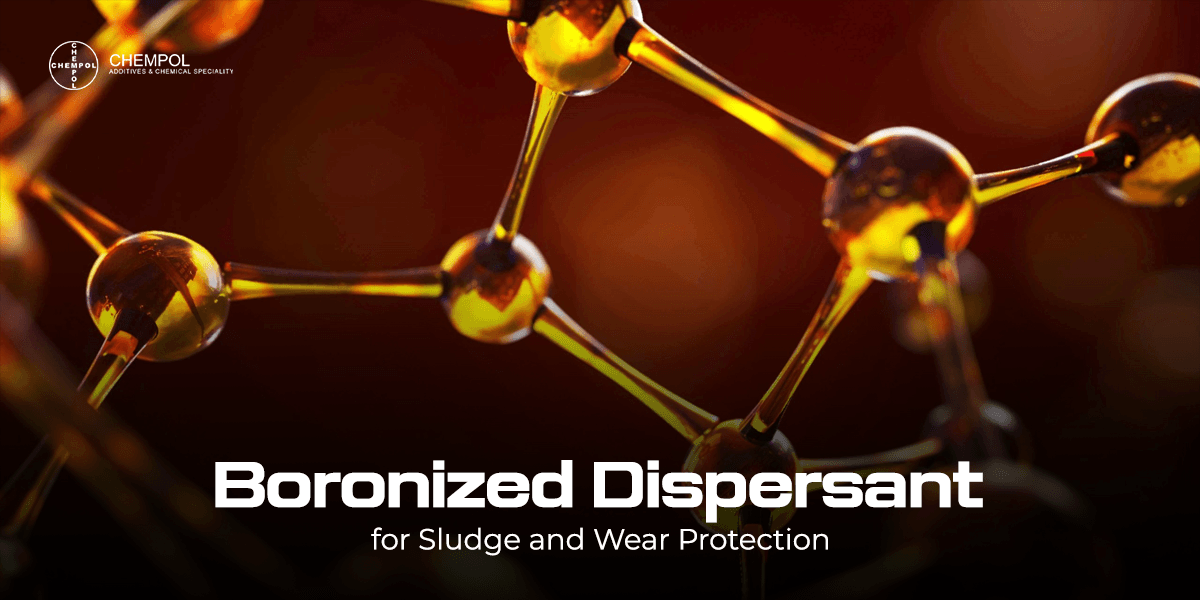
Boronized Dispersant for Sludge and Wear Protection
The pressure on lubricant formulators is mounting to create products that provide cleaner operation, longer oil life, reduced friction, and greater wear protection. Simultaneously, they have to ensure additive compatibility, formulation stability, and competitive production costs.
Today's engines and industrial systems run at higher temperatures, under heavier loads, with longer drain intervals, and are more demanding in fuel efficiency. These conditions enhance oxidation, sludge, varnish deposits, friction, wear, and scuffing. Traditional dispersants can aid in suspending contaminants, although most lubricant formulations demand increased performance from the same additive system.
An effective solution is a boronized dispersant, which offers both effective contaminant control and added surface protection. CHEMPOL 5200B is an ashless boronized succinimide-based dispersant, designed to be used in challenging automotive and industrial lubricant applications.
It helps regulate NOx-related sludge and oxidation deposition and promotes reduced friction, wear, and scuffing. Chempol provides a commercially viable and technically reliable additive solution for manufacturers seeking to enhance lubricant performance without introducing unwarranted complexity into the formulation.
Looking for a high-performance boronized dispersant for your lubricant formulations? Contact Chempol's technical team today to discuss your application requirements.
What is a Boronized Dispersant?
A dispersant is a lubricant additive that maintains insoluble contaminants, oxidation products, soot precursors, and sludge-forming particles in the oil.
Without a suitable dispersant, these contaminants may accumulate into larger particles and deposit on pistons, bearings, valve components, transmission parts, and oil pathways. This can limit lubricant flow over time, leading to higher friction and lower equipment reliability.
An improved boronized succinimide dispersant is a derivative of conventional succinimide dispersant chemistry with boron. The succinimide structure reacts with contaminants, and the oil-soluble fraction maintains the contaminants dispersed in the lubricant.
The dispersant is widened in its functionality through boron modification. When properly formulated as a lubricant, it may help with wear, friction reduction, improved anti-rusting resistance, and better surface protection.
This makes boronized chemistry well-suited for formulators requiring a lubricant dispersant additive that promotes cleanliness and mechanical endurance.
CHEMPOL 5200B is an ashless boronized dispersant. The ashless term implies that the additive is not based on the traditional metallic detergent chemistry that can dramatically raise sulfated ash.
This feature is useful for lubricant manufacturers who require good sludge management while meeting performance goals and finished lubricant specifications for ash.
Why Modern Lubricants Need Advanced Dispersant Technology
Modern lubricants require advanced dispersant technology.
Modern engines, transmissions, and other industrial machinery now operate under more severe conditions.
Turbocharging, stop-start operation, increased power density, reduced oil volume, high operating temperatures, and long service life are factors that accelerate lubrication degradation.
One of the biggest problems of modern engine lubrication is the exposure to NOx. The oxidation products, fuel residues, and other contaminants can recombine with NOx to form sludge-forming materials.
A good NOx Sludge Control Additive will ensure that these materials do not combine and form deposits. This will facilitate cleaner oil flow and reduce the possibility of clogged oilways and limited component movement.
Another essential issue is oxidation. During the process of the oxidation of lubricating oil, acids, precursors of varnish, insoluble particles, and sticky deposits may be produced.
An oxidation deposit control dispersant suspends these materials. This inhibits their propensity to adsorb onto hot surfaces and disrupts lubrication, heat transfer, and mechanical efficiency.
The use of low viscosity lubricants has also been promoted by fuel economy requirements. These oils can minimize energy loss, but since they have lower lubricant films, anti-wear and friction-control chemistry might become more significant.
The complete formulation can be reinforced by a multifunctional additive that serves as an anti-wear lubricant additive, a friction-reduction additive, and a scuffing-protection additive.
These challenges are more demanding with extended drain intervals. The lubricant should be able to resist more contamination and still be compatible with detergents, antioxidants, corrosion inhibitors, viscosity modifiers, anti-wear agents, and other performance additives.
Boronized dispersant technology is a progressive approach to meeting these interconnected performance needs more efficiently.
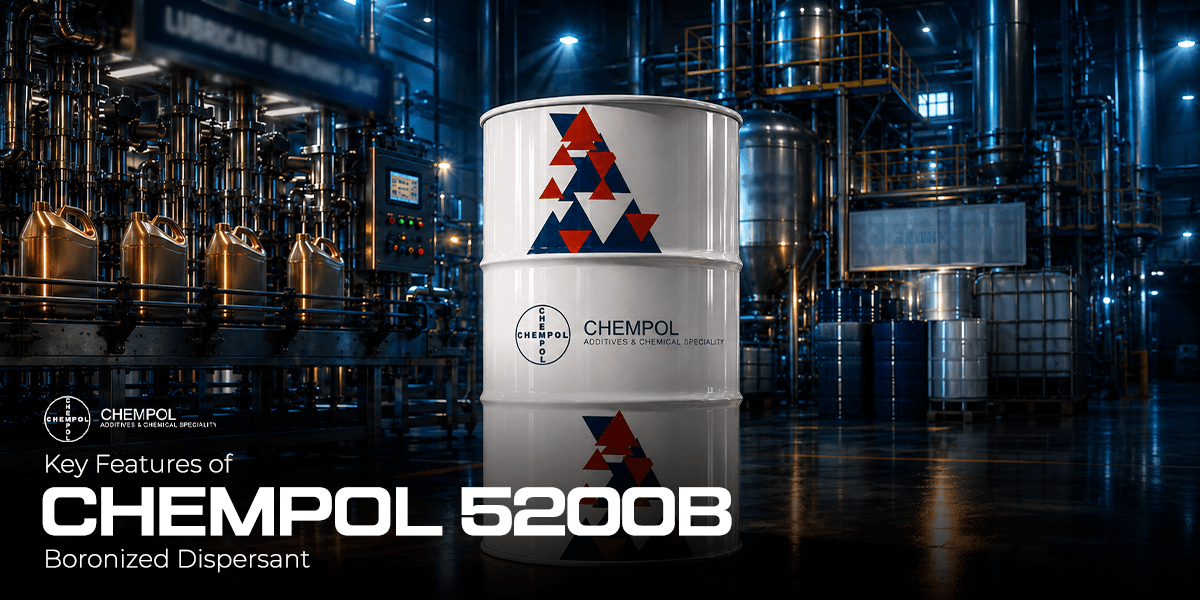
Key Features of CHEMPOL 5200B Boronized Dispersant
Below are the key features of Chempol 5200B:
Superior NOx Sludge Control
CHEMPOL 5200B has been developed to help manage sludge related to NOx exposure and lubricant degradation.
NOx contaminants may react with oxidation products and fuel residues, forming thick sludge. Unless this material is contained, it can block oil passages, reduce piston ring movement, and affect internal engine cleanliness.
CHEMPOL 5200B assists in maintaining sludge-forming substances in fine suspension in the lubricant. Its decrease in contaminant agglomeration promotes cleaner oil flow and decreases the risk of damaging deposits accumulating on inner surfaces.
This performance is especially useful in engine oils required to operate under high temperatures, frequent stop-start cycles, long drain intervals, and challenging commercial duty cycles.
Oxidation Deposit Control
Oxidation may produce varnish, acid, insoluble material, and sticky deposits that form on pistons, bearings, valves, transmission parts, and other high-temperature surfaces.
CHEMPOL 5200B is an oxidation deposit control dispersant that aids in the suspension of these oxidation by-products in the lubricant.
This decreases their propensity to create hard deposits or surface films which can influence oil flow, friction behavior, heat transfer, and component dependability.
To the lubricant manufacturers, better deposit control can facilitate cleaner equipment, longer fluid life, and more reliable operation at higher operating temperatures.
Enhanced Anti-Wear Performance
CHEMPOL 5200B offers an added advantage on top of traditional dispersancy.
Its boron-containing chemistry can help protect surfaces under loaded operating conditions. This helps reduce direct metal-to-metal contact and reduce wear on vital parts.
CHEMPOL 5200B can be used as an anti-wear lubricant additive to complement existing anti-wear systems, such as those with ZDDP-based formulations.
This provides the engine oil and industrial lubricant formulators with more flexibility in weighing cleanliness, oxidation stability, wear protection, and additive compatibility.
Friction Reduction Benefits
Friction reduces power loss, heat generation, component stress, and operating expenses.
With an appropriately designed lubricant system, CHEMPOL 5200B may be used to help manage friction. Its boronized chemistry can help facilitate the interaction of moving metal surfaces.
It can be used as a friction-reduction additive to sustain lubricants engineered for reduced mechanical losses, enhanced operating efficiency, and smooth equipment operation.
Such advantages apply in engine oils, automatic transmission fluids, gear oils and industrial lubricants where friction directly impacts on efficiency and durability.
Scuffing Protection
Scuffing takes place when heavily loaded surfaces lose adequate lubricant film and direct or nearly direct contact takes place.
This may lead to scoring, material movement, and abrasive wear and early equipment breakdown.
CHEMPOL 5200B assists in increasing the protection against friction-related and scuffing-related damage. It has a boron-based chemistry that promotes surface durability when subjected to variable loads and high temperatures.
It can be regarded as a scuffing protection additive applicable to formulations in engines, transmissions, gears, bearings and industrial machinery.
Seal Compatibility
Seal compatibility is a critical concern in engine oils, transmission fluids, gear oils and industrial lubricants.
Inappropriate additives may lead to undue swelling, hardening, cracking or leakage of the seal. Such issues can add to maintenance expenses, downtime, and warranty claims.
CHEMPOL 5200B is designed to enhance compatibility with rubber sealing materials while ensuring effective dispersant performance.
This rubber-seal-compatible dispersant profile allows formulators to address a significant technical and commercial issue.
Even finished lubricants must be subjected to application-specific seal testing as ultimate compatibility relies on the entire formulation, base oil, treat rate, and the type of seal material.
Low Chlorine Content
Many lubricant manufacturers are concerned about purchasing and formulation regarding chlorine content.
CHEMPOL 5200B is positioned as a Low-Chlorine Dispersant Additive, which helps formulators meet halogen-related specifications and internal quality demands.
Reduced chlorine levels can facilitate a cleaner additive choice and help manufacturers satisfy customer-specific or regional formulation requirements.
This feature can make product assessment and supplier selection easier for technical buyers and procurement managers.
Excellent Additive Compatibility
A complete lubricant has various additives that cannot cause instability, haze, separation, precipitation, or loss of performance.
CHEMPOL 5200B can be used with a wide variety of typical lubricant additives, including ZDDP.
This compatibility facilitates testing in engine oils, transmission fluids, two-stroke oils, gear oils, and some industrial lubricant formulations.
Its light color and low turbidity can also support clean, stable finished products.
Good additive compatibility minimizes the risk of incompatibility and provides formulators with increased flexibility in developing new lubricant systems.
Need technical data, formulation support, or bulk supply information? Contact Chempol today and discover how CHEMPOL 5200B can improve lubricant performance.
Boronized Dispersant vs Conventional Dispersants
Conventional succinimide dispersants are popular for suspending contaminants and managing sludge. However, they are mainly concerned with cleanliness and deposit management.
Expanded Range of Functionality
A high-performance boronized dispersant offers an expanded range of functionality due to its ability to provide effective dispersancy along with extra friction, wear, and surface-protection characteristics.
Avoid Mixing of Contaminants
Traditional dispersants are used to avoid the mixing of contaminants and their settling on engine parts. CHEMPOL 5200B is also capable of controlling sludge related to NOx exposure and the oxidation of lubricants.
This makes it especially pertinent to modern engines subjected to high temperatures, harsh duty cycles, or long drain intervals.
Suspend Oxidation Products
Conventional and boronized dispersants can be used to suspend oxidation products. However, CHEMPOL 5200B is used when varnish precursors, insoluble substances, and high-temperature deposits can influence oil circulation and component purity.
Wear Protection
Another significant difference is wear protection.
Strong anti-wear performance is not typically desired of conventional dispersants. The boron-based chemistry of CHEMPOL 5200B enables it to play a role in surface protection and minimizing metal-to-metal damage.
The benefits of friction-reduction provided by CHEMPOL 5200B are typically not available in traditional dispersant chemistry.
Reduce Frictional Stress
It reduces frictional stress, helping generate less heat, reduce mechanical stress, and enhance mechanical efficiency.
Scuffing Protection
Another formulation benefit is the scuffing protection. Liquid dispersants, especially conventional ones, are used to control contaminants, whereas CHEMPOL 5200B may also be used to minimize harm under heavy-load operating conditions.
It is also important to have seal compatibility and formulation stability. CHEMPOL 5200B is engineered for better compatibility with rubber sealing materials and frequently used lubricant additives, such as ZDDP.
Enhanced Efficiency of Formulation
The business benefit is enhanced formulation efficiency.
Lubricant manufacturers can consider CHEMPOL 5200B as a versatile solution rather than treating sludge control, friction, wear, and scuffing as totally different issues.
Final performance will depend on the choice of base oil, additive interactions, treatment rate, and finished lubricant testing. However, boronized chemistry offers a larger development platform than a typical dispersant alone.
Why Lubricant Manufacturers Choose Chempol
Lubricant manufacturers do not need claims made on the product. They require reliable product quality, supply regularity, compatibility with formulations, helpful technical data, and responsive service.
CHEMPOL 5200B is placed in Chempol's portfolio of high-performing automotive and industrial lubricant additives.
For procurement managers, uniform product features may help minimize batch uncertainty and facilitate easier supplier approval. For formulators, it gives them flexibility in product development since it is compatible with ZDDP and other popular additives.
For commercial teams, multifunctional performance helps sustain a more robust value proposition for finished lubricants around cleanliness, wear protection, friction control, and equipment durability.
Chempol pursues an application-oriented strategy due to the varied base oils, testing needs, treat rates, and performance targets in engine oils, automatic transmission oils, gear oils, two-stroke oils, and industrial lubricants.
Preliminary technical consultation may help manufacturers reduce development risk and determine which testing program is appropriate and which additive level is most suitable for their target application.
CHEMPOL 5200B can be applied in a variety of lubricant types and environments. This makes it a flexible choice for lubricant manufacturers, additive blenders, and distributors with regional or global markets.
Speak with Chempol's specialists to find the right dispersant solution for your lubricant formulation.
Ready to Order Boronized Dispersant in Bulk?
Modern lubricants have to manage NOx-related sludge, oxidation deposits, friction, wear, scuffing, and seal interactions and be stable in a complex additive system.
CHEMPOL 5200B offers a viable means of dealing with these interrelated issues with multifunctional Boronized Dispersant technology.
CHEMPOL 5200B is an ashless dispersant made of boronized succinimide that gives it anti-wear, friction-reduction, and scuffing-protection properties in addition to contaminant suspension.
It has low chlorine content, is compatible with rubber seals, has a light appearance, and is compatible with ZDDP, which makes it applicable to engine oils, automatic transmission fluids, two-stroke oils, gear oils, and some industrial lubricants.
For lubricant manufacturers, it is not just technical performance that matters. These versatile additives can simplify formulation, enhance product positioning, and help provide cleaner, longer-lasting lubricant systems.
Chempol integrates high-tech lubricant additive development with support to formulators, buying teams, product development engineers, additive blenders, and lubricant manufacturers, all application-oriented.
Contact Chempol today to discuss your lubricant formulation requirements, request technical information, or obtain a quotation for CHEMPOL 5200B.