[email protected]

Choosing an Anti-Foam Additive Supplier for Lubricants
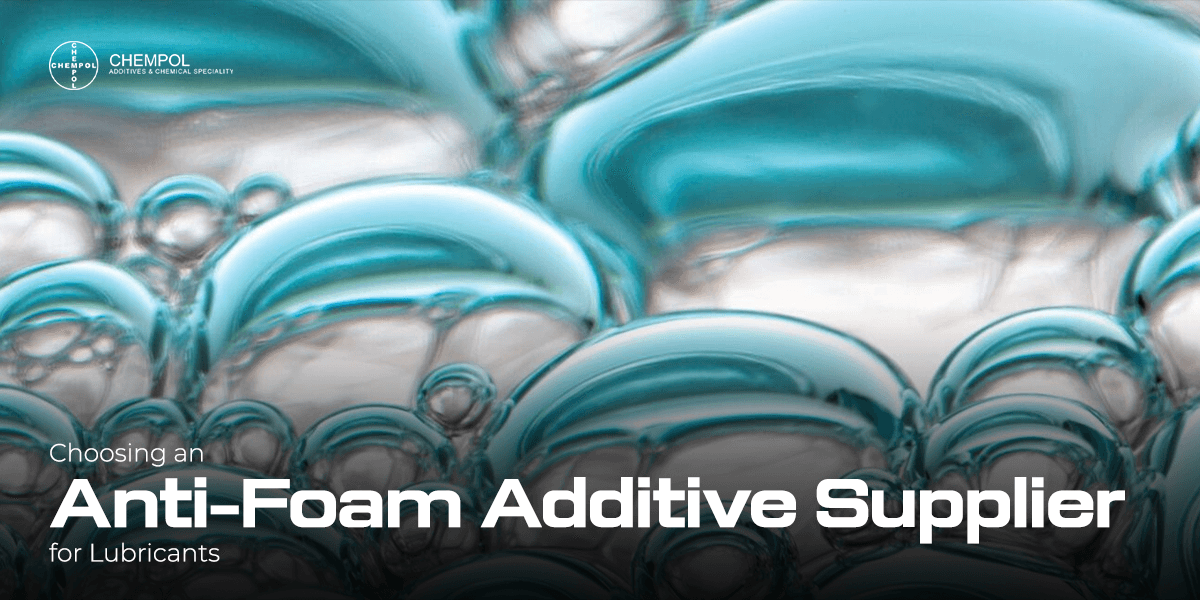
On the surface of oil, foam can appear harmless, but in hydraulic systems, compressors, gearboxes, turbines, and oil lubrication circuits, it can be a significant performance problem. Lubricants may lose their ability to form a stable protective film when air becomes trapped within them. It may result in ineffective lubrication, pump cavitation, oxidation, pressure fluctuations, overheating, and unnecessary maintenance expenses.
This is why selecting the right Anti-Foam Additive Supplier is not just a buying decision. It is a decision on formulation and equipment protection. Lubricant manufacturers, oil blenders, OEMs, distributors, and industrial buyers require additives that are compatible, stable, have low treat rates, and meet the real operating conditions.
Chempol assists lubricant formulators and industrial purchasers with viable additive concepts created to achieve performance and stability. CHEMPOL 5800 - Non-Silicon Type Foam Inhibitor is preferred for automotive and industrial lubricants that require ashless, non-silicone foam suppression.
For formulation guidance, product inquiries, or bulk requirements, contact Chempol’s technical team to discuss the right anti-foam solution for your application.
What is an Anti-Foam Additive?
Anti-foam additives are specialized lubricant additives designed to prevent foam formation and accelerate its collapse in oil systems. In simple words, it assists the lubricant in releasing entrained air and prevents stable foam from staying on the oil surface.
Foam occurs when oil is mixed with air, and the mixture forms bubbles. It may occur due to high-speed agitation, splashing, circulation, return-line turbulence, pump suction problems, or inadequate reservoir design. In most industrial systems, there is inevitability of some contact with air. Thus, a properly formulated oil must contain a foam-suppression additive that will not disrupt the other components of the additive package.
An anti-foam additive for lubricants works by weakening the foam walls, causing the bubbles to burst more easily. The additive should be applied sparingly, as excessive amounts can occasionally cause air release or a filtration effect. This is why dosage, compatibility, and testing are important.
Anti-foam chemistry is not a compulsory finishing additive to lubricant manufacturers. It is an essential performance component in hydraulic oils, compressor oils, gear oils, turbine oils, automotive oils, and other industrial lubricants.
Problems Caused by Foam in Lubricants
Foaming of lubricants may cause various operational problems. One of the most common is pump cavitation. In the event of excess air in the oil, pumps may not be able to maintain stable suction and pressure. This may cause noise, vibration, inefficiency, and component damage in the long run.
Foam also contributes to oxidation. Oil has air entrapment that increases the lubricant's exposure to extra oxygen, which may accelerate degradation and shorten oil life. This can, over time, lead to varnish, sludge, deposits, and decreased system cleanliness.
In hydraulic systems, foam may result in sluggish response, spongy performance, erratic pressure, and loss of control. This is why a hydraulic oil foam inhibitor or a hydraulic fluid foam control additive is necessary in numerous industrial applications.
Foam may reduce the lubricant's load-carrying capacity in gearboxes and compressors. When oil contains air bubbles, the protective film may become weaker, increasing the risk of wear. A gear oil foam inhibitor additive, or compressor oil foam inhibitor, helps ensure constant lubrication under agitation and high operating stress.
Foam may also lead to overflow, false oil-level readings, increased maintenance downtime, and reduced productivity. These problems can be costly in a short time in high-value equipment. Proper foam management can help preserve the lubricant and the equipment it is applied to.
Why Choose an Ashless Non-Silicone Anti-Foam Additive?
An Ashless Anti-Foam Additive is designed to provide foam control without adding metallic ash to the lubricant formulation. This helps in applications where cleanliness, deposit control, and balanced additive chemistry are important.
Another option is a non-silicone anti-foam additive when formulators are interested in avoiding potential problems with silicone carry-over, filtration sensitivity, surface flaws, or compatibility in a particular system. Although silicone-based defoamers have many applications, a silicone-free defoamer may provide a cleaner, more formulation-friendly solution for a few lubricant systems of choice.
CHEMPOL 5800, a non-silicone type foam inhibitor, is an ashless defoamer. It can be used with mineral and synthetic lubricants and is optimally suited to provide high flash point, stability in the system, and compatibility.
For oil blenders, this indicates that CHEMPOL 5800 could be considered as a mineral oil defoamer, industrial oil defoamer, or lubricant additive to control foam, without adding silicone chemistry to the formulation.
Features and Benefits of CHEMPOL 5800
Below are the features and benefits of using Chempol 5800:
Ashless Defoamer Technology
CHEMPOL 5800 is an Ashless Defoamer that assists formulators in controlling foam without adding metallic ash to the finished lubricant. This facilitates the use of cleaner formulations and may be useful for deposit control and formulation balance.
Non-Silicone Formulation
Since CHEMPOL 5800 is a non-silicone foam inhibitor, it can be used by customers seeking a Non-Silicone Anti-Foam Additive or a Silicone-Free Defoamer. This may also be particularly helpful when silicone chemistry is undesirable, either due to compatibility, filtration, or downstream process issues.
Suitable for Mineral and Synthetic Oils
CHEMPOL 5800 can be used in mineral and synthetic lubricants. This offers flexibility to lubricant manufacturers across a variety of product lines, including hydraulic oils, gear oils, compressor oils, turbine oils, automotive oils, and industrial lubricants.
Excellent Compatibility and Stability
One of the most significant aspects in the additive selection is compatibility. The anti-foam additive should be compatible with the base oil and the additive package, without causing separation, haze, instability, or performance imbalance. CHEMPOL 5800 is designed to be highly compatible and stable in the system, helping formulators ensure product consistency.
High Flash Point Performance
High Flash Point Defoamer can be useful in lubricant applications where safety, handling, and operating temperature are also factors of concern. CHEMPOL 5800 is a high-performance lubricant with a high flash point and can be used in harsh industrial lubricant environments.
ASTM D892 Foam Performance
CHEMPOL 5800 is used to enhance ASTM D892 foam. ASTM D892 is a well-known standard test procedure applied to identify the foaming properties of lubricating oils at 24°C and 93.5°C including foam tendency and foam stability.
This is important for lubricant manufacturers since the results of ASTM D892 are commonly utilized to determine whether a finished oil meets the application or customer specifications.
Recommended Dosage Range
The generally recommended CHEMPOL 5800 is 50-1000 ppm, depending on formulation, base oil, application and performance target. Given that anti-foam additives are very dosage sensitive, Chempol suggests technical analysis and laboratory testing to establish the optimal treat rate.
Contact the sales and technical support team of Chempol to order the CHEMPOL 5800 product datasheet, formulation advice, technical consultation, bulk pricing, or product suggestion.
Why Lubricant Manufacturers Choose Chempol
Industrial buyers and the manufacturers of lubricants require something more than a product name. They require a supplier with knowledge of formulation issues, supply and quality expectations as well as application performance.
Chempol specializes in the provision of lubricant additives that underpin viable industrial requirements. Chempol as an Industrial Anti-Foam Additive Supplier provides technical assistance, product information and bulk supply of commercial lubricant operations to customers seeking these services.
Oil blenders are particularly concerned with product consistency. Finished oils can be affected by a slight modification in additive quality or compatibility. By working with Chempol, customers are able to consult on the application requirements, dosage, type of base oil, formulation issues and performance objectives before choosing the appropriate product.
Chempol can also be used by the buyers who are seeking a Bulk Anti-Foam Additive Supplier since the commercial lubricant manufacturing needs a reliable supply planning, quotation assistance, and prompt communication.
How to Select the Right Anti-Foam Additive Supplier
The first step to selecting the right supplier is to have an understanding of your application. The hydraulic oil blender might require air release and filtration compatibility that is strong. A manufacturer of compressor oils might be concerned about oxidation stability, high flash point and foam control during prolonged air exposure. The turbine oil formulator can require low deposit tendency and long-term cleanliness. Before selecting a supplier, consider these key points:
- Does the supplier offer technical product guidance?
- Is the additive compatible with your base oil and additive package?
- Can the product support ASTM D892 foam requirements?
- Is the additive suitable for mineral, synthetic, or mixed base oils?
- Can the supplier support bulk orders and repeat supply?
- Is documentation available for purchasing and formulation review?
- Can the supplier help with dosage recommendations?
A reliable Anti-Foam Additive Supplier must assist their customers to resolve their formulation issues, rather than merely selling a chemical. Chempol would be a good option among lubricant manufacturers, distributors, industrial purchasers, OEMs and oil blenders who require a viable, compatible and technically supported foam-control additive.
When customers consider CHEMPOL 5800, they should proceed to look at the product datasheet, talk about the target application, make sure the dosage range is correct, and trial the additive in the finished lubricant formulation.
Ready to Order Chempol 5800 in Bulk?
Foam control is a vital element of lubricant performance. Foam can lead to cavitation in pumps, oxidation, air entrapment, inadequate lubrication, equipment erosion, unstable operation, and increased maintenance expenses when improperly handled. To industrial purchasers and the lubricant producers, the correct choice of anti-foam additive is imperative to quality in the formulation, as well as the safeguarding of equipment.
CHEMPOL 5800- Non-Silicon Type Foam Inhibitor is an ashless non-silicone liquid that is used as an additive in mineral and synthetic lubricants. It can be used in automotive, hydraulic, gear, turbine, and compressor oils, as well as in industrial lubricants. Having high flash point performance, good stability in the system, and excellent compatibility, a range of 50-1000 ppm (recommended dosage), it gives an option to oil blenders and industrial lubricant suppliers.
If you are looking for an Anti-Foam Additive Supplier, Industrial Anti-Foam Additive Supplier, or Bulk Anti-Foam Additive Supplier, Chempol can support your product inquiry, formulation discussion, technical evaluation, and quotation request.
Contact Chempol today to request a quotation, discuss your lubricant formulation requirements, ask for bulk supply details, speak with technical experts, or get guidance on whether CHEMPOL 5800 is the right anti-foam additive for your application.