[email protected]

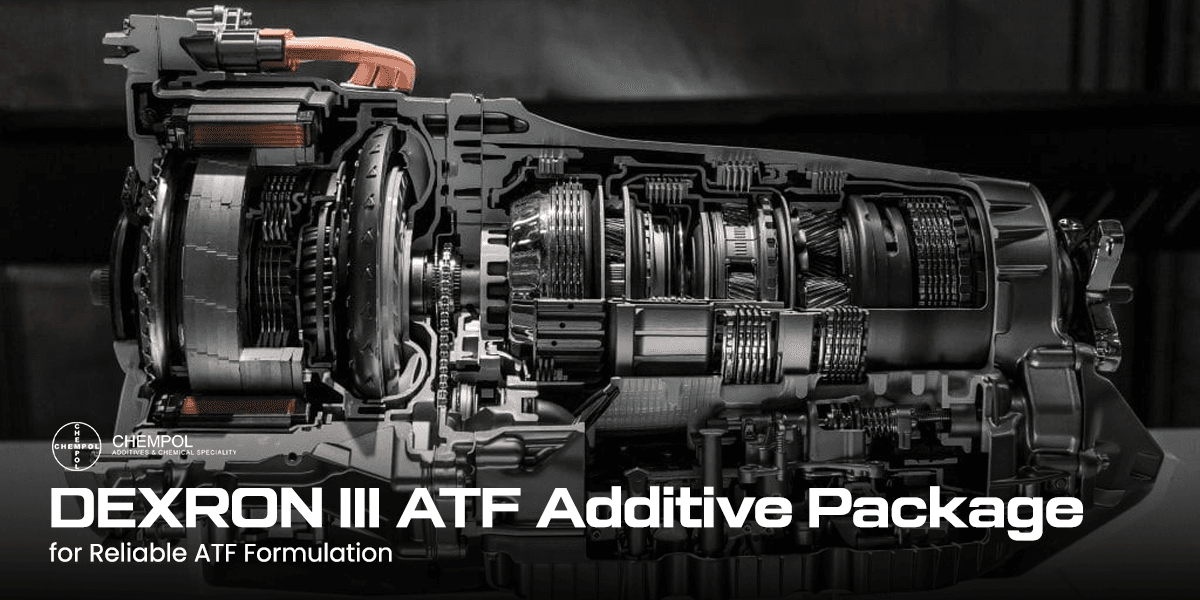
DEXRON III ATF Additive Package for Reliable ATF Formulation
Automatic transmission fluid manufacturers face a demanding formulation challenge: produce fluids that deliver smooth shifting, friction stability, oxidation resistance, component protection, and dependable performance across varying operating temperatures. Such requirements make the DEXRON III ATF Additive Package an essential component in the development of effective transmission lubricants for applicable legacy automotive and industrial applications.
Automatic transmission fluid is formed by the base oil; however, much of its functionality lies in the additive technology. The choice of the appropriate additive chemistry is critical in determining friction properties, wear management, oxidation resistance, deposit management, and transmission longevity.
CHEMPOL 4155 ATF DEXRON-III Additive is designed for formulators, lubricant manufacturers, oil blenders, and automotive lubricant brands formulating transmission fluids to meet the performance standards of DEXRON III G/H and MERCON-type. CHEMPOL 4155, which is recommended for use in treat rate of 8.2 wt%, is a viable path that allows formulators to create high-performance automatic transmission fluids with the help of appropriate base oils.
Chempol offers a dedicated solution for ATF development and production to manufacturers who want consistency, technical assistance, and commercially practical additive technology.
Looking for a reliable DEXRON III ATF additive package? Contact Chempol's technical team to discuss your formulation requirements, base oil selection, product specifications, and production targets.
What is a DEXRON III ATF Additive Package?
A DEXRON III ATF Additive Package is a concentrated blend of functional lubricant additive components designed to deliver the performance properties desired in an automatic transmission fluid formulation to the appropriate level of DEXRON III performance.
The operation of automatic transmissions involves a complex interaction among the hydraulic circuits, friction elements, gears, bearings, seals, torque converters, and transmission control systems. The fluid thus performs multiple tasks simultaneously. It serves as a hydraulic medium, lubricant, friction-control medium, cooling medium, and a protective coating between moving parts.
Base oil does not contain the full set of properties required in a finished ATF. An engineered base oil additive package assists in controlling the friction behavior, oxidation, wear, sludge and deposit formation, and stable operation during the planned service life.
This is especially significant for transmission fluid friction durability. The predictable nature of an ATF's characteristics means its behavior should not change drastically with fluid aging. Examples of poor friction stability include inconsistent engagement properties, issues with shift quality, or failing customer satisfaction.
For lubricant manufacturers, the comprehensive automatic transmission lubricant additive also facilitates development. Formulators can operate with an integrated package designed to meet the desired performance profile, rather than balancing many components on their own.
Manufacturers in need of this formulation route developed by Chempol came up with CHEMPOL 4155.
Understanding CHEMPOL 4155 ATF DEXRON-III Additive
CHEMPOL 4155 ATF DEXRON-III Additive is a specialty transmission fluid performance additive used in the formulation of automatic transmission fluids in DEXRON III G/H and MERCON-type performance applications.
The recommended treatment rate is 8.2 wt%, and lubricant manufacturers can add the additive package to the chosen, appropriate base oils in response to the necessary finished-fluid design and validation program.
CHEMPOL 4155 is a concentrated form of approach that consolidates key ATF performance functions into a single additive system desired by the formulators who seek a DEXRON III G/H Additive. It can also assist manufacturers designing products aimed at meeting applicable MERCON ATF Additive Package requirements, where the targeted transmission, service documentation,, and finished-fluid testing can accommodate its use.
CHEMPOL 4155 is especially applicable to lubricant blenders that supply the replacement market, legacy vehicles, commercial, workshop, automotive distributor, and transmission service network markets, and to markets where there is still commercial interest in the use of DEXRON III-type ATFs.
The package may be taken into account when creating an ATF Additive for GM Vehicles that demands the desired level of performance on the legacy and an ATF Additive for Ford Transmissions where the specific transmission demands the specific fluid properties.
CHEMPOL 4155 is also poised for formulations that meet Allison C4 Transmission Fluid Additive performance specifications for relevant equipment. OEM guidelines are dynamic; therefore, lubricant manufacturers should never test the finished fluid against the specifications and applications they claim.
The technical team at Chempol can liaise directly with lubricant producers and product development teams on formulation discussions, including viscosity targets, base oil compatibility, treat rate, performance testing, and commercial production.
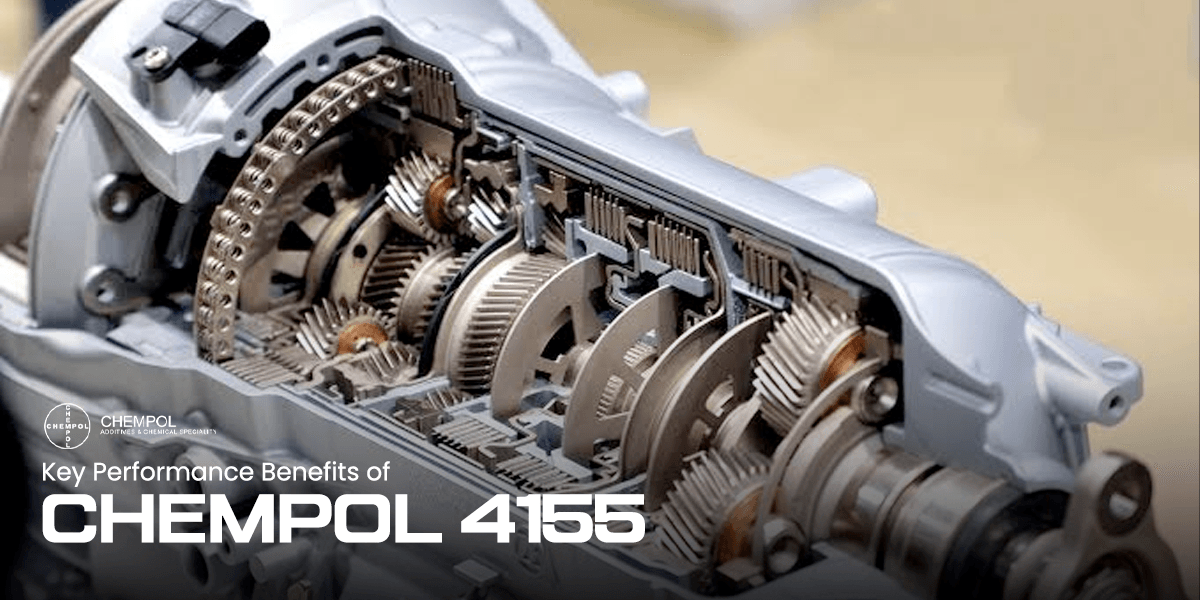
Key Performance Benefits of CHEMPOL 4155
Below are the key performance benefits of Chempol 4155:
Friction Durability for Consistent Shift Performance
One of the most significant properties that distinguishes automatic transmission oil from conventional lubricating oil isits friction behavior.
Clutch packs and friction elements must have close interaction with the lubricant. Friction characteristics that are too high, too low, or even too unstable may influence engagement and shifting behavior.
CHEMPOL 4155 uses additive technology aimed at improving transmission friction performance and durability. In a correctly formulated finished ATF, its ATF friction modifier assists the formulators in aiming at creating uniform frictional properties and smooth shifting in the gears.
This is of direct commercial interest for lubricant brands. Transmission fluid performance is judged by customers based on practical results, including: shift quality, transmission response, operating smoothness and confidence in long service life.
Oxidation Stability for Extended Fluid Life
Auto transmission fluids are under continuous thermal and mechanical load. Oxidation may lead to lubricant degradation, viscosity variations, acidity, sludge, varnish, and deposits as temperature and operating time rise.
A good oxidation stability additive system can be used to slow this degradation.
CHEMPOL 4155 is used to support fluid formulations that help maintain fluid quality under harsh operating conditions. Enhanced oxidation control would enable cleaner operation in transmission and more stable lubricant performance over the desired fluid service life.
For manufacturers formulating a high-performance ATF additive, control of oxidation is not merely a laboratory requirement. It has a direct impact on fluid durability, transmission cleanliness, brand reputation, and customer perception.
Wear Protection for Transmission Components
Automatic transmissions have gears, bearings, bushings, shafts, and other heavily loaded mechanical surfaces that demand good lubrication.
CHEMPOL 4155 is a transmission wear-protection additive component found in the total package, which helps develop the finished fluid that protects transmission parts against harmful wear under optically designed operating conditions.
Good wear protection may also lead to longer component life and greater confidence in the final lubricant, especially in commercial and challenging service conditions where the reliability of the transmission is directly linked to vehicle uptime.
Reliable wear performance enhances the technical value proposition of the finished ATF for the lubricant manufacturers.
Low-Temperature Fluidity Enhancement
Transmission fluids should be able to circulate efficiently during cold starts and also prevent components from operating at extreme temperatures.
Low temperatures can increase lubricant viscosity and affect hydraulic response. Proper formulation hence necessitates an amalgamation of apt base oils, viscosity management, and additive technology.
CHEMPOL 4155 may be included in an ATF formulation designed to operate at low temperatures. The formulation can be used to provide a more predictable cold-start transmission response when paired with appropriately chosen base stocks and the necessary viscosity properties.
Strategies used by manufacturers to achieve low-temperature fluidity should consider the entire formulation, since the final low-temperature performance is determined by interactions among base oil properties, viscosity modifiers, additives, and the finished-fluid viscosity goals at low temperatures.
Compatibility with GM, Ford, and Allison Requirements
ATF formulations based on CHEMPOL 4155 are intended to fulfill the needs of DEXRON III G/H, potential MERCON-type applications, and Allison C4 performance requirements.
This is especially useful for manufacturers with a wide range of aftermarket and fleet lubricant markets, rather than developing an ATF for a single specific application.
Many requirements in the legacy market can be met with a properly validated DEXRON III specification fluid, and formulations to meet the performance of specifiable MERCON specification transmission fluids can provide more commercial options.
For Allison-related applications, formulators are advised to distinguish between older C4-targeted products and more recent Allison-approved fluid specifications, as Allison now recommends newer TES specifications for most of its current transmission families.
Need technical data before beginning formulation trials? Speak with Chempol's technical team to request product information, formulation guidance, recommended treat-rate details, and technical support for CHEMPOL 4155.
Why Transmission Fluid Additives Matter in Modern ATF Formulation
The automatic transmission lubricant market is also increasingly appreciative of manufacturers who balance product quality with the reliability of their performance in the field.
Customers do not judge lubricants by cost alone anymore. Fleet operators, workshops, distributors, and vehicle owners anticipate consistent shifting, transmission cleanliness, dependable wear protection, and fluid stability.
This puts a lot of responsibility on additive selection.
An effective ATF additive package for transmission oils has the chemistry to upgrade suitable base stocks into a specialized functional lubricant. Friction control assists clutch operation. Antioxidant chemistry retards corrosion. Anti-wear technology provides protection for loaded components. Detergency and dispersancy are used to control deposits and contaminants.
The formulation should also be balanced. Trading off one property to achieve another may result in an unstable product.
That is why integrated automotive lubricant additives with formulation support are becoming increasingly important to manufacturers.
CHEMPOL 4155 allows manufacturers to develop automatic transmission fluid formulations using a specified additive system, rather than building up critical performance chemistry from several independent components.
For product development teams, this would help minimize unnecessary formulation cycles and provide a more organized path to laboratory, bench, and field testing, as well as commercialization.
Applications of CHEMPOL 4155 Across Multiple Transmission Systems
CHEMPOL 4155 offers formulation flexibility for lubricant manufacturers serving several segments of the transmission fluid market.
GM Automatic Transmissions
When manufacturers are developing finished fluids intended for DEXRON III G/H-type performance specifications, they can use the package for applicable legacy GM automatic transmissions. The final formulation developed must be constantly checked against the performance claims the lubricant marketer plans to make.
Ford Automatic Transmissions
The package may accommodate fluids suitable for MERCON-type applications in applicable Ford automatic transmissions. Ford now offers newer MERCON fluids to meet modern needs, such as MERCON V, LV, and ULV, so formulators must match their product claims to the exact transmission and required fluid specifications instead of offering a DEXRON III/MERCON-like product as a universal fit for all newer vehicles.
CHEMPOL 4155 is also testable on fluids to meet Allison C4 performance requirements in suitable legacy applications.
In addition to passenger cars, the package can be applied to specific commercial vehicles, fleet maintenance markets, service workshops, transmission rebuilding operations, and industrial transmission systems, where the equipment also requires an ATF with the required performance profile.
This flexibility makes CHEMPOL 4155 especially helpful to manufacturers that serve multiple markets with a dedicated transmission-fluid portfolio.
Why Lubricant Manufacturers Choose Chempol
A supplier of additives gives much more to the success of a lubricant manufacturer than merely a delivery of a chemical product.
Batch-to-batch consistency in production, availability of technical data, formulation advice, stable logistics, and responsive commercial support are all factors that affect an additive technology's ability to transition from the laboratory to full manufacturing.
Chempol collaborates with lubricant producers, oil blenders, technical departments, distributors, and procurement departments to acquire reliable additive solutions to commercially significant lubricant applications.
Product Consistency
Consistency in products is particularly significant in the production of the ATF. Minor changes in formulation behavior can influence finished-fluid properties. Chempol thus emphasizes regulated product quality and reproducible additive performance.
Technical Support
Another significant benefit is technical support. Price and supply capacity can be analyzed first by a procurement manager, and the formulation team requires data on treat rate, base oil suitability, blending parameters, and finished-product performance. Engaging an additive supplier capable of facilitating both commercial and technical negotiations is one way to expedite the buying process.
The additional experience that Chempol has in lubricant additive technology also allows customers to discuss related formulation needs rather than taking each lubricant project separately.
The manufacturer looking at transmission fluids can naturally be guided to the Transmission Additives category page on the Chempol site, and companies developing a wider range of lubricants can look at the Lubricant Additive Packages category page. Potential customers interested in the company's technical history can visit the About Chempol page, and serious commercial inquiries should be sent to the Contact page.
Developing or sourcing a DEXRON III / MERCON-type ATF? Contact Chempol today to request a quotation, obtain technical support, discuss your formulation requirements, inquire about CHEMPOL 4155, or discuss bulk supply requirements with our commercial and technical teams.
Request product specifications, speak with the technical team, discuss your ATF development requirements, and request a quotation for commercial or bulk supply today.
How CHEMPOL 4155 Helps Improve ATF Product Performance
CHEMPOL 4155 has commercial value that goes beyond its additive functions on an individual basis.
An integrated additive package may simplify the formulation process for formulators. Rather than procuring and matching a large number of individual building blocks, manufacturers can start with an additive system focused on the desired ATF performance profile.
This can reduce development cycles and help technical departments allocate laboratory resources more effectively.
CHEMPOL 4155 can also make it easy to expand the portfolio for established lubricant blenders. A company that already produces engine oils, gear oils, hydraulic fluids, or industrial lubricants can use a specially designed ATF package as the technical basis for adding transmission fluids to its product offerings.
Downstream customer satisfaction can also be enhanced through reliable formulation performance. Distributors prefer products that lead to repeat orders rather than complaints. Workshops desire fluid behavior to be predictable. Customers of fleets appreciate consistency and less maintenance interruption.
CHEMPOL 4155 enables manufacturers to focus on producing a commercially competitive finished ATF by integrating the functions of friction performance, oxidation control, wear protection, and transmission lubricant into a single package.